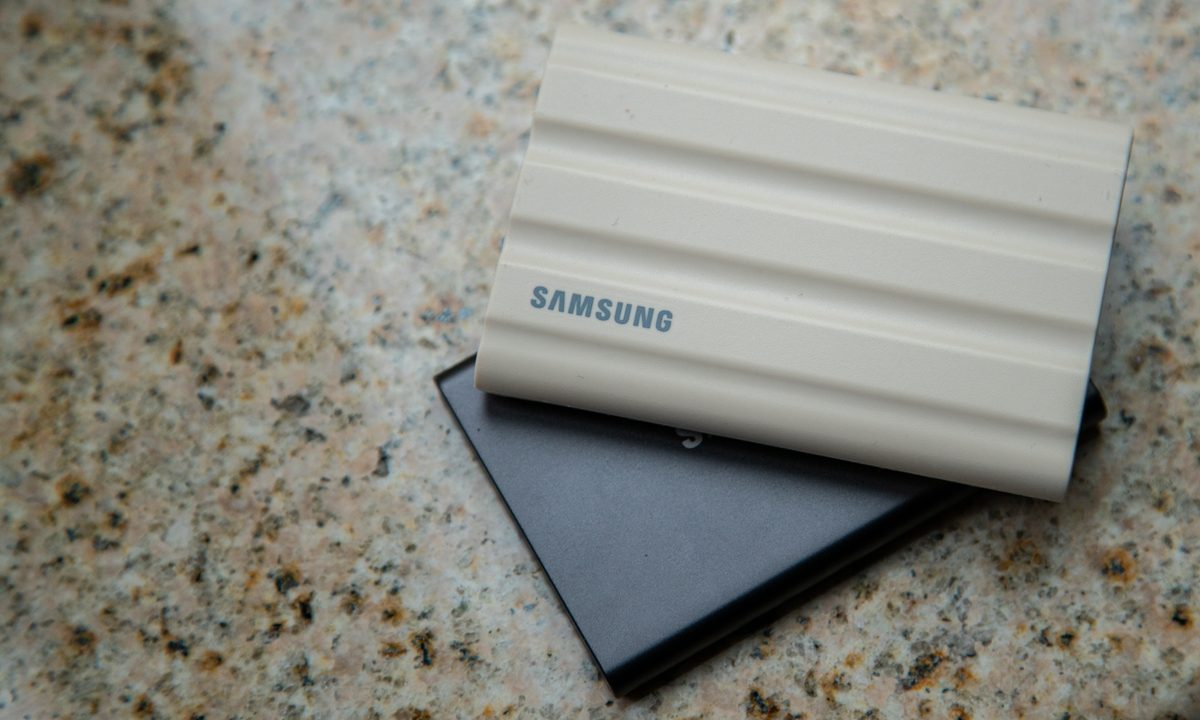

“The Samsung T7 Shield is the same ultra-fast SSD as the T7, just with a rugged exterior.”
- Blazing speed
- Light and portable
- AES-256 hardware encryption
- IP65 dust and water resistance
- Can get a little hot
- More expensive than base T7
“Why you can trust Digital Trends – We have a 20-year history of testing, reviewing, and rating products, services and apps to help you make a sound buying decision. Find out more about how we test and score products.“
Samsung is expanding its T7 family with the T7 Shield — an external SSD built on the bones of the best external SSD you can buy, but with a focus on durability. That comes in the form of a soft rubber shell, dust and water resistance, and a little extra protection against drops.
Under the hood, however, the T7 Shield is identical to the T7, despite being more expensive. It’s a great drive, just like its non-rugged sibling, but you may not need to pay up for the extra protection.
Design
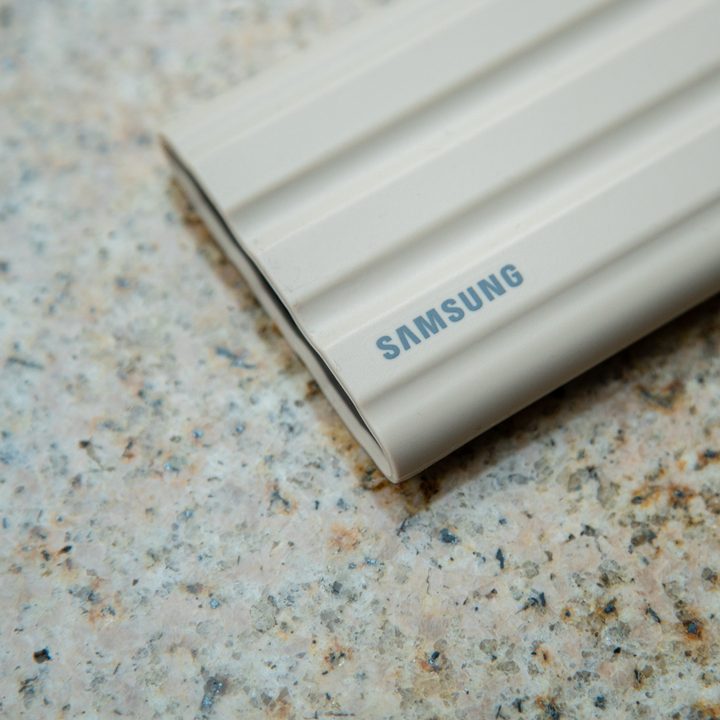
The T7 Shield isn’t too different from the base T7 in terms of size. It’s still light at 98 grams, and it’s compact, measuring 3.5 inches long, 2.3 inches wide, and only half-an- inch thick. It’s slightly larger than the T7 and T7 Touch models due to the rubber shell around the exterior of the drive.
In exchange for a little more size, the drive offers three meters of drop resistance, as well as IP65 water and dust resistance. The T7 Shield is far from the first rugged external SSD. However, it shoots ahead of options like the SanDisk Extreme V2 with better drop, water, and dust resistances.
The drive comes in blue, beige, or black, and it’s available in either a 1TB or 2TB capacity. I like the extra ridges and soft rubber shell for holding onto the drive, but the T7 Shield wears it like a coat. The T7 was already prone to get hot, and with a hefty shell on the outside, the T7 Shield makes matters worse.
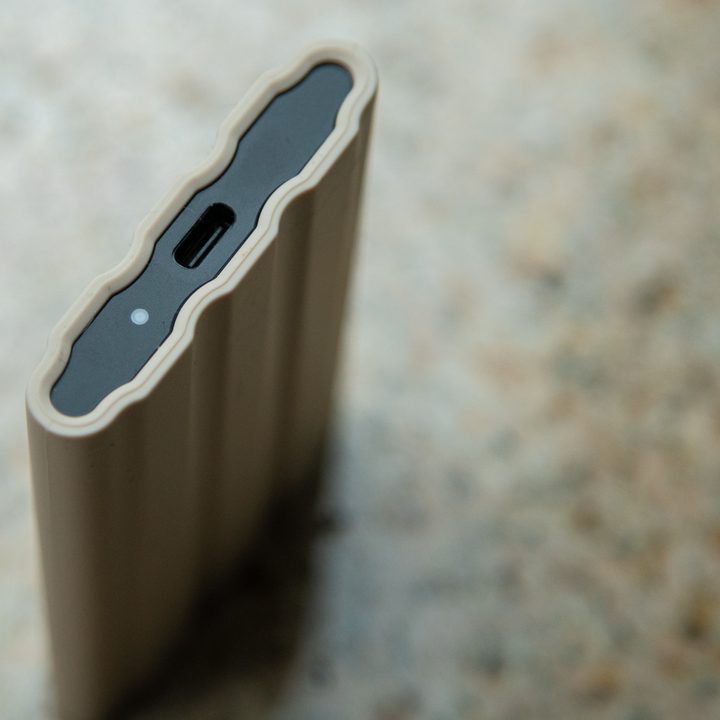
In the box, you’ll find the drive, a USB-C to USB-A cable, and a USB-C to USB-C cable. The unit I received has some problems with the USB-C port on the drive, with the rubber shell fighting against a solid connection. Samsung says that it has fixed the problem on units currently being shipped.
Pricing
Despite offering more physical protection than the T7 Touch, the T7 Shield isn’t more expensive. Samsung is offering the drive for $160 for 1TB or $280 for 2TB. Both the T7 Shield and Touch are $10 to $40 more expensive than the base T7 depending on the capacity.
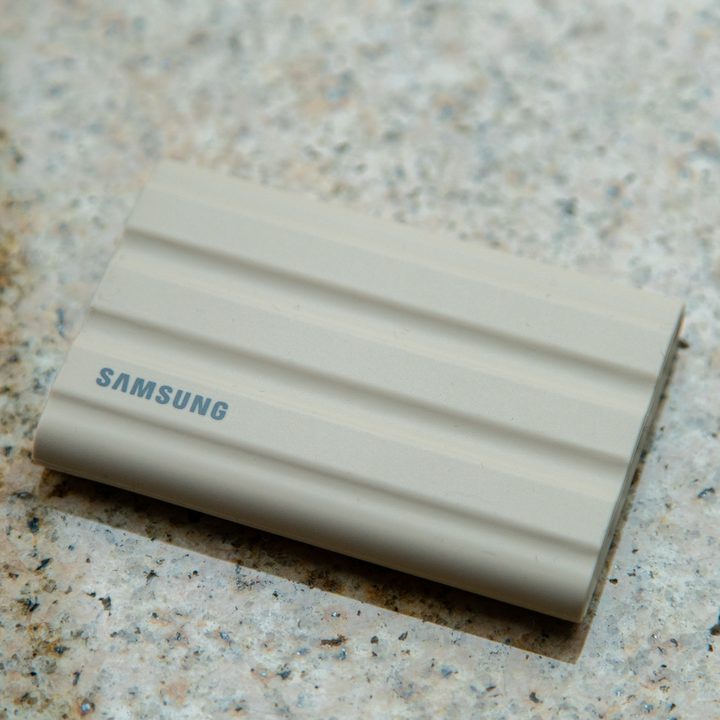
Interestingly, Samsung isn’t offering the T7 Shield in a 500GB size — something that’s available on both the T7 and T7 Touch.
I find the extra protection hard to justify, too. Although the T7 Touch and T7 aren’t water resistant, they are drop resistant. Unless you’re traveling into dirty environments with the T7 Shield, most people can either save some money with the T7 or access fingerprint security with the T7 Touch.
Performance
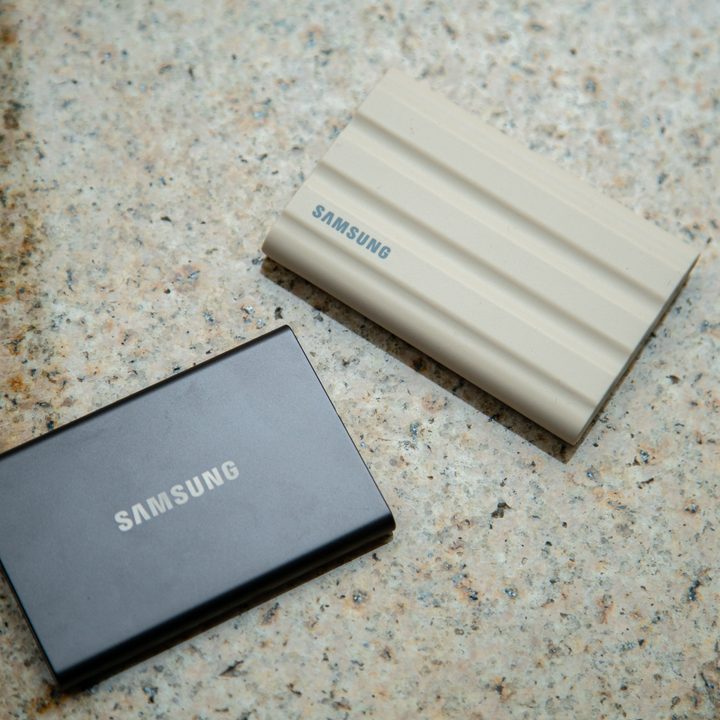
The T7 Shield uses the same SSD inside the T7 and T7 Touch — a proper NVMe SSD that’s capable of sequential read speeds of 1,050 MB/s. That’s not what you’ll get in most cases, as I’ll dig into below, but in the world of external hard drives, the T7 Shield offers the fastest storage you can access over a USB connection.
It’s the USB 3.2 Gen 2 interface that offers that speed, and you’ll need to hook up the T7 Shield to a port with support to unlock the drive’s full speed. I hooked the drive up and ran it through CrystalDiskMark to get an idea about speed.
The T7 Shield offers the fastest storage you can access over a USB connection.
It came out with a sequential read speed of around 855 MB/s and a sequential write of around 835 MB/s. That’s short of Samsung’s highest possible speed, but it falls in the range of other T7 drives. I tested a 1TB base T7 and came out with read and write speeds of 820 MB/s and 800 MB/s, respectively.
Security and software
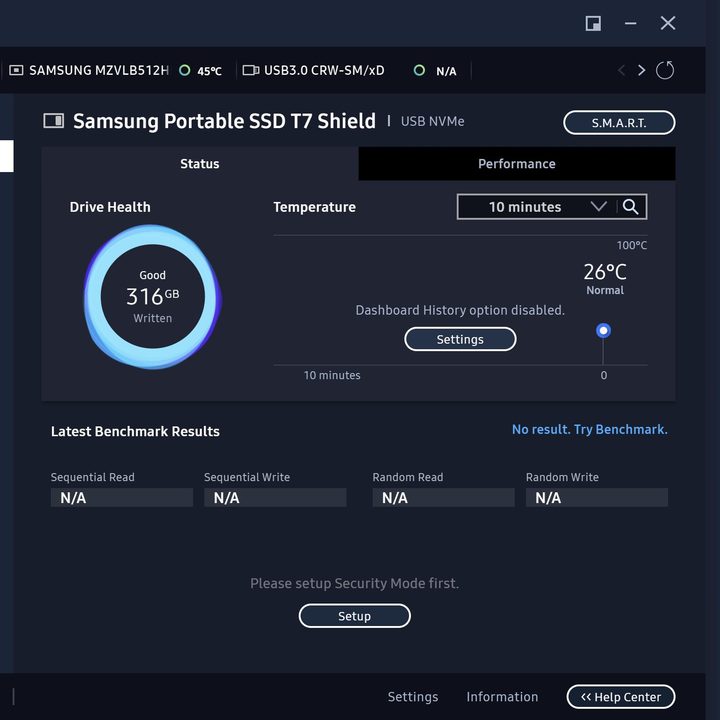
Although the T7 Shield doesn’t offer fingerprint protection like the T7 Touch, it still comes with hardware-based AES-256 encryption, which you can set up through Samsung’s software with a password. That’s the strongest encryption you can find, and because it’s hardware-based, your data will be protected even if you lose your drive.
Outside of encryption, Samsung’s Magician software offers a suite of utilities for your drive. You can manage your files outside of File Explorer, view details about your drive health, and run it through a benchmark. It’s fine software, much more than most external SSDs offer, but I can’t imagine opening Magician up after setting up encryption for the first time.
Our take
The T7 Shield joins Samsung’s T7 as another excellent SSD with blazing-fast speed, a slender and light design, and top-notch security. Samsung charges for the extra dust, water, and drop protection, however, so I’d recommend sticking with the base T7 unless you need that extra protection.
Are there any alternatives?
There are several external SSDs that are competing with the T7 Shield:
- Buy at Newegg — Worse water and dust protection, but available in more capacities. It’s also smaller and lighter.
- Buy at Amazon — Cheaper and with even better dust and water protection, but limited to 1TB.
How long will it last?
I’ve been using a Samsung T7 for about two years now, and I expect to use it for several more. That should be the case with the T7 Shield as well, especially considering its rugged exterior.
Should you buy it?
Yes, if you need the extra dust, water, and drop protection. For most people, I’d recommend going with a base T7 instead. It’s cheaper, it doesn’t get as hot, and although it’s not water and dust resistant, it can still withstand a few falls.