What started as openness is starting to look like a liability. Spotify says AI slop is flooding your music feed, and it’s rolling out a control to limit the damage. The company is testing a feature that lets artists review songs before they appear on their profile.
Called Artist Profile Protection, the tool is in beta and adds a checkpoint to a system that has long been easy to game. Artists can screen releases tied to their identity before launch, cutting off a common path used by spam uploads and mislabeled tracks.
The pressure is building fast. As music generation gets cheaper and faster, more content is being assigned to the wrong profiles, whether by mistake or design.
That risk is already playing out. A recent US case involved a guilty plea tied to AI-made tracks and bot-driven streams that generated fraudulent payouts, showing how automated content can be exploited in large volumes.
A new approval layer for releases
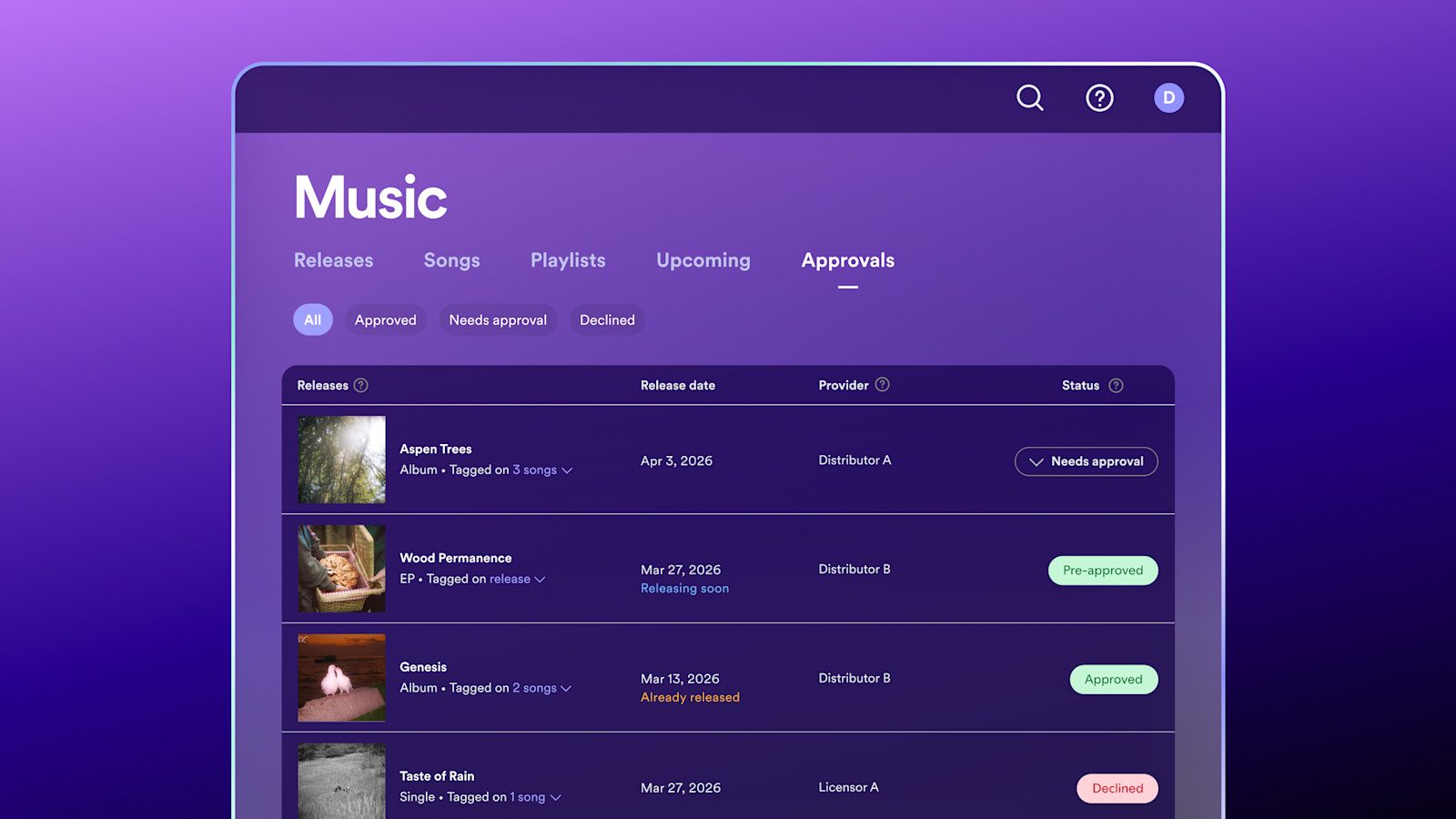
The update introduces a missing checkpoint. When a release arrives with an artist credit, it no longer shows up automatically. The artist gets notified and decides if it belongs on their page.

If cleared, the release rolls out normally and feeds into stats and recommendations. If blocked or ignored, it stays off that profile, even if it still appears elsewhere.
Spotify frames this as a first for streaming platforms. It also adds an artist key, a unique code that trusted partners can include so legitimate releases move through without manual review.
There’s a tradeoff to manage. Artists who enable it need to stay on top of incoming releases or risk slowing down their own drops.
Why AI music fraud forced this move
This rollout lands as abuse shifts from clutter to financial risk. Tools that speed up music creation have also made it easier to flood platforms with low-effort material.
In the US fraud case, automated listening paired with synthetic tracks turned into real revenue. That combination exposes a weakness in how payouts and attribution are handled.
The impact goes beyond messy profiles. Wrongly credited releases can skew listener data, disrupt discovery systems, and divert earnings away from the right creators.
Spotify has leaned on open distribution to help artists publish widely. But that openness created entry points for bad actors, and automation has amplified the scale of the problem.
What to watch next for artists
Artist Profile Protection is optional and limited to a small beta group, so access is still uneven. Spotify says it will refine the feature before expanding it, though it hasn’t shared a timeline. Apple Music recently rolled out a tagging system that lets labels tag content if it’s AI.
The system also depends on vigilance. Artists still need to catch bad submissions early, and it doesn’t stop unauthorized uploads from reaching other platforms.
Still, the shift is meaningful. Control is moving earlier in the process, before a release can affect stats or reach fans.
If the rollout expands soon, this could become a standard safeguard, especially for artists with common names. For a platform built on discovery, it’s getting harder to trust what you’re hearing.