
Satellite-based internet has emerged as the next avenue for mobile connectivity. At the moment, Elon Musk-led SpaceX is sitting at the top of the food chain with its Starlink constellation of satellites. From deals with airline carriers for providing in-flight Wi-Fi to partnerships covering mobile devices with T-Mobile, Starlink satellites are now working even in war zones.
It will soon have some hot competition from Amazon. The company has announced that it will launch its first batch of 27 satellites on April 9, as part of the “KA-01” Kuiper Atlas 1 mission. It ks the first full-scale deployment of satellites as part of the ambitious Project Kuiper, which hopes to create a constellation of 3,200 satellites in low-Earth orbit.
Small beginnings, ambitious plans
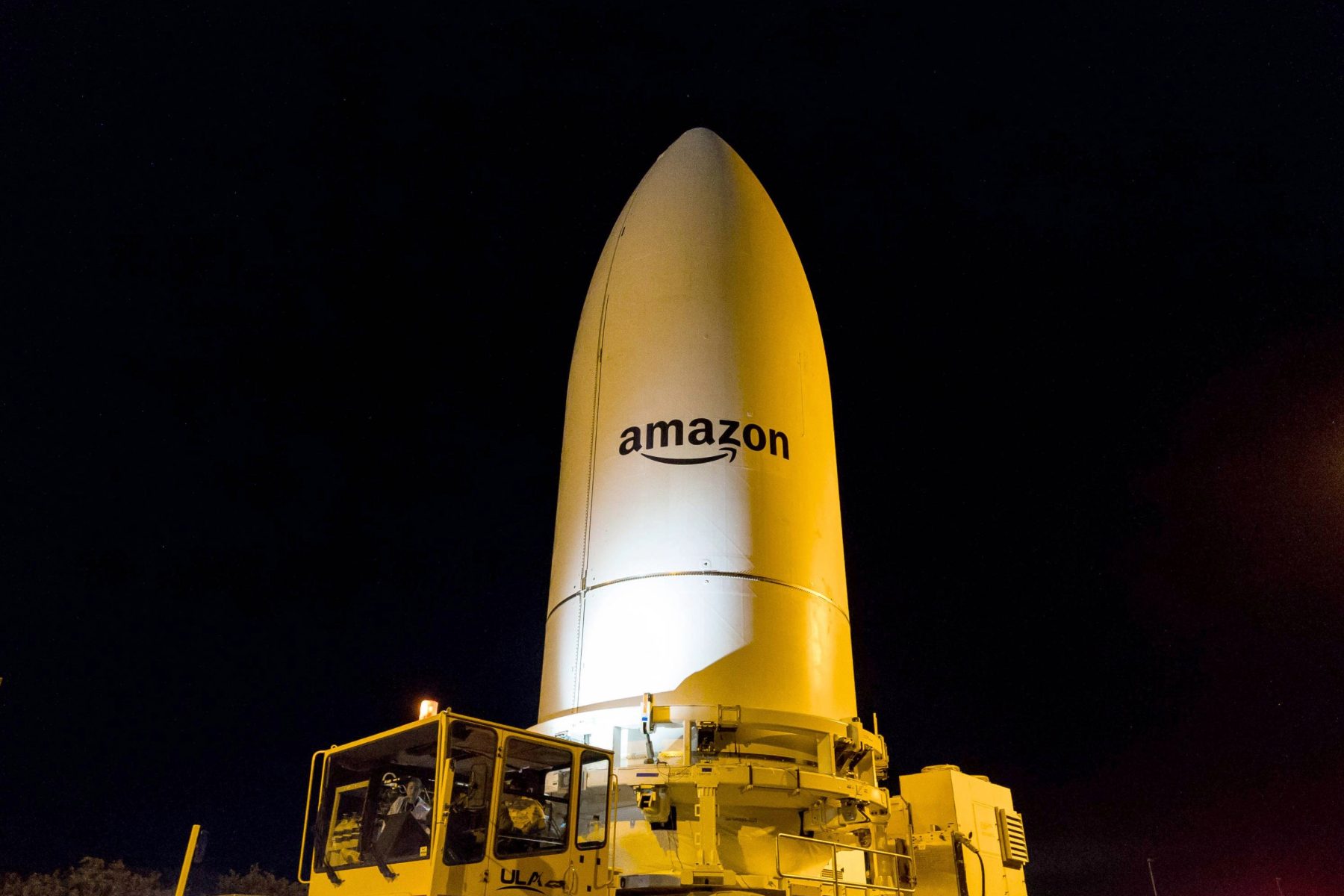
Amazon notes that so far, it has secured the launch of over 80 satellites for the first network phase. Just like SpaceX and its Starlink system, Project Kuiper is also promising high-speed, low-latency internet connection for virtually any location across the world.
The company says Project Kuiper will start offering internet services by the end of 2025. The satellites will be launched atop the most powerful configuration of ULA’s Atlas V rocket, which includes a total of six massive booster engines.
In the coming years, the Atlas V will carry over half a dozen satellite launch missions, while the bigger Vulcan Centaur rocket will handle a total of 38 satellite injection trips. Arianespace, Blue Origin, and SpaceX will also share some of the launch duties.
The roadmap ahead
“This will be the first time we’ve flown our final satellite design and the first time we’ve deployed so many satellites at once,” says Rajeev Badyal, VP of Project Kuiper at Amazon. “No matter how the mission unfolds, this is just the start of our journey, and we have all the pieces in place to learn and adapt as we prepare to launch again and again over the coming years
For comparison, SpaceX has already launched thousands of Starlink satellites and offers its internet services in more than a hundred countries. Aside from its consumer-facing business, the company has even bagged government and military contracts, while SpaceX shoulders NASA mission duties, including the Artemis project.
The company has been testing prototype satellites since 2023, and they stand out courtesy of a unique dielectric mirror film that reflects sunlight and keeps them from interfering with the view of ground-based telescopes. Obstruction and night-sky pollution have lately raised concerns within the scientific community due to satellites and other man-made material floating in orbit.