
Giant televisions and impressive cameras are great and everything, but it’s not why your intrepid CES Awesome correspondents got into the tech journalism game. No, we were lured away from all those other, sensible career paths by an obsession with the intersection of science and gadgetry. We like pretending we live in a science fiction movie, and nowhere on the planet provides as many opportunities for that feeling as CES. Here are a few of the things that blew our minds while also harnessing our brainwaves to move cursors across screens.
Check out more top picks from CES 2013.
Lego Mindstorms EV3Remember when you used to play with Legos and think, man, it would be so cool if this robot that I just made was actually a robot? With their new Mindstorms EV3, they are. And, yes, this means that while you think your kids are happily snapping away with a cool new toy that teaches them some basic computer programming skills, what they’re actually doing is building a herd of dinosaur robot monsters to completely take over your house.
Here’s more on the Lego Mindstorms EV3.
 |
Leonar3DoMany companies are hopping onto the 3D printing trend, but Leonar3Do is one of the few that addressed how to create items to 3D print in the first place. With its latest software and tools, anyone can learn to sculpt, model, and create designs that talk to 3D printers, without learning a single programming code. Basically, if you know how to use a pen, you can make an iPhone case and manufacture it yourself.
Read on to learn about the Leonar3Do virtual modeling tool.
 |
Qi WirelessIt’s 2013. Why do we still need to carry five different wires every time we go on a business trip? With the Qi Wireless technology, cellphones, computers, and tablets will soon sport energy conductive coils that will charge power into the device without ever hooking up a cord. Simply place the items on a charging pad and watch as the battery level go from red to green. This is the kind of gear we can definitely embrace and set as the new standard of mobile technology.
Here’s the full coverage on Qi Wireless.
 |
Sifteo CubesThe proliferation of gaming devices and platforms is great, but it inadvertently distracts from the original mission of games in the first place: bring people together to have fun with each other. Sifteo Cubes bring the interactivity back by allowing multiple people to play together on a modular gaming system – all while taking up very little physical space or gobbling up your hard drive. They’re also great for kids to hone their logic and puzzle skills. Continue here for more on Sifteo Cubes. 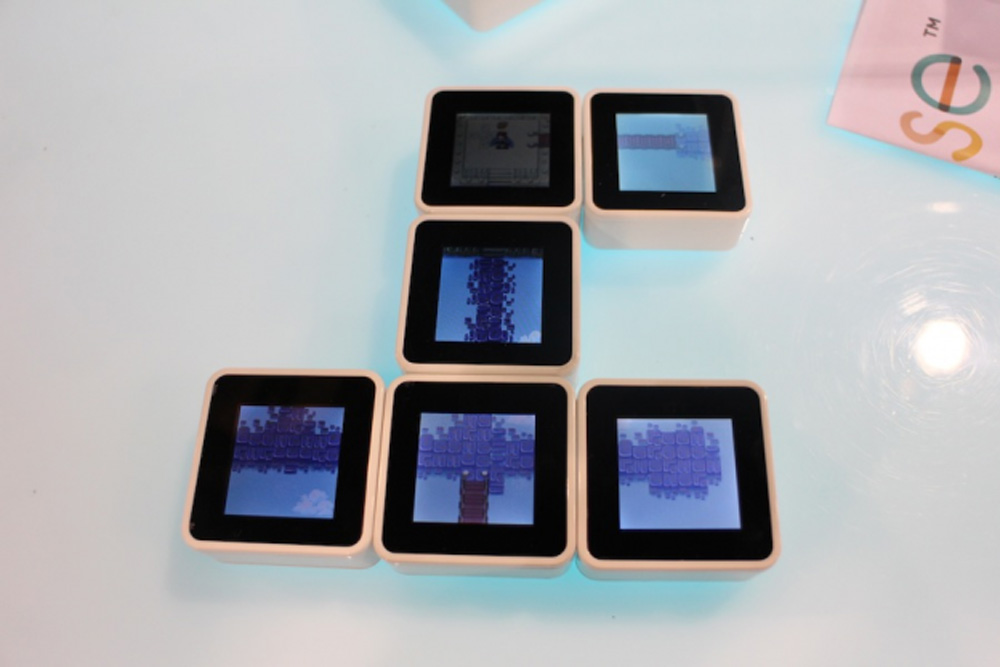 |
DisplairOne of the best and worst parts of CES is that there’s too much to see. Between the various conference halls, keynotes, ballrooms, and show floors, the event is bursting at the seams with all the new electronics and gadgets that we’ll see in the near future (and some we won’t). Enter, Displair. Hidden in the depths of the Venetian, it’s a touch display made of nothing but mist — and guess what, it’s not just a concept! The Russian startup plans to bring the Displair to market later this year for the incredibly affordable price of $12,000. Too steep? You’re in luck: You can rent it for $1,000 a day. We know, for that price, if you’re considering the Displair you’re probably a prince living in Dubai. WIth your own island. With five islands. And a pet tiger. Anyway, the point is, you can play Fruit Ninja on mist-made touch display and nothing else matters. Read more about Displair. 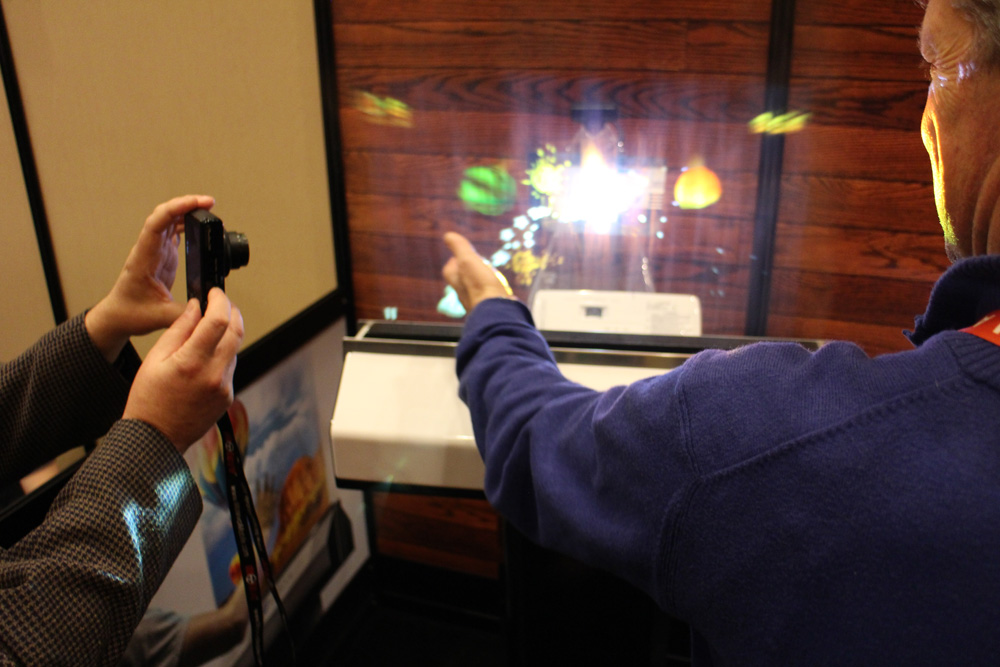 |


