  1. Home
  2. Emerging Tech
  3. Smart Home
  4. News

This ingenious invention highlights mosquitoes so you can murder them faster

Add as a preferred source on Google
Introducing Bzigo - First Ever Device to Detect and Locate Mosquitoes

This story is part of our continuing coverage of CES 2020, including tech and gadgets from the showroom floor.

Recommended Videos

Few things are more frustrating than lying in a dark room, drifting off to the land of nod, when you’re suddenly jolted awake by the high-pitched whine of a mosquito, floating through the blackness with designs on your tasty, tasty blood. Such moments can quickly transform even the most measured of people into crazed wall-smacking loons as they try and squash the cursed bug before it can bite.

CES has some good news, then, in the form of Bzigo: a laser detection system that uses a combination of infrared (IR) camera, laser designator, and smart computer vision algorithms to clue you in on the location of the pesky mosquito is as it buzzes around your room.
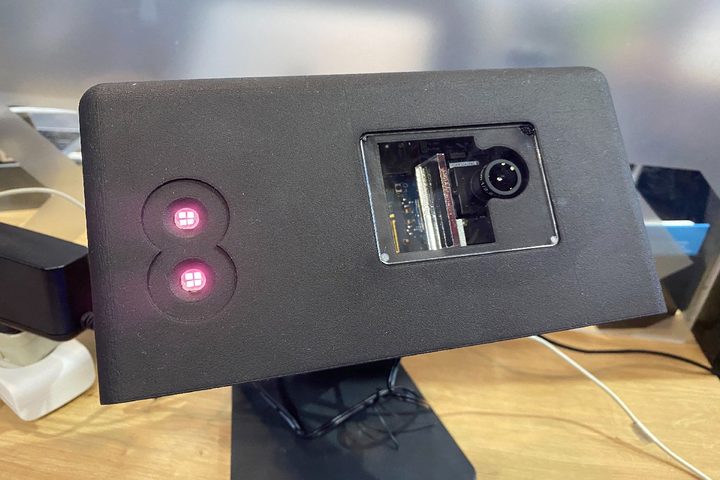
Image used with permission by copyright holder

Sadly, it won’t blow it out of the sky with said laser like a miniature Death Star obliterating a particularly bloodthirsty Alderaan. Instead, once Bzigo has spotted its target (from up to 8 meters/26 feet away) an eye-safe laser highlights the mosquito when it lands. It will even send a notification via Wi-Fi to the user’s phone on the off-chance that they’re not already aware of the tiny floaty vampire hiding in the darkness. It’s then up to you to go and remove it from your domicile in a peaceful, life-preserving way — or by turning it into a tiny smear on your wall; hopefully with just enough time before its demise for the neurons in its tiny insect brain to regret ever hassling you. (The company is, however, considering a more autonomous death-dealing system, in the form of a nano drone, for the future.)

While, for most of us, a mosquito in the night is just an annoyance, it’s worth pointing out that this is a serious problem in many parts of the world. According to the World Health Organization (WHO), mosquitoes are the worst of the disease-transmitting insects; aiding with the spread of diseases including malaria, dengue, yellow fever, and more. If technology such as this was able to be implemented in parts of the world where they mosquito-borne diseases are rife, this could prove to be a genuine life saver.

The first generation of Bzigo mosquito-spotter is expected to hit the market sometime in the next 12-14 months. It is likely to cost around $170.

Follow our live blog for more CES news and announcements.

Luke Dormehl
I'm a UK-based tech writer covering Cool Tech at Digital Trends. I've also written for Fast Company, Wired, the Guardian…
This tiny sensor could help self-driving cars and robots see better in the dark
Penn State researchers have developed a light-adaptive photomemristor modeled on the human eye that achieves over 95% visual accuracy in shifting light conditions.
Waymo Jaguar I-PACE sensors close up

Penn State researchers have developed a light-adaptive sensor component that could make autonomous vehicle cameras and robots far more reliable in shifting lighting conditions. The work, published Monday in Nature Communications, takes direct cues from how the human eye adjusts between bright and dark environments.

Biology as a blueprint

Read more
A chemical bath could bring your old EV battery back to near-full strength
Cornell researchers have developed a recycling process that restores spent lithium-ion cells to 95% of their original capacity while cutting recycling costs by more than half.
Li-ion battery close up showing recycling symbol

Your next phone or EV could run on a recycled battery that performs nearly as well as a new one. Cornell University researchers have developed a new recycling technique that restores spent lithium-ion cells to up to 95% of their original capacity, while cutting recycling costs by 56%.

A bath instead of a shredder

Read more
The best new ChatGPT feature is one most people will never use
Logo, Emblem, Symbol

For years, the biggest conversation around AI has been what these tools can do. They can browse the web, analyze documents, connect to your apps, conduct research, and increasingly act on your behalf. But as AI systems become more capable, another question has become harder to ignore: what happens when an AI assistant is tricked into handing over information it shouldn’t?

OpenAI’s new Lockdown Mode is its latest answer to that problem. Available across all ChatGPT account types, Lockdown Mode is an optional security setting designed for people and organizations handling sensitive information. The trade-off is that you get stronger protection against certain forms of data theft, but you lose access to some of ChatGPT’s most powerful features.

Read more