
In the U.S. it seems that a lot of government-funded robotics research is geared around possible military applications. In Europe, on the other hand, things seem a little bit … less aggressive.
How else to explain the European Union-funded Flora Robotica program, a four-year initiative spanning six research groups across Poland, Denmark, Germany, and Austria, based on the idea of creating interesting plant-robot hybrids?
Pun partially intended, Flora Robotica’s flowery goal is: “to develop and investigate closely linked symbiotic relationships between robots and natural plants and to explore the potentials of a plant-robot society able to produce architectural artifacts and living spaces.”
The possibilities are broad-ranging, from using robots to keep tabs on how certain plants are growing and helping them if necessary, to nature-inspired biomimicry projects concerning swarm intelligence.
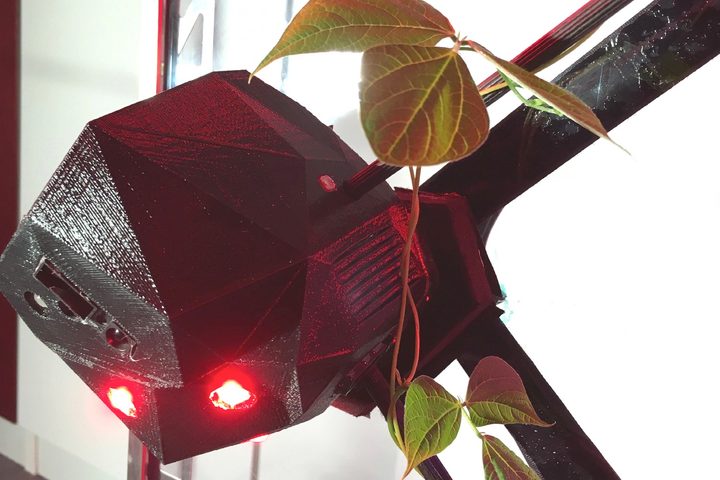
“We are coming from research on so-called ‘mixed societies’ where robots are mixed with animals,” Heiko Hamann, a professor of computer science at the University of Paderborn, told Digital Trends. “For example, there is research showing that insects can be convinced to aggregate at a different spot influenced by mobile robots. We want to mix robots with natural plants to influence them. We want to make the plants grow into shapes and forms that we determine. This way we hope to create green walls and grow roofs or even houses.”
In the short term, applications are likely to include plant-crawling robots which can dictate the growth of plants by using super-bright LEDs. “In other projects, we investigate means to slowly actuate robots that are supposed to artificially ‘grow’ very slowly in sync with the plants,” Hamann said.
Long term? Well, imagine a more literal take on the term “green city.”
“The vision is to develop generic methods for such symbiotic robot-plant societies that allow us to grow many of these things that we currently construct using many resources,” Hamann said. “The same tools could also be used to do automatic vertical gardening and urban agriculture. We envision very green cities that grow according to our needs, that grow food, and make use of a close symbiosis between technology and nature.”
Hey, it may sound like far-out stuff, but the interaction between technology and the natural world is one that has long been explored — by pioneering figures such as Buckminster Fuller and counterculture publications like the Whole Earth Catalog — not to mention the nature-inspired naming of tech companies like Apple later on.
From the sound of things, Flora Robotica is worth keeping an eye on.


