  1. Home
  2. Emerging Tech
  3. News

This lens breakthrough could put utterly cheap thermal cameras in phones and cars

A sulfur-based lens could bring thermal vision to everyday devices

Add as a preferred source on Google
Electronics, Camera Lens, Can
Produtora Midtrack / Pexels

A breakthrough in lens technology could soon put powerful thermal cameras into everyday devices like smartphones and cars at a fraction of the current cost.

According to TechXplore, scientists at Australia’s Flinders University have created a new type of infrared lens using extremely low-cost and widely available materials. These lenses could bring the expensive optics usually found only in specialist equipment to common consumer products.

Recommended Videos

Thermal cameras work by detecting infrared light released as heat from objects. They are widely used in security systems, fire detection, industrial inspections, medical devices, and vehicle safety systems.

Despite their usefulness, thermal cameras remain rare in consumer products because their lenses are costly and difficult to manufacture. Most infrared lenses today rely on materials like germanium or silicon.

These materials are expensive, hard to process, and vulnerable to damage. A single lens can cost hundreds or even thousands of dollars. This has kept thermal imaging limited to professional and industrial equipment.

A plastic-like lens that changes the cost equation

According to the research paper, the new lens is made from a polymer created using elemental sulfur and a low-cost organic compound. Sulfur is widely available and produced in large quantities as a by-product of petroleum refining. This polymer can be shaped using molding techniques similar to those used for plastics.
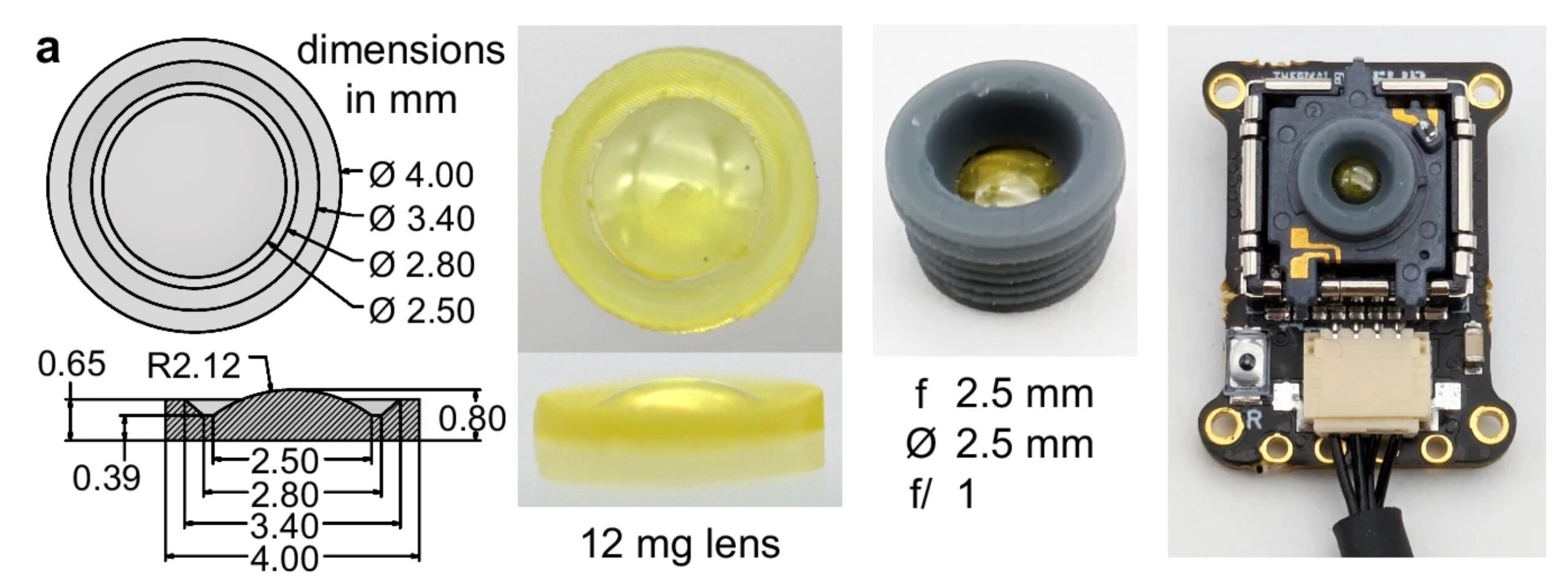
In fact, the raw material cost for a single lens can be less than one cent. These lenses can also be produced quickly, repaired if damaged, and recycled at the end of their life. Meanwhile, traditional infrared lenses are usually discarded once they crack or degrade.

The technology opens the door to embedding thermal imaging in everyday technology. Cars could use them for improved driver assistance and night visibility. Smartphones could gain heat-sensing features for safety, diagnostics, or energy monitoring.

The researchers are also working with partners at NASA to explore how this lens could be used in planetary science and other advanced imaging applications. If this technology reaches consumer devices, heat-sensing cameras could become as common as regular cameras in phones and cars.

Advancements in smartphone imaging are also accelerating on other fronts, with researchers exploring radically new camera lenses that could dramatically expand what phones are able to see and detect.

Manisha Priyadarshini
Manisha Priyadarshini is a tech and entertainment writer with over nine years of editorial experience.
Microsoft’s newest AI agent wants to take entire projects off your plate
Microsoft

Microsoft is expanding its ambitions for workplace AI with the general availability of Copilot Cowork, an agentic system designed to handle complex tasks from start to finish rather than simply offering suggestions.

After spending three months in Microsoft’s Frontier preview program, the company says Copilot Cowork is already used by more than half of the Fortune 500, alongside organizations such as Accenture, Zurich Insurance, Capital Group, and others. The rollout marks one of the fastest-growing launches in the history of Microsoft’s Frontier program, according to the company.

Read more
Online payments are dimming the charm of one of America’s top tourist attractions
One of America's last analog tourist traditions just joined the cashless economy.
Photography, Binoculars, Camera

We all know those heavy, coin-operated binoculars perched on every scenic overlook in America, the ones you’ll find everywhere from the Empire State Building to the Grand Canyon. Turns out, they’ll soon start accepting tap-to-pay payments. 

This is great news, as you’ll no longer need to carry a quarter anymore, and making payments with your smartphone is much more convenient. However, I’d argue that the quarter was kind of the whole point.

Read more
The FBI secretly built an entire fake town just to practice cyberattacks
Hidden inside a warehouse in Alabama, the Kinetic Cyber Range recreates real-world digital attacks from start to finish.
FBI Kinetic Cyber Range Featured

While Hollywood has fake cities for filming movies, the FBI apparently has one for getting hacked. The agency has pulled back the curtain on its Kinetic Cyber Range, a 22,000-square-foot replica small town hidden inside its Huntsville, Alabama campus. But instead of training officers for shootouts or hostage rescues, the facility is designed to simulate realistic cyberattacks on homes, businesses, and critical infrastructure so investigators can practice responding to them in a controlled environment.

The FBI built an entire town just to simulate cybercrime

Read more