When I want to play a video game, I have no shortage of devices that can help me do that: PlayStation 5, Xbox Series X, Xbox Series S, Nintendo Switch, PC, MacBook, Steam Deck OLED, Legion Go, Ayaneo 2S, PlayStation Portal, Meta Quest 3, PlayStation VR2, iiRcade, Playdate, iPhone, iPad, and even on my Samsung TV and Amazon Fire Stick via cloud streaming. If it can run games, there’s a good chance I have access to it.
Though I have so many gaming platforms at my fingertips, lately I’ve found myself using the most unlikely device in my closet: the Razer Edge.
Cutting Edge
Released in February 2023, the Razer Edge was a bit of a peculiar product launch. It was the second attempt in what seemed like a growing line of “cloud gaming handhelds,” which kicked off months prior with the Logitech Cloud G. The idea was to give players a dedicated device where they could stream in peace, free of constant notification interruptions. The impressive, but pricey device felt like it fell under the radar before it even came out, getting outclassed by portable PCs like the Steam Deck and Legion Go. After all, why spend hundreds of dollars on something your phone can already do?
I had my criticisms of the Razer Edge in 2023, but saw potential in the deceptively powerful Android device. Despite that, I quickly packed my Razer Edge into a closet shortly after I finished reviewing it, where it collected dust. I just didn’t feel like I had a use case that other devices I owned didn’t fill already. That’s changed in the last month; now I’m using it all the time.
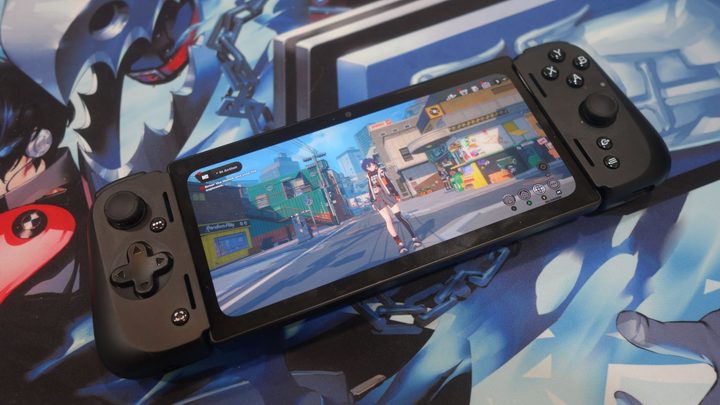
My breakthrough came when Zenless Zone Zero launched earlier this month. I was curious about Hoyoverse’s action-RPG and wanted to play on a portable device rather than a console. I initially planned to play on my iPhone, but I started remembering how disruptive that experience can be. I’m always getting texts, work messages, and other notifications that get in the way of my play sessions. That’s fine for more casual experiences, but Zenless Zone Zero is a little closer to a console game. I wanted to stay immersed in its stylish action and sci-fi worldbuilding rather than being pulled out every few minutes. That’s when I remembered my Razer Edge.
Within minutes of booting the RPG up, I remembered why I had reviewed the device so favorably in the first place. It mini-tablet screen is just big enough without sacrificing portability, it delivers high performance on a bright display, and its bundled Kishi controller is a comfortable fit in my hands. It was the perfect way to dive into Zenless Zone Zero, giving me a smooth and uninterrupted experience without giving up the portable play it was designed around.
That positive experience put the bug in me. Rather than packing it back in a closet when I was done, I left it out in my living room so I’d remember it was there and be compelled to use it more. That mental conditioning worked. When Polygon’s Nicole Carpenter wrote a recommendation for Lego Hill Climb Adventures, I went straight to my Razer Edge to download it. I was once again sold as I played in peace with no pesky pop-ups getting in my way.
One thing I’ve always appreciated about the Razer Edge is its flexible design. If I’m playing a game that doesn’t have controller support, I can snap the Kishi off and use it like a tablet. As I was enjoying my renaissance with the device, I started downloading more games that took advantage of that. I downloaded 2016’s Super Mario Run, a game I’d always meant to try, to get the most out of its touchscreen and ability to flip to a vertical orientation like a phone. The more games I played, the more I wondered why I hadn’t been doing this for the past year.
After a few weeks of playing, I scrolled back through my previously downloaded apps and remembered something else about the Razer Edge: It’s an emulation dream machine. Since it’s essentially just an Android tablet with internet access, it’s easy to get emulators and ROMs working on it. I loaded up a Game Boy emulator and spent an evening playing the 1994 version of Donkey Kong, another game that’s been on my bucket list for years. The controls instantly mapped to my Kishi with no fiddling needed. That cemented it as one of my new go-to devices.

Pros and cons
As I rediscovered the device’s power, I couldn’t help but reflect on the Razer Edge’s misguided launch. Rather than emphasizing the all-in-one nature of the Edge, Razer’s advertising was more focused on its cloud streaming aspect. The company touted its easy access to apps like Xbox Game Pass and its 5G capabilities. It was less focused on the device’s internal guts and how much that widened what the device could be used for. I get why it didn’t go that route; a company like Razer isn’t going to point players to emulators. Throw in an exorbitant price tag and the console was doomed from the start.
I’m not saying that you should go drop $400 to $600 (depending on the model) to grab a Razer Edge. That price tag is still hard to stomach when placed next to a device like the Steam Deck. There is a strong use case for it, though, and I’m finding more ways to fit that into my gaming lifestyle as I rethink what devices I use every day, from my PlayStation Portal to my smart TV.