Coming straight off of Elden Ring, I’ve been playing Tunic, the lovely Legend of Zelda-like game developed by Andrew Shouldice. And while the game is adorable and fun, it’s more mysterious than either of those others. Like the other games it reaps inspiration from (Dark Souls is clearly up there, along with Zelda), Tunic drops you straight in and says: “Here’s the game, figure it out!”
But where other games will offer comprehensive tutorials, Tunic doesn’t. In fact, the game doesn’t even use English very often, swapping out any legible language for fantasy characters and runes. While Tunic‘s mysteries are somewhat frustrating to play through, there is a use for them in the end. Players are going to figure them out eventually, and they’ll likely post solutions, questions, and theories online. Don’t be surprised if this is the next big game where you see people swapping its secrets over Twitter.
New-age forums
In a way, Tunic was made for this kind of social sharing. Figuring out its mysteries by yourself is like running into a brick wall at times. At the time of writing, I’ve sunk a healthy amount of hours into the game and still have questions like “why is there a giant sword floating in the ether?” and “how the hell do I get to that item?” I’m sure those answers could be revealed with time, but they also might not. Who knows?
Tunic doesn’t explain things the same way so many other games normally do. Elden Ring, for instance, barrages you with text boxes. Mario games let you learn through practice, slowly layering on more ideas. In Tunic, all the ideas are there already, and none of them are explained to you, at least not immediately. Instead, you have to find pages of an old-school instruction manual, each of which explains a bit of the game.
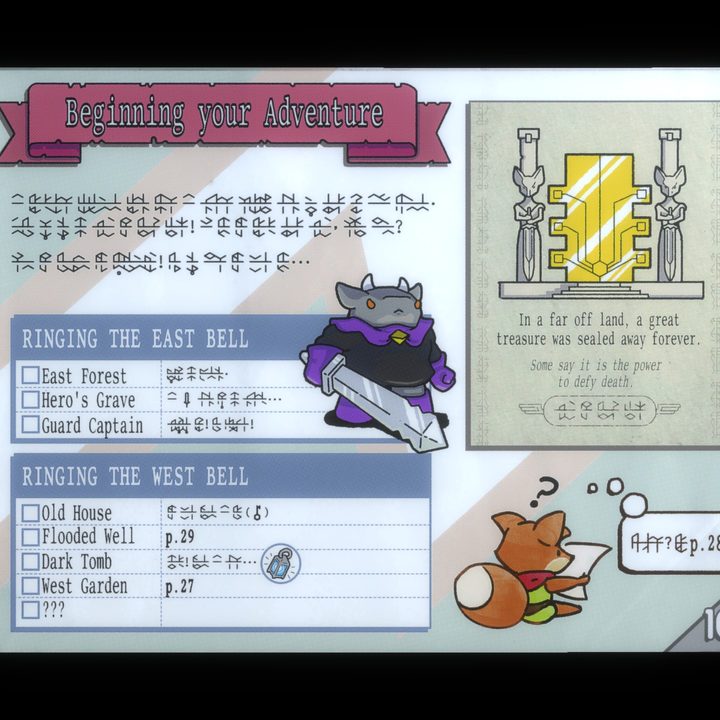
Of course, there’s a chance that you won’t find a certain page, and that a certain part of the game will go unexplained. That’s where Twitter comes in. Like it or not, the site is a new-age gaming forum where you can share new and exciting things about a game that then get picked up and shared by countless other users before becoming part of common knowledge.
And not to bring up the biggest game of the year (so far) again, but we’ve already seen this happen with Elden Ring. Players have shared their builds across Twitter, others have asked for specifics, and all of a sudden you’ve got a ton of people creating builds based around the Sword of Night and Flame and killing a massive sleeping dragon for 80,000 runes. This information spreads like wildfire, and while Tunic isn’t nearly as deep (and that’s not a dig, the game was made by one person), its mysteries might just be harder to decode.
The main difference between the two games, though, is that so many of Tunic‘s mysteries are integral to actually playing the game. Elden Ring leaves NPC and item locations in the air for players to figure out, sure, but never is the path to the next main objective a massive question mark. There are literally rays of light in the sky guiding players to their next boss fight or site of grace. Tunic takes the same approach, except everything is obtuse. Its main objectives, side content, ad more is hidden behind an unnecessary amount of vagueness. Whether it’s incomprehensible item descriptions or a simple lack of directions toward your next objective, Tunic won’t tell its players anything itself.
Out of the loop
For me, the experience of working through a game with a collective of others playing it at the same time is missing while I play Tunic for review purposes. It’s a pretty sizable game, and so much feels hidden throughout its cutesy world. Every time I move from one area to the next, I can’t shake the feeling that I’m leaving something on the table.
Of course, anyone in my position after the game launches can just look up a guide for whatever puzzle they’re trying to solve. But that’s not nearly as fun. The thrill that Tunic can supply for players is one based on community, especially in its late stages. Piecing together the game’s lore and backstory, as well as its moves and abilities that are available from the get-go, can all be explained through a guide, sure. Sharing information with other players though, that’s the kind of experience Tunic is built for. Its mysteries aren’t meant to be explained away but unraveled.
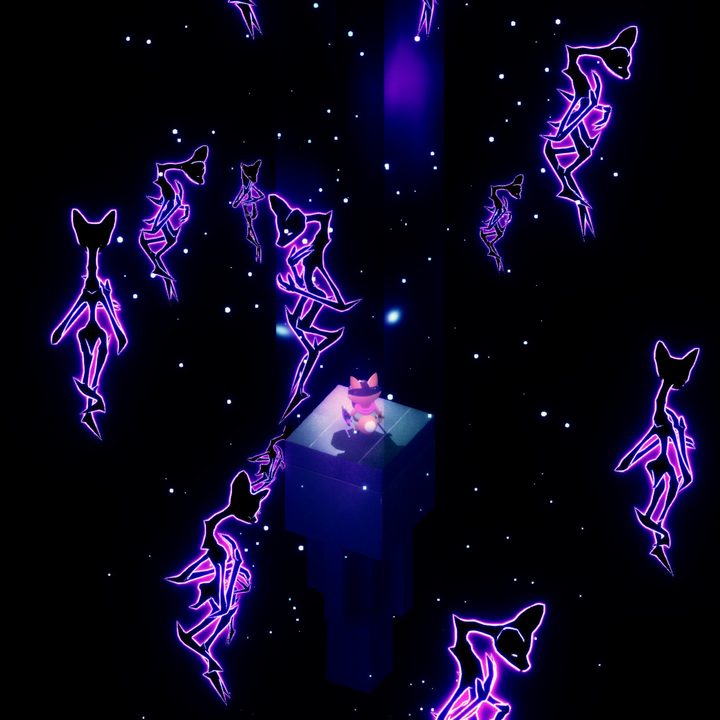
Tunic doesn’t make things clear enough at times, and that can be to its detriment. Sometimes things aren’t visually distinctive and it can be hard to see if there’s a path against a wall. But at other times, Tunic won’t tell you specific things like how to activate its fast-travel portals, or that you can parry once you get a shield, or where you can even get a shield. The game expects you to piece that all together yourself, and for what it’s worth, if I did it, you can do it too.
But there’s no reason why you should do it alone. Tunic‘s mysteries and vagueness aren’t enjoyable enough when approached by just yourself. But with a community — though that may be the wrong thing to call a bunch of strangers at-ing each other on Twitter — it can become an enjoyable puzzle to sort out.
Tunic is available now for Xbox One, Xbox Series X|S, and PC via Steam.