
You absolutely should not do what I am about to describe. It almost certainly is not recommended by or was intended by the manufacturer.
And I don’t care. Because I am about to describe one of the most enjoyable tech setups that I’ve put in my home in recent years — and it’s remained virtually untouched for the last half-decade.
First, some context: It was late summer 2017. August, in fact, when a bunch of trucks rumbled into my backyard around 7 a.m. on a Wednesday. An excavator quickly got to work, and we had the not-so-rough hole for a 16-by-33-foot swimming pool. I say “not-so-rough” because it’s amazing how accurate someone can be with one of those things if they know what they’re doing. It’s also amazing how quickly a basic pool can come together. By Saturday afternoon, we had a meager garden hose starting to fill our relatively basic pool — enough for the kids to wade in a little.
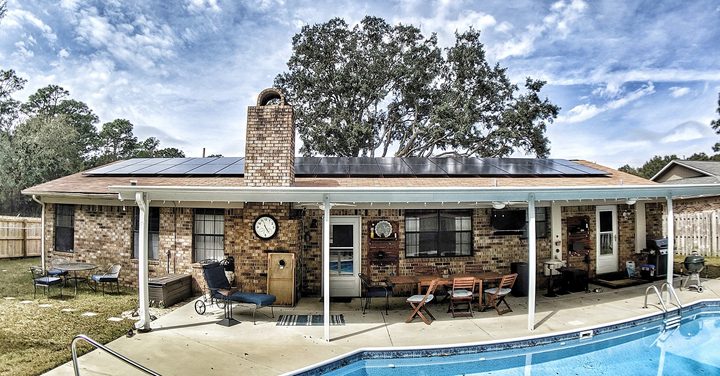
Another part of that project was to put a cover over a good portion of the concrete decking that came with the pool. Basically, we were making a new backyard living space for our early 1980s home. Any good covered, outdoor living space has to have some entertainment, of course. And I had some ideas.
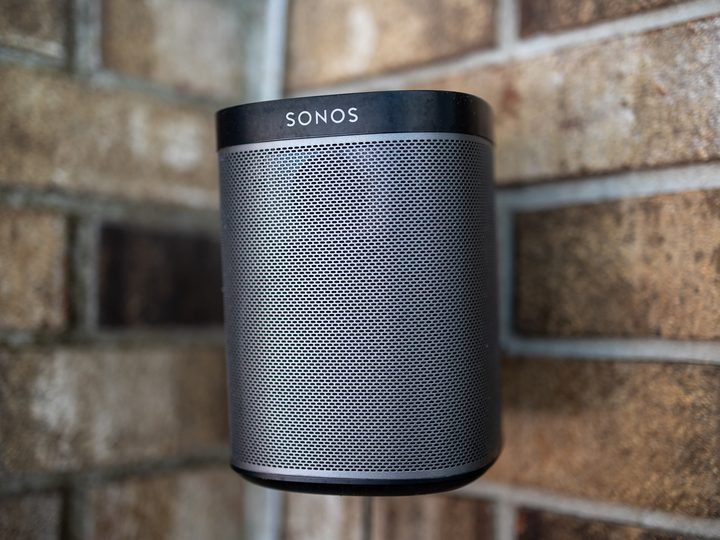
Electronics made to withstand the outdoors aren’t anything new. But they’re still, generally speaking, much more expensive than something meant to be indoors. And that makes sense — you have to over-engineer for the elements. I didn’t want to deal with that. I already had a perfectly good Sonos Play:1 (this was a couple of months before the Sonos One was announced) on hand. I’d heard them in an outdoors settings any number of times and it was plenty obvious that one was pretty powerful. Plus, it’s portable enough — easy to bring in and out at will.
But that’s not what I wanted to do. If one Sonos speaker is already excellent, then two paired in stereo must be that much better, right? (Spoiler: True.)
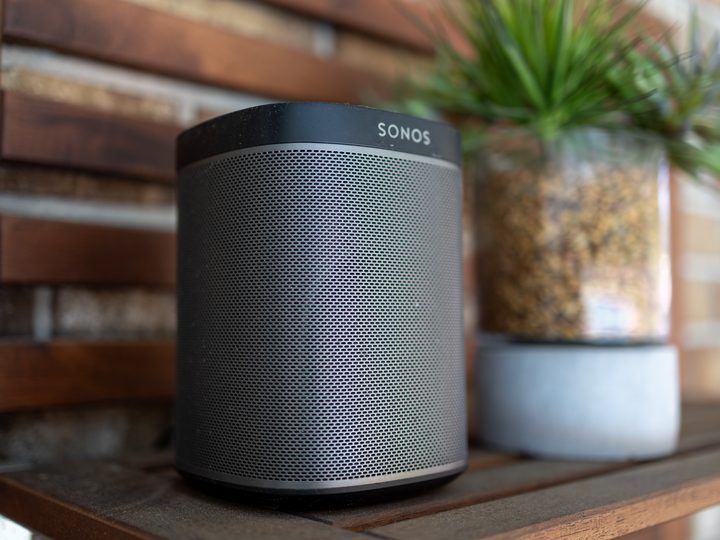
So I picked up a second Play:1, and a wall-mount for one of them. (The other is sitting on a shelf about 20 feet or so away.) Making a stereo pair out of a couple of Sonos speakers requires just a couple of taps. And that remains as true today as it was six years ago.
And since then, I haven’t really had to think about it, except to say that when I do, I marvel at how well this setup has worked, and for how long. After nearly six years in the Florida heat and humidity (and the occasional freeze, because Northwest Florida is weird like that), my pair of Play:1s performs as well as it did on Day 1. I can count on one hand the number of times I’ve actually brought them inside — Hurricane Sally in 2020. I’ll occasionally wipe off the top of the speakers because pollen is another deadly threat here. But that’s it.
Otherwise, they just sit there, doing their thing.
Note that there’s no way I’d do this with something like a new Sonos Era 100. And probably not with a pair of Sonos One SL. At least not at retail prices. But if you can get something used, say, for $100 or so each? That’s worth considering.
Perhaps I shouldn’t be so surprised at how well all this worked. The OG Play:1 was actually designed to be humidity-resistant. But that almost certainly was meant for in-home environments like a bathroom, or maybe a kitchen. Living 24/7 outdoors in Florida is decidedly not that. Think of Florida more like a vindictive sauna seeking retribution against all who wished it ill, only with even worse politics. It’s like if someone were to continuously throw water balloons inside of an oven and then stand back and laugh.
It’s hot. And it’s humid. And I can’t spend as much time out back as I’d like.
But at least when I do it sounds good.


