Amazon Alexa and Apple Home are two of the best smart home platforms around. Both support hundreds of devices, dozens of product categories, and offer a simple way to automate your smart home. However, there are some big differences between these two technologies, and choosing the wrong one could prevent you from syncing your favorite devices. Not all of the products that work with Apple Home (sometimes referred to as HomeKit) work with Alexa, meaning you need to be careful when choosing which to adopt.
Thankfully, both are excellent choices for your home. They also work with Matter, allowing you to access gadgets outside their primary platform. Choosing the right option for your home largely comes down to personal preference — and you should base your decision on which products you plan to use with the software. Love your Echo Show? Opt for Alexa. Prefer your HomePod? Apple Home is the better choice.
Here’s a closer look at Amazon Alexa and Apple Home to help you find the best platform for your needs. This includes a look at supported devices, hubs, and ease of use.
What is a smart home platform?

Smart home platforms offer a centralized place to control all your smart home products. After loading up the software (whether it be on your phone or a hub device), you’ll be able to see a list of everything in your smart home and have easy access to all its controls.
Of course, you don’t necessarily need to use a smart home platform, as most smart home products come with their own standalone applications. But if you have tons of gizmos sitting around your house, each with its own app, it can be cumbersome to flip through all of them to carry out basic tasks. With a smart home platform such as Alexa or Apple Home, everything in your home can be accessed in one unified location.
Hub devices
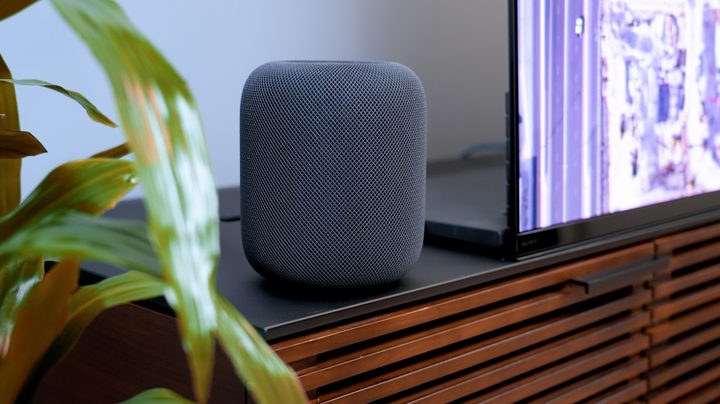
Hub devices are the center of most smart homes, with both smart speakers and smart displays giving you ways to control the rest of your setup. However, Apple doesn’t have the most robust selection of HomeKit hubs, as you’ll largely be limited to the HomePod, HomePod mini, Apple TV 4K, or a standard iPad Pro.
Note that iPads are no longer supported as a home hub on the new Home architecture, meaning you’ll likely want to use an Apple TV 4K or a HomePod as the brains of your operation.
Amazon Alexa, meanwhile, works with the entire Echo lineup (which includes a variety of smart displays and smart speakers), as well as third-party products like the Sonos One or Bose Home Speaker 500. Amazon also seems to be churning out more smart home hubs for Alexa than Apple is for HomeKit. In fact, Apple doesn’t even have a dedicated smart display for Home — although that could be changing in the future. So if you’re set on adding a smart display to your home, you might have to wait a while if you pick Apple Home.
Winner: Alexa
Compatible devices

Without a doubt, Amazon Alexa is supported by more products than Apple Home. From video doorbells and smart thermostats to smart speakers and robot vacuums, it’s hard to find a product that doesn’t work with Amazon’s smart home platform. Amazon itself churns out some of the best products for Alexa, including the Amazon Smart Thermostat, Blink Video Doorbell, and more.
Apple falls far behind Amazon in terms of sheer number of compatible products, but its smaller pool is arguably of similar quality. So while you won’t have dozens of smart speakers to choose from, having HomePod and HomePod mini support with HomeKit is a big win. There are also plenty of third-party products that work with HomeKit, including popular items from Nanoleaf, Schlage, and Ecobee. Expect to see this number balloon further as Matter continues to roll out to more products.
For now, however, it’s hard to go wrong with Amazon Alexa, as you’re all but guaranteed to find something that fits your needs. Apple Home is no slouch, but its catalog is a bit smaller and typically a bit more expensive than the competition.
Winner: Alexa
Ease of use

With intuitive smartphone apps and responsive voice assistants, both Apple Home and Alexa are remarkably easy to use. Alexa works across both Android and iOS smartphones, while Apple Home is limited to iOS devices, but aside from that quirk, controlling your smart home is as simple as opening an app.
Winner: Tie
Verdict

If you’re glued to the iOS ecosystem and don’t mind a smaller pool of products to choose from, there’s nothing inherently wrong with Apple Home. It’s functional, easy to use, and supports more than enough products to build a robust smart home.
Alexa, however, is an easy recommendation for everyone. With a catalog that’s bursting with top-tier products, you’ll never have a problem finding something that fits your needs and budget. Shoppers on a budget will find Alexa to be an incredible option, as you can pick up the Echo Pop to use as a hub for just $40 (and it’s often on sale for much less).
Alexa is also a great voice assistant, capable of tackling any task you throw its way. Siri performs voice tasks just as well as Alexa, but the fact that it’s limited to fewer products makes HomeKit harder to recommend.
All told, Alexa is probably a better choice for your smart home than HomeKit. With a wider variety of products and support for both Android and iOS devices, it’s hard to go wrong with Amazon’s comprehensive platform. HomeKit is a close second, but with fewer options and some big omissions, there’s not much of a reason to pick it over the competition.