1. Home
  2. Phones
  3. News

Android phones will soon warn you about apps that are sucking up too much battery juice

A stricter wake-lock policy could finally put an end to apps that keep your phone awake long after you’ve put it down, improving the battery life.

Add as a preferred source on Google
Battery settings percentage splash screen on the Google Pixel 10 Pro in Obsidian
Nirave Gondhia / Digital Trends

What’s happened? Google is cracking down on Android apps that cause excessive battery drain by rolling out a new metric and updated Play Store policy.

  • Per the Android Developers Blog, the new metric is called “excessive partial wake locks.” It has recently graduated from beta.
  • Google defines a user session as excessive if an app holds non-exempt wake locks for more than two cumulative hours in a 24-hour duration.
  • If an app crosses the “bad behavior threshold,” i.e., if 5% or more of its user sessions over the last 28 days are “excessive” in nature, the app will be penalized starting March 1, 2026.

The “Excessive Partial Wake Locks” metric is now GA in Android Vitals! 🔋

Find & fix battery-draining wake locks. Vitals now provides a new wake lock names table (P90/P99) to make debugging easier.

Improve your app’s power efficiency → https://t.co/m4vdTHkEYY pic.twitter.com/FvEBMbLTOq

— Android Developers (@AndroidDev) November 10, 2025

Why is this important? The penalization includes exclusion from the prominent discovery surfaces, such as recommendations in the Google Play Store. Furthermore, the app’s listing may display a red warning label that reads “This app may use more battery than expected due to high background activity.”

  • Google has co-developed this metric along with Samsung, combining its Android platform data with Samsung’s real-world device and battery-related insights.
  • Android developers can already access the new metric in the Android Vitals console and should make any required changes ahead of the March 1, 2026, deadline.
Recommended Videos

Why should I care? For those catching up, wake lock is a mechanism in Android phones that allows an application to keep your phone awake by accessing the screen, the CPU, or both, when you aren’t actively using it.

  • While there are times when apps need to stay awake in the background (such as when you’re playing music with your phone’s screen off), a poorly designed app might abuse the wake lock functionality by holding it longer than necessary. This often results in excessive battery consumption.
  • Given that battery drain is one of the most common issues for Android devices, the update to core metrics and Play Store policies will help address it on the developer side, while consumers can still implement additional battery-saving techniques.
  • You’ll likely see warnings on Play Store listings about apps that use more battery than is necessary. Over time, the new metric will discourage apps from misbehaving, leading to better battery life for virtually all Android smartphones.

OK, what’s next? The addition will especially benefit users with an older or lower-sped Android smartphone.

  • Google will enforce the new Play Store policy beginning March 2026, giving developers enough time to optimize their apps (also encouraging developer best practices).
  • In the future, we could see more granular Android Vitals metrics to help reduce the number of low-quality apps on the Play Store.

Shikhar Mehrotra
For more than five years, Shikhar has consistently simplified developments in the field of consumer tech and presented them…
Oppo’s Bubble is the fun MagSafe accessory Apple still refuses to make
This tiny selfie screen is MagSafe accessory phones badly need
Oppo Bubble official images with the AMOLED display

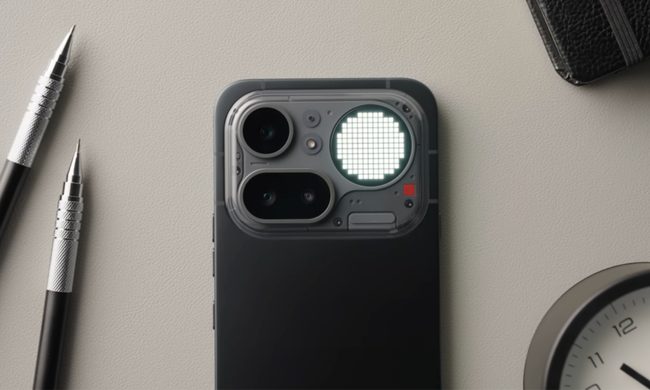
Oppo has launched a new phone accessory in China called the Oppo Bubble, and it's surprisingly versatile. It functions like a selfie tool, while also being a tiny rear display, a playful phone add-on, and a fun accessory in general. All of this would have it dominate tech TikTok a few years ago.

Announced alongside the Reno 16 series, the Bubble is a compact magnetic circular display that attaches to the back of supported Oppo smartphones. The tiny gadget basically acts like a secondary screen that helps in taking better selfies, which is honestly handy. It is small, light, and customizable, while also upgrading your selfies or group photos thanks to the better rear cameras. You'd usually have to guess the framing with your rear cameras, but this just makes it work.

Read more
A developer built Quick Share from scratch for phones Google forgot, and it actually works
Bada gives the millions of Android devices locked out of Google's Quick Share a working file-sharing solution.
Electronics, Phone, Mobile Phone

Google's Quick Share is the kind of feature you don't think about until the day you need it and your phone simply doesn't have it. Huawei device owners live in that reality permanently, given that they don’t have access to Google Play services, and so does anyone running the Chinese regional build of Android. 

However, a developer with the handle Kyujin-cho just published an open-source Android app called Bada on GitHub that seems to solve exactly this problem. It does so by implementing Google's own Quick Share protocol from scratch, circumventing the lack of Google Play Services.

Read more
Samsung’s next budget flagship just leaked, and here’s what it looks like
The Galaxy S26 FE is months away, but case renders are already here to spill the beans.
A hand holding the Galaxy S25 FE, the screen is on and facing the camera

Samsung has a busy second half of 2026 lined up, with several Galaxy devices in the pipeline. Apart from the expected Galaxy Z Fold 8 and Ultra launch, one of the most anticipated launches aimed at the affordable market is the Galaxy S26 FE. 

We are still a few months away from its official debut, but as reported by SammyGuru, a third-party case maker has already listed protective cases for the phone, giving us our first look at its design from multiple angles.

Read more