1. Home
  2. Phones
  3. Apple
  4. Mobile
  5. Evergreens

Do you need to erase your device? Here’s how to turn off Find My iPhone

Add as a preferred source on Google

Find my iPhone is one of those very useful features that you want to have turned on. It can prevent a thief from erasing your iPhone, or it can help you locate your device. It also lets you erase it remotely, lock it, or simply send an alert.

As long as Find My iPhone is turned on, you can’t erase your iPhone. There are times when you will want to know how to turn off Find My iPhone, such as when you’re getting ready to sell your iPhone to trade it in for a new iPhone 8 or iPhone X.

Recommended Videos

How to turn off Find My iPhone

Step 1: Go to Settings > [your name] > iCloud > Find My iPhone.

Step 2: Swipe the green toggle to the off position.

Step 3: Enter your Apple ID password and tap Turn Off.

Are you selling your iPhone? Read this!

Image used with permission by copyright holder

Some people want to sell their iPhone, and this is the reason why they need to turn off Find My iPhone. The first thing to do before you move on to your next iPhone is to back up your current iPhone. If you don’t know how to do that, follow our guide on how to backup your iPhone with and without iTunes.

Keep in mind that before you erase and sell your iPhone, it is important for you to sign out of iCloud and iTunes and App Store. When you go to Settings > [your name], you will see Sign Out at the bottom of that page. Make sure that you sign out of your iCloud account, so that the new owner won’t be asked to enter your Apple ID and password.

Are you still learning how to use iOS? Let us help you master it with our best tips and tricks for iOS 11.

Carlos Vega
Carlos has been involved in computers since 2000, when he earned his MCSE and A+ certifications. A love for technology turned…
Nimble’s SharePower breaks in half, and it’s the coolest power bank idea I’ve ever seen
Body Part, Finger, Hand

Portable chargers are boring — that’s not necessarily a criticism. Most power banks are supposed to be boring. They sit in a backpack, save your phone from dying, and disappear back into a drawer when they’re done. Every year, companies try to spice things up with bigger batteries, faster charging, or sleeker designs, but the basic formula rarely changes.

That’s why Nimble’s new SharePower immediately caught my attention. It may be the coolest power bank idea I’ve seen in years, not because it charges faster than the competition, but because it solves a surprisingly human problem. SharePower is a 10,000mAh portable charger composed of two magnetically attached 5,000mAh batteries. Snap them together, and you have a standard power bank. Pull them apart, and each half becomes its own portable charger. So, you can literally split your battery with someone else.

Read more
This upcoming foldable is taking zoom capture to ridiculous levels, far ahead of Apple and Samsung
Vivo’s X Fold 6 is packing the kind of zoom that puts other foldables to shame
Hinge view of Vivo X Fold 5 foldable phone

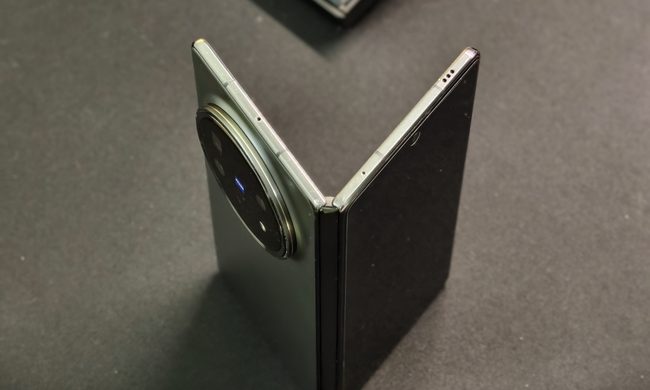
Foldable phones have usually been great at multitasking, but aren't known for their photography prowess. Recent offerings from Chinese brands have been the exception, and now, Vivo might be pushing the boundaries once again. Ahead of its launch in China later this month, Vivo has confirmed several major camera and display details for the Vivo X Fold 6.

However, the real headline-grabber is support for the ZEISS G2 telephoto converter, an accessory that lets the foldable shoot at a 200mm equivalent focal length.

Read more
UK plans social media ban for under-16s in major online safety push
The UK wants kids to touch grass instead of scrolling TikTok
Representative Image

The United Kingdom is preparing one of the world's toughest restrictions on children's access to social media after Prime Minister Keir Starmer announced plans to ban users under the age of 16 from accessing major social networking platforms.

If implemented, the proposal would affect some of the world's largest online services, including TikTok, Instagram, Facebook, Snapchat, YouTube, and X. While the first phase of the regulations is not expected to take effect until spring 2027, the announcement signals a significant shift in how governments are tackling online safety concerns among young people.

Read more