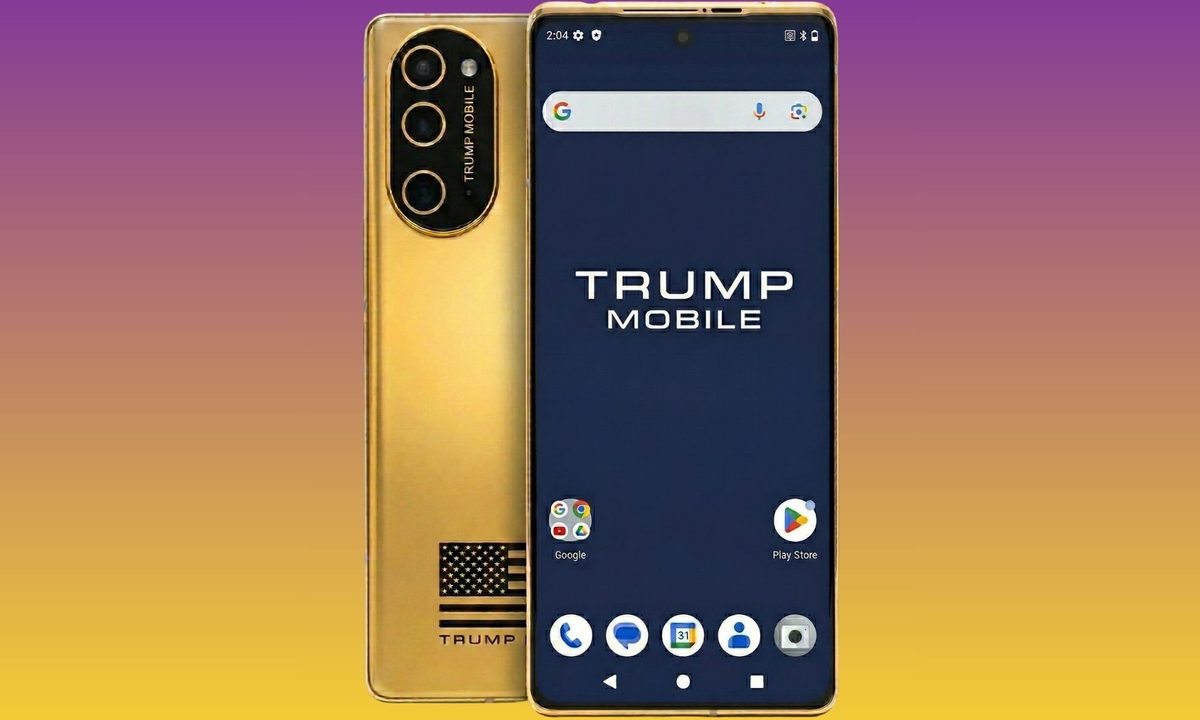
When the Trump Mobile T1 was announced, it arrived wrapped in the kind of marketing language you’d expect from a product tied to Donald Trump: bold claims, patriotic branding, and plenty of references to American values. What wasn’t immediately clear was what made the phone itself special.
Now, thanks to a detailed teardown and CT scan analysis by iFixit, we appear to have an answer. And it’s not exactly the revelation Trump Mobile was probably hoping for. After peeling back the gold-colored exterior, investigators found what looks remarkably like another smartphone already on the market: HTC’s U24 Pro. That’s awkward for a device marketed as something distinct.
Beneath the gold paint, the similarities pile up quickly
Smartphones often share components — that’s normal. The industry is built on common suppliers, shared manufacturing partners, and reference designs. But what makes the T1 interesting is how little seems to separate it from HTC’s existing hardware.
The internal layout reportedly mirrors the U24 Pro almost component-for-component. Are the camera placement differences visible from the outside? Apparently, little more than cosmetic adjustments. The flash assembly wasn’t relocated internally; instead, a longer cable was used to make it appear different from the exterior. Even the speaker system appears unchanged. The only noticeable variation is a slightly altered grille pattern machined into the chassis.
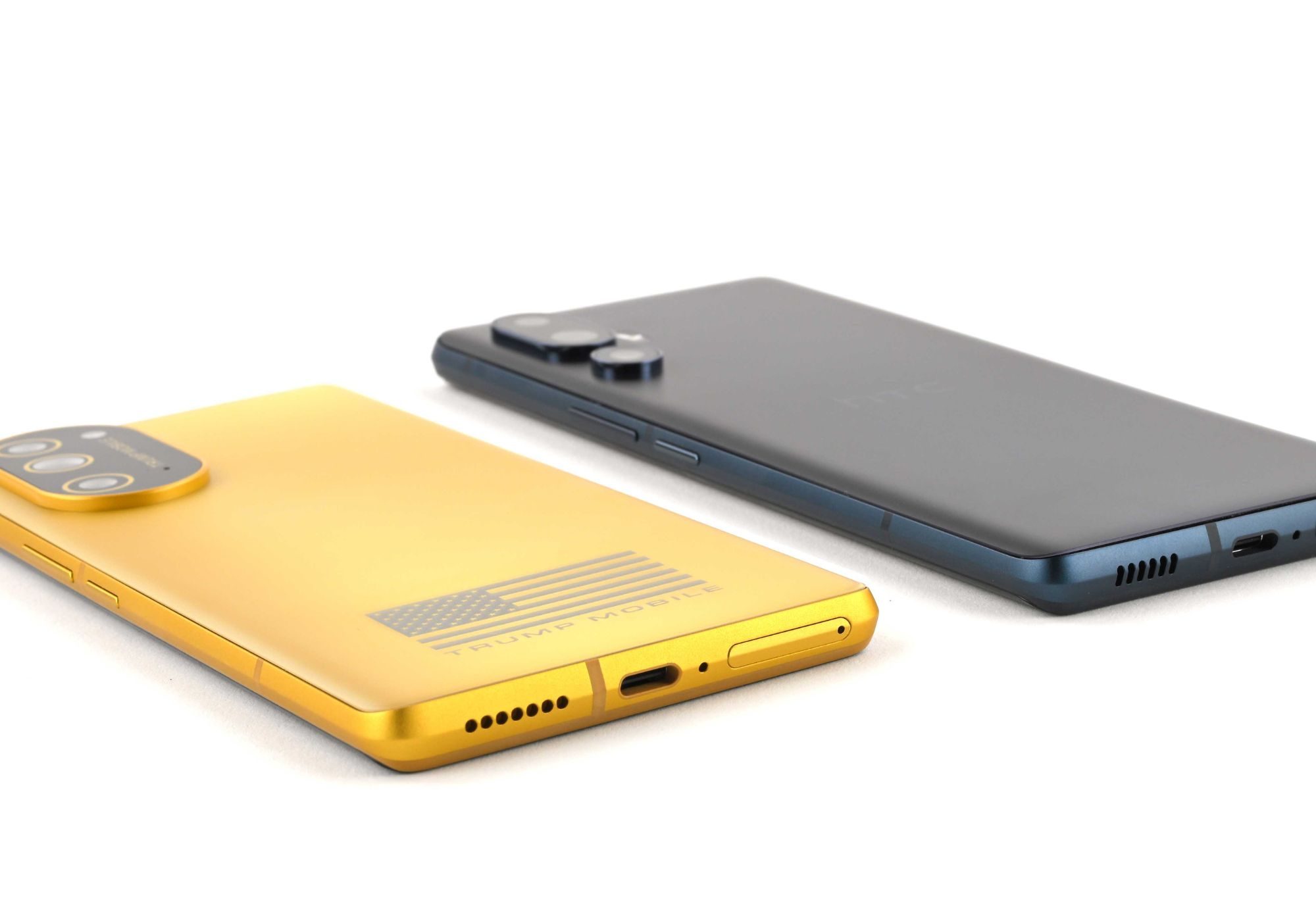
Think of it like buying a sports car only to discover it’s the same sedan underneath with a new paint job and different wheels. Technically, it looks different. Mechanically, it’s telling a different story. The display tells a similar tale. While the Trump Mobile marketing materials list slightly different screen dimensions, teardown findings suggest the panel is effectively the same one used in HTC’s device. The deeper researchers dug, the harder it became to find meaningful distinctions.
Motherboard layouts match, component placement matches, screw locations match, and even the anti-tamper stickers sit in the same places. At that point, that’s basically shared DNA.
The “Made in America” question remains complicated
The more fascinating part of the teardown isn’t actually the HTC connection — it’s what the findings reveal about Trump’s broader manufacturing claims. For months, the phone has been wrapped in messaging emphasizing its American identity. Yet the hardware itself paints a more complicated picture.
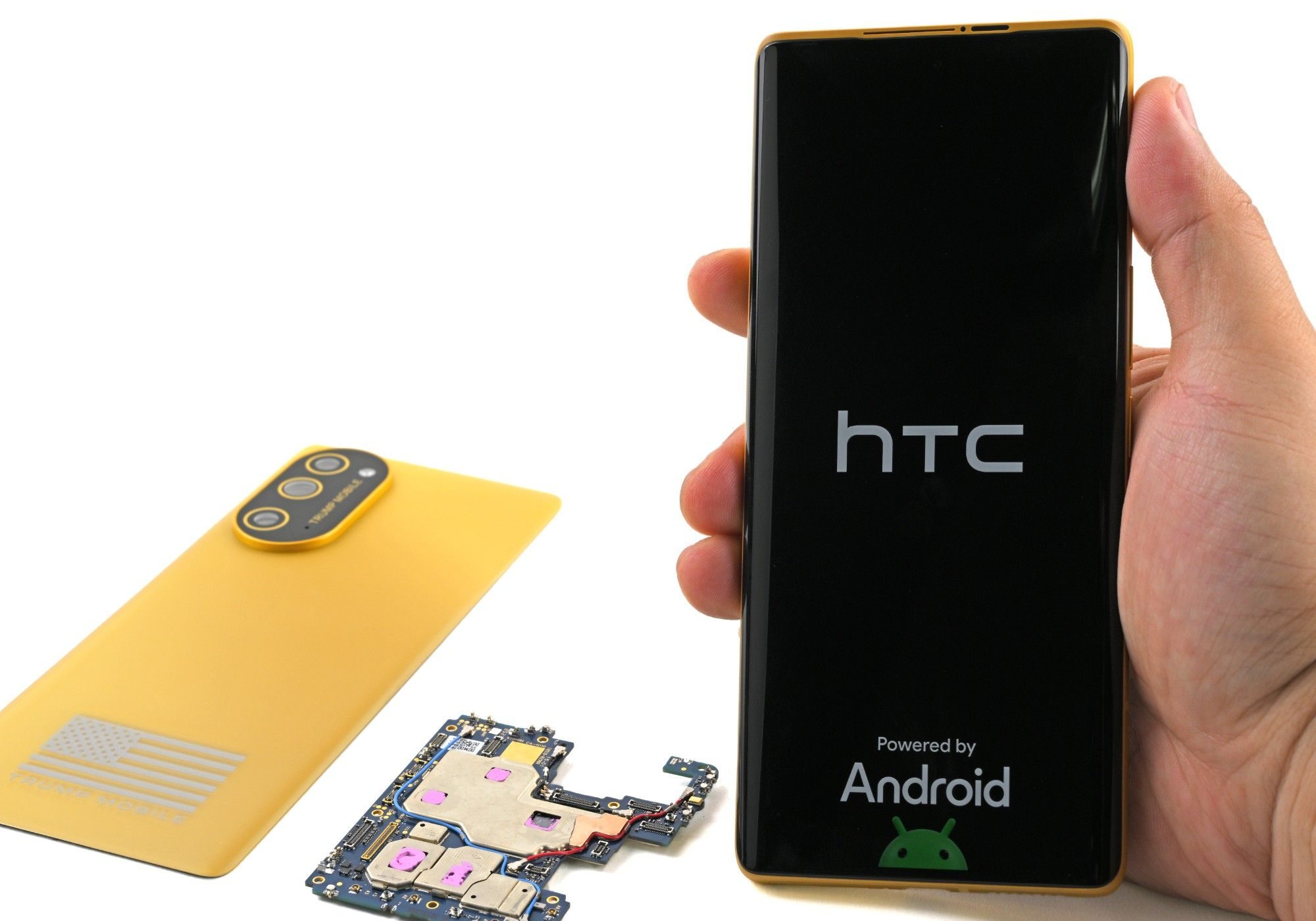
According to the teardown analysis, the T1 appears to rely heavily on the same global supply chains that power virtually every Android phone on the market. Researchers believe many of the device’s components trace back to existing production lines in China, which would make sense given the phone’s rapid development timeline and aggressive pricing. There is one notable exception: the battery.
Unlike most smartphone batteries, which are typically sourced from China, the T1’s battery reportedly comes from a Philippine manufacturer. It also offers a larger capacity than the HTC model, though that gain comes at a trade-off. Charging speeds are capped at 30 watts, while the HTC U24 Pro supports 60W charging. Still, one battery component doesn’t fundamentally change the bigger picture.
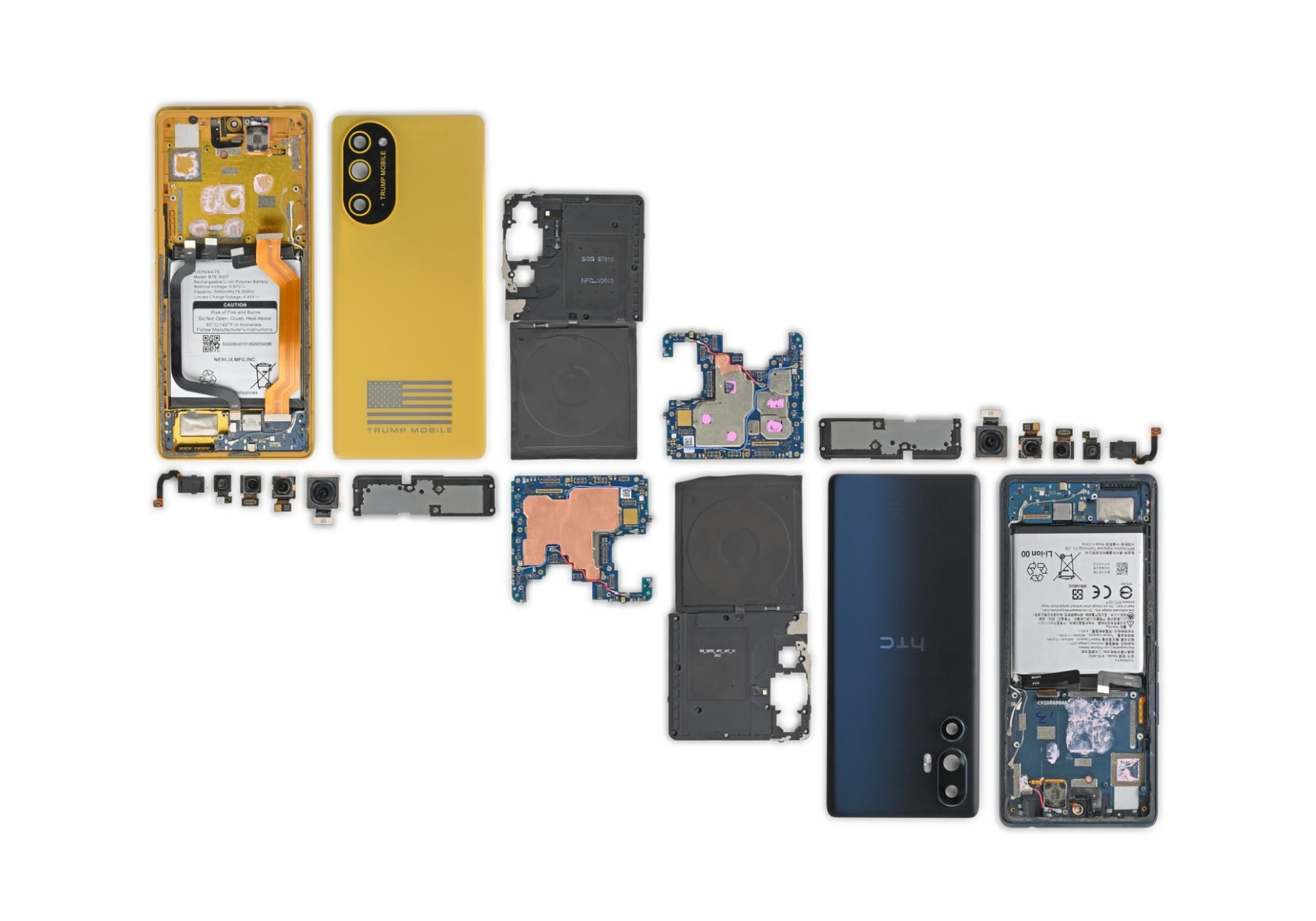
Building smartphones domestically is extraordinarily difficult. The challenge isn’t just assembling parts; it’s creating an entire ecosystem of suppliers, manufacturing expertise, tooling, logistics, and skilled labor. That’s why even companies with vastly greater resources than Trump Mobile rely on international supply chains. The reality is that “assembled in America” and “made in America” are very different claims. The former may involve putting together imported components on U.S. soil. The latter requires a far deeper domestic manufacturing footprint that very few consumer electronics products can genuinely achieve.
A familiar phone wearing a different badge
Perhaps the most surprising conclusion from the teardown is that the T1 isn’t necessarily a bad value. In fact, based purely on specifications, it compares fairly well with the HTC device it’s believed to be derived from. Buyers aren’t paying dramatically inflated prices for weaker hardware, which is often the fear when celebrity branding enters the equation; the bigger issue is transparency.
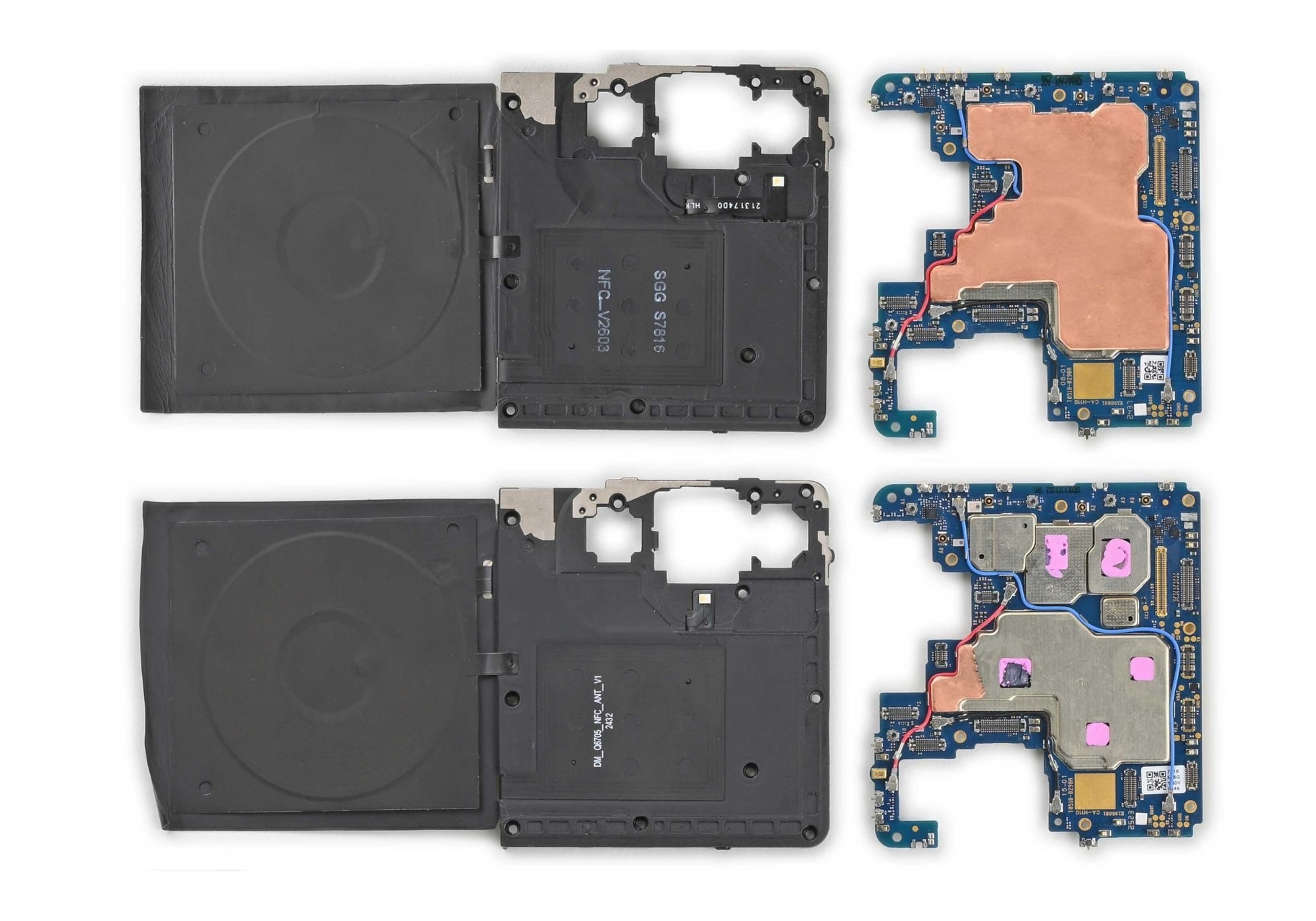
Consumers were led to believe they were getting something uniquely American, distinctly different from what was already available. The teardown suggests the reality is far less dramatic: a largely existing smartphone design dressed up with a new identity and a patriotic marketing campaign.
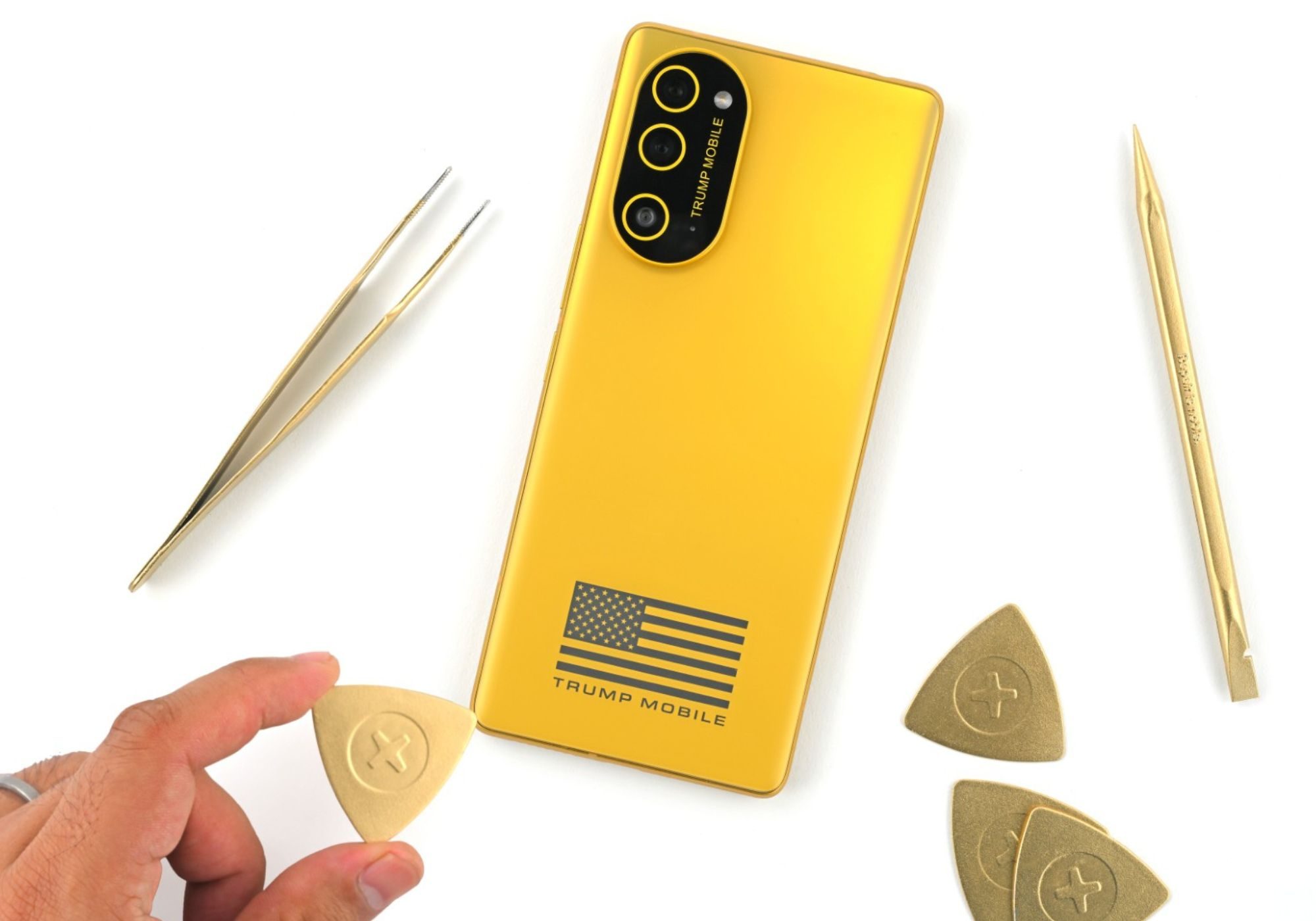
That’s not unusual in the smartphone industry. White-label devices and ODM partnerships have existed for years. Smaller brands frequently license designs from manufacturing partners rather than creating phones from scratch. What’s unusual is how aggressively the T1 was marketed as something special. After all the talk about American pride, domestic production, and a new vision for smartphones, the teardown’s conclusion feels almost anticlimactic. The Trump Phone wasn’t hiding a revolutionary new design; it was actually hiding an HTC phone and not particularly well.