
Verily Life Sciences, formerly Google Life Sciences division, wants to build a model of perfect human health. To do so, it is launching Baseline, a multi-year study with thousands of volunteers who will regularly supply metrics on sleep, fitness, heart rate, genomics, and more.
Baseline, which Google announced in 2014, seeks to “create a map of human health” — an “early discovery platform” that will nail down key correlations between physiological changes and disease. Verily, which is undertaking the study with Duke University and the Stanford Unversity School of Medicine, will enroll about 10,000 participants from half a dozen study sites in California and North Carolina. That is up from a pilot in about 200 people that began three years ago.
“What we are really aiming to do is figure out how do we identify people who have a change in their health where we can make an intervention so they don’t come into the hospital?,” Adrian Hernandez, a professor of medicine at Duke, told Business Insider.
Researchers will recruit subjects across a range ethnicities and age groups, including groups at risk of chronic diseases like diabetes and heart disease, to build a nationally representative sample. Participants will have their genomes sequenced and get blood work done at study sites run by Duke and Stanford. Over the course of a year, they will respond to survey questions and upload data from the Study Watch, a digital timepiece that measures electrodermal activity and heart rate.
Verily’s current plan calls for a four-year study, the findings from which will be made available to “qualified researchers.” Jessica Mega, the chief research officer at Verily, told The Verge that an “executive committee” will review and approve requests for data. Initially, the scope is limited to cancer and heart disease, but researchers hope to extend its length. That will depend on funding, partially — Bloomberg pegs the Baseline study’s cost at $300 million.
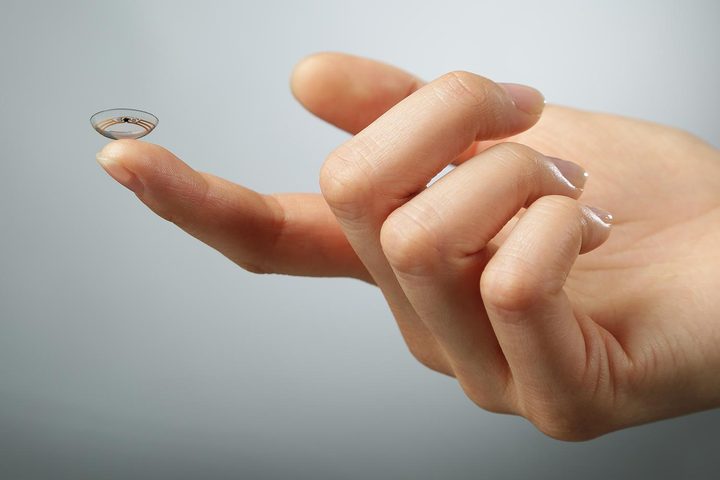
Baseline may be Verily’s largest project yet, but it is far from its only one. The health spinoff, which has attracted funding from Singapore investment firm Temasek Holdings and pharmaceutical companies like GlaxoSmithKline, Novartis, Johnson and Johnson, Biogen, and Dexcom, has been developing glucose-monitoring and autofocus contact lenses. It makes tableware designed to make it easier for people with hand tremors to eat independently, and it’s partnered with a surgical robot spin-out company and a bioelectronics company working to develop ways to use electric signals to treat chronic illnesses.


