NASA has announced the four crew members who will be traveling around the moon for the Artemis II mission, the first time that humans will have left low-Earth orbit in over 50 years.
The crew consists of three NASA astronauts and one Canadian Space Agency (CSA) astronaut, who will travel on a 10-day flight using the recently tested Space Launch System rocket and Orion spacecraft which flew uncrewed on the Artemis I mission late last year. They will test out new technologies and systems ahead of a planned Artemis III mission which will see humans land on the moon for the first time since 1972.
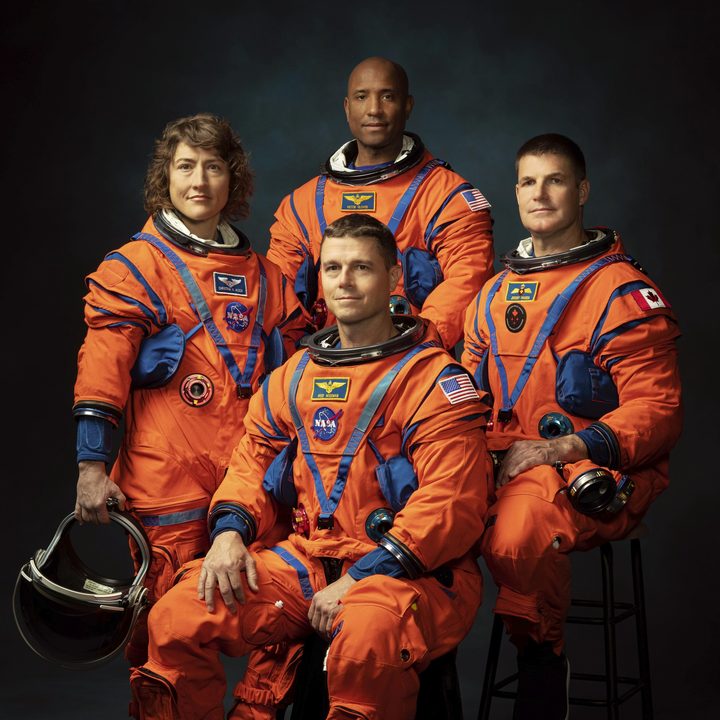
“For the first time in more than 50 years, these individuals – the Artemis II crew – will be the first humans to fly to the vicinity of the Moon. Among the crew are the first woman, first person of color, and first Canadian on a lunar mission, and all four astronauts will represent the best of humanity as they explore for the benefit of all,” said Director Vanessa Wyche, NASA Johnson, in a statement. “This mission paves the way for the expansion of human deep space exploration and presents new opportunities for scientific discoveries, commercial, industry and academic partnerships, and the Artemis Generation.”
The Artemis II crew consists of NASA astronauts Christina Koch, Victor Glover, and Reid Wiseman, plus CSA astronaut Jeremy Hansen. Koch is known for being part of the first all-woman spacewalk and for breaking the record for the longest single stay in space by a woman, while Glover was a member of the historic Crew-1 mission. Wiseman has also previously been to space and served on the International Space Station in 2014, while Hansen will be traveling to space for the first time.
“I could not be prouder that these brave four will kickstart our journeys to the Moon and beyond,” said Director of Flight Operations Norm Knight, NASA Johnson. “They represent exactly what an astronaut corps should be: a mix of highly capable and accomplished individuals with the skills and determination to take on any trial as a team. The Artemis II mission will be challenging, and we’ll test our limits as we prepare to put future astronauts on the Moon. With Reid, Victor, Christina, and Jeremy at the controls, I have no doubt we’re ready to face every challenge that comes our way.”
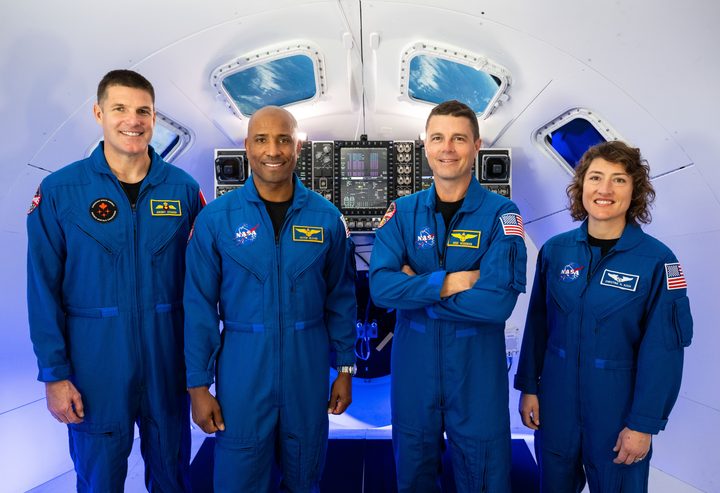
The crew is scheduled to launch from NASA’s Kennedy Space Center in Florida in November 2024, following a complex path that will take them out around the far side of the moon and back. They will be testing out technologies to support human spaceflight such as Orion’s life support functions, enabling future crewed missions aiming to land on the moon and stay there long-term.
“The Artemis II crew represents thousands of people working tirelessly to bring us to the stars. This is their crew, this is our crew, this is humanity’s crew,” said NASA Administrator Bill Nelson. “NASA astronauts Reid Wiseman, Victor Glover, and Christina Hammock Koch, and CSA astronaut Jeremy Hansen, each has their own story, but, together, they represent our creed: E pluribus unum – out of many, one. Together, we are ushering in a new era of exploration for a new generation of star sailors and dreamers – the Artemis Generation.”