
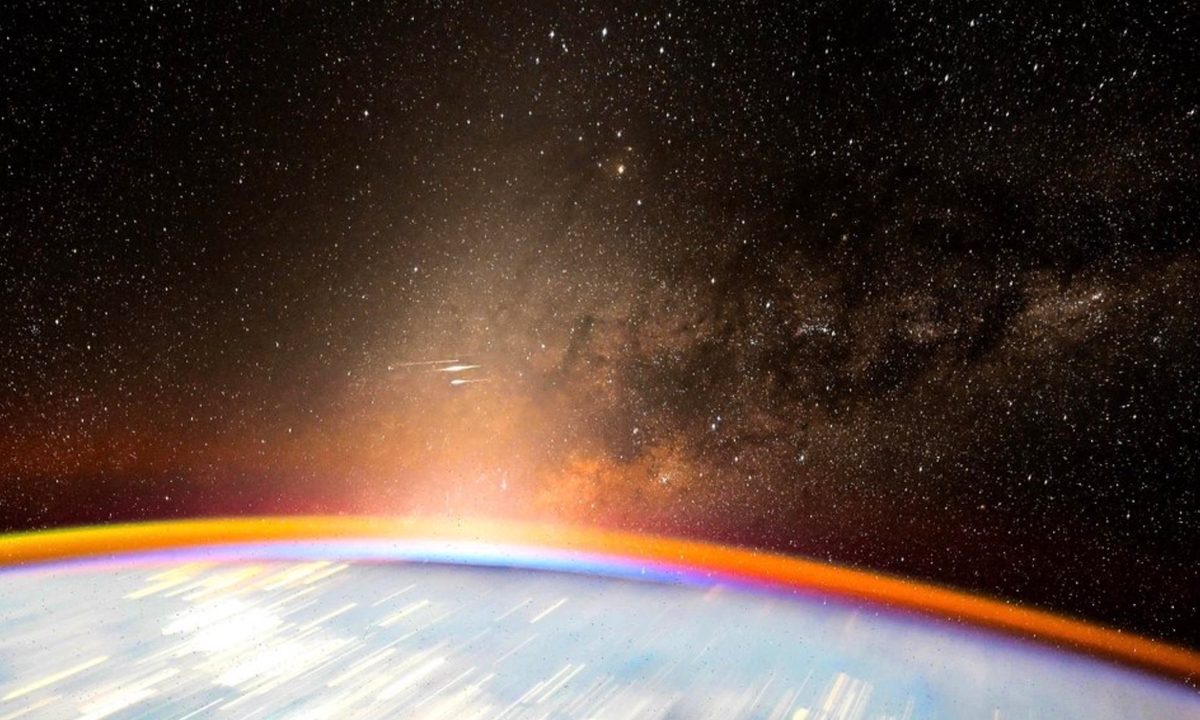
NASA astronaut Don Pettit has been busy with his camera again. The crack photographer recently shared another stunning image, this one captured from the window of a Crew Dragon spacecraft docked at the International Space Station (ISS).
“One photo with: Milkyway, Zodical [sic] light, Starlink satellites as streaks, stars as pin points, atmosphere on edge showing OH emission as burned umber (my favorite Crayon color), soon to rise sun, and cities at night as streaks,” Pettit wrote in a post accompanying the photo.
One photo with: Milkyway, Zodical light, @Starlink satellites as streaks, stars as pin points, atmosphere on edge showing OH emission as burned umber (my favorite Crayon color), soon to rise sun, and cities at night as streaks. Taken two days ago from Dragon Crew 9 vehicle port… pic.twitter.com/iCIXwgw9JB
— Don Pettit (@astro_Pettit) January 13, 2025
Earth is easily identified at the bottom of the picture, as are the many stars that dot the rest of the image. Look more closely, however, and you’ll see a number of streaks in the blackness, which Pettit identifies as SpaceX Starlink satellites that provide internet connectivity to folks back on terra firma.
The Milky Way can also be seen sweeping across the center of the photo, while the zodiacal light that Pettit mentions is the faint, diffuse glow that appears as a triangular or cone-shaped illumination. This ethereal phenomenon is caused by sunlight scattering off interplanetary dust particles in our solar system.
OH emission, also known as hydroxyl airglow, is a natural phenomenon that occurs in Earth’s upper atmosphere, specifically in the mesosphere and lower thermosphere region. It’s characterized by the release of infrared radiation from excited hydroxyl (OH) molecules and can be seen lining Earth as a brownish color in Pettit’s image.
With the ISS experiencing 16 sunrises and sunsets a day, astronauts aboard the space-based laboratory are treated to an ever-changing panorama.
Across his four space missions over the last 30 years, Pettit has earned a deserved reputation for his outstanding photography work, capturing sublime images of Earth and beyond.
The advent of social media has allowed him to share his work with a growing audience of fans who never quite know what he’s going to post next.
Surprises from his current mission, which began in September and runs through March, have included a remarkable shot of a Crew Dragon spacecraft returning to Earth at high speed at the end of a mission. He also managed to capture a Starship launch from SpaceX’s Starbase site in Texas when the ISS, through sheer luck, passed overhead during liftoff.


