  1. Home
  2. Space
  3. News

How to watch Cygnus spacecraft depart International Space Station on Wednesday

Add as a preferred source on Google
NASA Live: Official Stream of NASA TV

Much of the western world may be taking a break this week for the holidays, but astronauts on the International Space Station (ISS) are still busy. On Wednesday, an uncrewed cargo spacecraft will depart from the ISS, carrying various scientific experiments into orbit on an extended mission.

Recommended Videos

NASA will be livestreaming the departure of the spacecraft from the ISS, and we’ve got the details on how to watch it live.

What’s in the cargo ship
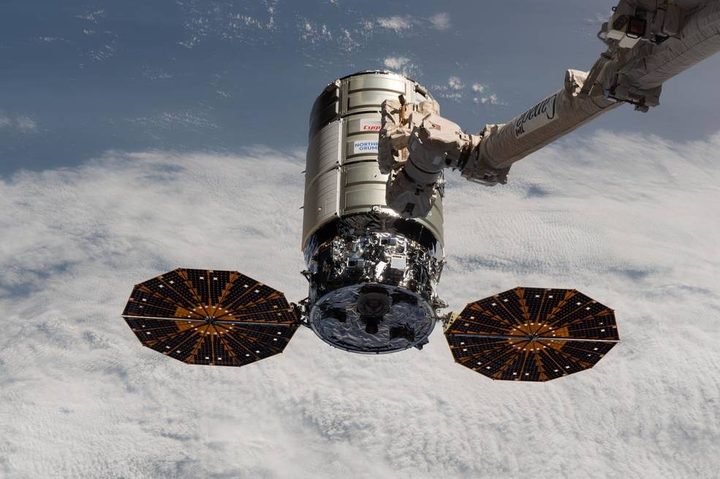
Northrop Grumman’s Cygnus space freighter approaches the International Space Station where the Canadarm2 robotic arm is poised to capture it for docking.
Northrop Grumman’s Cygnus space freighter approaches the International Space Station where the Canadarm2 robotic arm is poised to capture it for docking. NASA

The cargo spacecraft in question is a Northrop Grumman Cygnus, and it has been docked at the ISS for three months. It delivered nearly 8,000 pounds of equipment and supplies to the astronauts there including experiments to target cancer therapies, to create an immersive VR spacewalk program, and to grow radishes. It also delivered a new space toilet.

While it has been docked, the astronauts have removed all of the cargo that it brought from Earth, and they have filled it up with things to be sent into an extended mission in orbit from the station. This includes the Saffire-V experiment, which looks at how to create a more effective fire suppression system for space use, and a telecommunications test called SharkSat. In addition, the cargo ship will be filled with trash that needs to be taken off the space station and disposed of.

This particular Cygnus is named after Kalpana Chawla, the first female astronaut of Indian descent, who died in the space shuttle Columbia disaster in 2003.

What to expect from the departure

The Cygnus is scheduled to begin departure activities at 6:45 a.m. PT on Wednesday, January 6, with undocking scheduled for 7:10 a.m. PT.

Cygnus will detach from the station’s Unity module, from the port which faces Earth, and will maneuver into position. Then NASA astronaut Kate Rubins will use the station’s robotic arm to release Cygnus and it will begin its journey back to the planet.

NASA will livestream the release of Cygnus on NASA TV, with coverage beginning at 9:45 a.m. ET on Wednesday. You can watch either on NASA’s website or using the embedded video at the top of this page.

Correction: An earlier version of this article misstated the destination of the Cygnus spacecraft.

Georgina Torbet
Georgina has been the space writer at Digital Trends space writer for six years, covering human space exploration, planetary…
Blue Origin successfully re-uses a New Glenn rocket for the first time ever
Blue Origin achieves first New Glenn reflight despite payload setback
Blue Origin

Blue Origin has achieved a major milestone in its spaceflight ambitions by successfully reusing a booster from its heavy-lift New Glenn rocket for the first time. The historic launch, conducted on April 19, marks a significant step forward for Jeff Bezos’ space company as it seeks to compete with rivals like SpaceX in the rapidly evolving commercial launch market.

A Milestone With A Mixed Outcome

Read more
Stunning close-up footage shows NASA’s moon rocket roaring to space
On its first crewed flight, NASA's lunar rocket displays its awesome power.
NASA's SLS rocket roars skyward at the start of the Artemis II mission on April 1, 2026.

As NASA’s Artemis II astronauts journey back to Earth following their breathtaking close encounter with the moon earlier this week, the space agency has just shared some stunning footage (below) of the rocket launch that sent the crew on its way on April 1.

The close-up tracking shot shows the awesome power of the Space Launch System (SLS) rocket’s four core RS-25 engines together and its two solid rocket boosters as the 98-meter-tall vehicle roars away from the launchpad at the Kennedy Space Center in Florida.

Read more
How to watch NASA’s moon crew splash down at end of historic mission
The Orion spacecraft's final moments before splashdown will be the most perilous of the entire mission.
Earth and the moon as seen from the Orion spacecraft during the Artemis II mission in April 2026.

The Artemis II astronauts have looped around the moon, captured some extraordinary imagery (above), set a slew of records, and are now on their way back to Earth.

The 10-day mission will reach its climax on Friday, April 10, during a dramatic homecoming that will see the Orion spacecraft enter our planet’s atmosphere at a speed of nearly 25,000 miles per hour.

Read more