  1. Home
  2. Space
  3. News

James Webb Space Telescope arrives in French Guiana ahead of launch

Add as a preferred source on Google

The James Webb Space Telescope, a brand new telescope that will allow astronomers to hunt for habitable exoplanets, learn about star formation, and even study the formation of the universe itself, has arrived at its launch destination in French Guiana this week. Webb was shipped over 5,800 miles from California, through the Panama Canal, to Port de Pariacabo on the Kourou River, located on the northeast coast of South America.

After a 16-day journey, Webb arrived in French Guiana on Tuesday, October 12. Engineers will now set about preparing it for its launch in December this year from Europe’s spaceport in Kourou. The mission is a partnership between NASA, the European Space Agency, and the Canadian Space Agency.
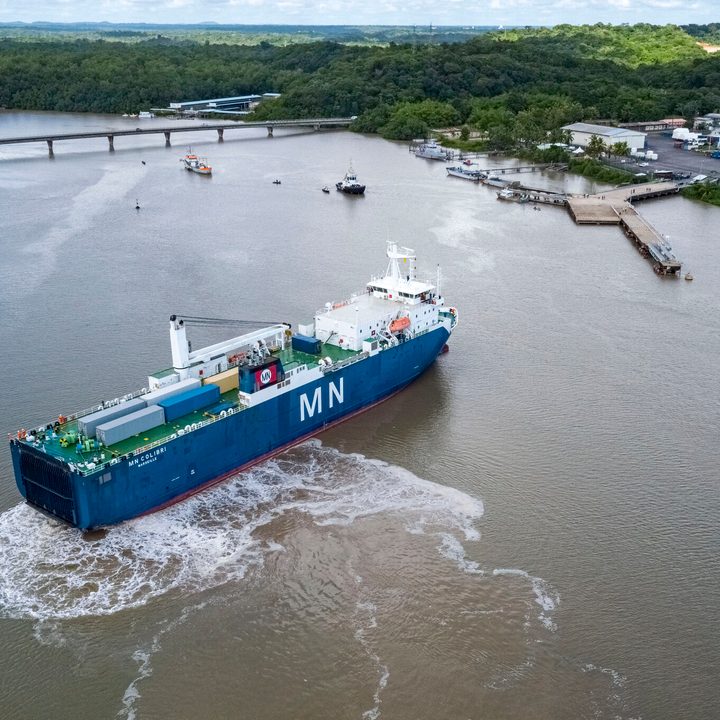
A cargo ship carrying the James Webb Space Telescope arriving safely at Pariacabo harbour in French Guiana.
The James Webb Space Telescope, a once-in-a-generation space mission, arrived safely at Pariacabo harbor in French Guiana on October 12, 2021, ahead of its launch on an Ariane 5 rocket from Europe’s Spaceport. ESA/CNES/Arianespace

“A talented team across America, Canada, and Europe worked together to build this highly complex observatory. It’s an incredible challenge — and very much worthwhile. We are going to see things in the universe beyond what we can even imagine today,” said Thomas Zurbuchen, associate administrator for NASA’s Science Mission Directorate, in a statement. “Now that Webb has arrived in Kourou, we’re getting it ready for launch in December — and then we will watch in suspense over the next few weeks and months as we launch and ready the largest space telescope ever built.”

Recommended Videos

To keep the delicate hardware of Webb safe as it traveled, it was loaded into a custom-made case called Space Telescope Transporter for Air, Road, and Sea, or STTARS, which weighs 168,000 pounds and is 110 feet long. For more on the journey, NASA has a two-part video series showing how the telescope was transported.
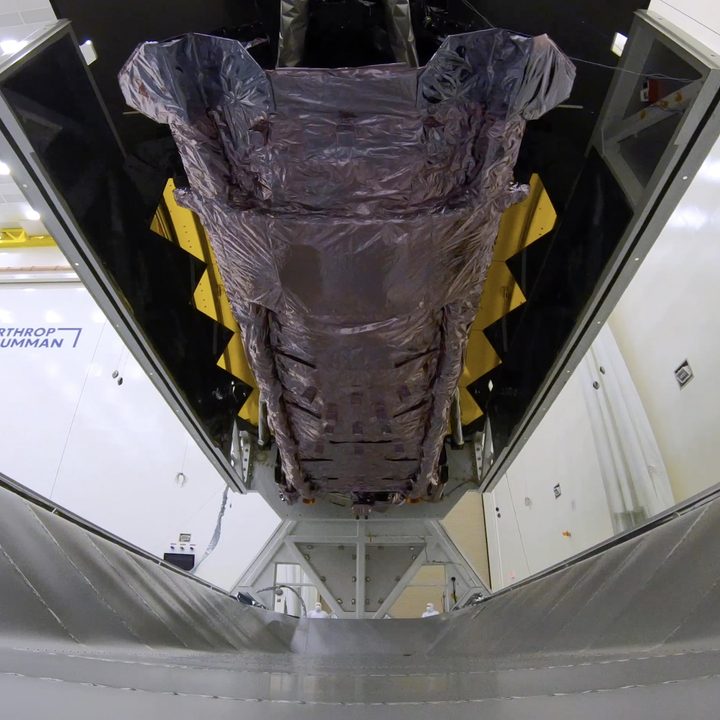
TheJames Webb telescope packed in its protective transport container.
The Webb telescope’s journey to space began with engineers packing the telescope into its protective transport container. The container was then moved from Northrop Grumman in Redondo Beach, California, to Seal Beach, California. Waiting at Seal Beach was the ship that would carry Webb to French Guiana. NASA's Goddard Space Flight Center

“Webb’s arrival at the launch site is a momentous occasion,” said Gregory Robinson, Webb’s program director at NASA Headquarters. “We are very excited to finally send the world’s next great observatory into deep space. Webb has crossed the country and traveled by sea. Now it will take its ultimate journey by rocket one million miles from Earth, to capture stunning images of the first galaxies in the early universe that are certain to transform our understanding of our place in the cosmos.”

Georgina Torbet
Georgina has been the space writer at Digital Trends space writer for six years, covering human space exploration, planetary…
Scientists have found a hidden galaxy inside the Milky Way, and they’re calling it Loki
A lost dwarf galaxy may be hiding inside the Milky Way.
milky-way-hidden-galaxy-loki

Our home galaxy has a secret buried inside. A new study published in the Monthly Notices of the Royal Astronomical Society suggests that the Milky Way swallowed an ancient dwarf galaxy billions of years ago, and its stellar remains are still embedded within ours.

Researchers have named this lost galaxy Loki, after the Norse trickster god, and the name is quite fitting because it remained hidden in plain sight for a very long time.

Read more
NASA aims September launch for Roman space telescope and it’s going to be a huge shift
An earlier target for Roman means one of NASA’s most ambitious observatories is getting close, with the potential to open a huge new era in space discovery
Machine, Wheel, Astronomy

NASA is now aiming to launch the Nancy Grace Roman Space Telescope as soon as early September 2026, a faster timeline than its earlier commitment to fly no later than May 2027. That alone makes this one of the agency’s most important missions to watch over the next few months.

The reason is simple, Roman is built to scan vast parts of the sky with sharp infrared vision.

Read more
Blue Origin successfully re-uses a New Glenn rocket for the first time ever
Blue Origin achieves first New Glenn reflight despite payload setback
Blue Origin

Blue Origin has achieved a major milestone in its spaceflight ambitions by successfully reusing a booster from its heavy-lift New Glenn rocket for the first time. The historic launch, conducted on April 19, marks a significant step forward for Jeff Bezos’ space company as it seeks to compete with rivals like SpaceX in the rapidly evolving commercial launch market.

A Milestone With A Mixed Outcome

Read more