
Finally, the big day approaches: The James Webb Space Telescope has completed its final tests and is now being prepared for its journey to its launch site. The next-generation telescope will be the successor to the venerable old Hubble Space Telescope, as well as taking over duties from the now-retired Spitzer Space Telescope.
The final round of testing includes a series of tests to ensure that the telescope will operate in space as planned. This is complex for several reasons — firstly, that the technology is cutting-edge and has to survive the extreme conditions of launch, and secondly, that the telescope needs to be folded up to fit into a rocket for launch and then unfurl itself once it is in orbit.
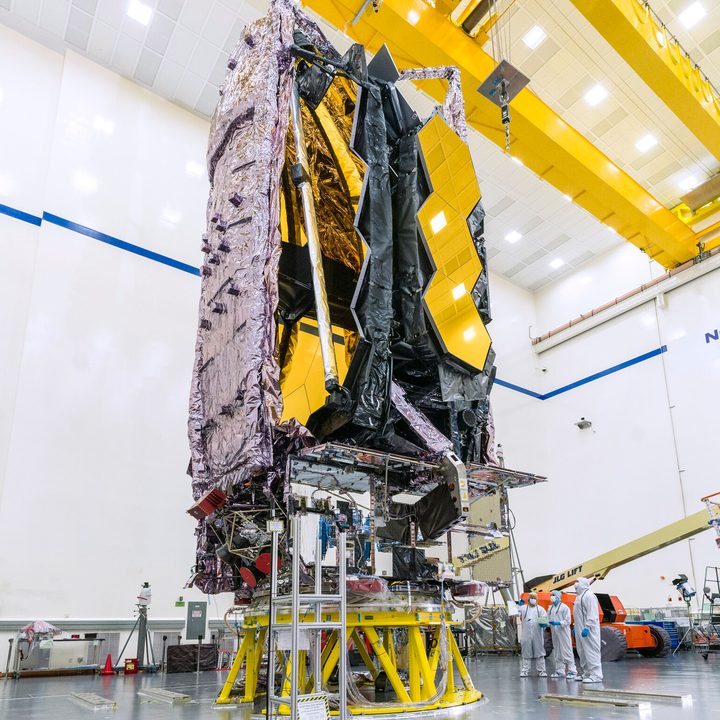
With the tests complete and engineers confident that Webb is ready for launch, it will now be packed up and shipped to its launch site in Kourou, French Guiana.
“NASA’s James Webb Space Telescope has reached a major turning point on its path toward launch with the completion of final observatory integration and testing,” said Gregory L. Robinson, Webb’s program director in a statement. “We have a tremendously dedicated workforce who brought us to the finish line, and we are very excited to see that Webb is ready for launch and will soon be on that science journey.”
With its more powerful hardware, Webb will be able to collect more data and do new science compared to the older Hubble. For example, it will be able to see whether a distant exoplanet has an atmosphere or not and even what that atmosphere is composed of — something which is very difficult to do with currently available telescopes. The bodies organizing the launch of Webb, NASA, the European Space Agency (ESA), and the Canadian Space Agency (CSA), have already laid out plans for what Webb will study in its first year.
For the team who have worked on Webb so far, the launch date, which is set for late November or early December this year, will be a major milestone both personally and professionally. “To me, launching Webb will be a significant life event – I’ll be elated of course when this is successful, but it will also be a time of deep personal introspection. Twenty years of my life will all come down to that moment,” said Mark Voyton, Webb observatory integration and test manager at NASA’s Goddard Space Flight Center.
“We’ve come a long way and worked through so much together to prepare our observatory for flight. The telescope’s journey is only just beginning, but for those of us on the ground who built it, our time will soon come to an end, and we will have our opportunity to rest, knowing we put everything on the line to make sure our observatory works. The bonds we formed with each other along the way will last far into the future.”


