Right on the heels of the first total solar eclipse to hit the United States in nearly 40 years, we’re approaching yet another celestial treat. The annual Leonid meteor shower will peak late in the evening on Friday, November 17 and into the early morning hours of Saturday, November 18 and if the conditions are just right in your neck of the woods, you won’t want to miss it.
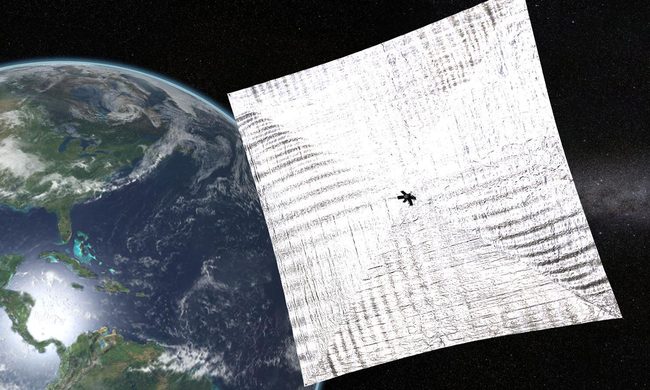
While some companies are already working on creating massive artificial meteor showers, using microsatellite and a series of ornate “pellets” the naturally occurring events are certainly more impressive to behold. That said, here’s everything you need to know about the (shooting) star-studded event.
Meteors, meteorites, and meteoroids — oh, my!
First and foremost, let’s get the semantics out of the way. Per the good folks over at NASA: A meteor is a piece of stony or metallic material that fully burns up in our atmosphere. A meteoroid is an object comprised of this same material that is currently traveling in space. Lastly, a meteorite is a meteor which actually survives reentry and eventually impacts our planet.
What is a meteor shower?
Meteors are specifically the cosmic leftovers of passing comets and chunks of asteroids. As a comet approaches the sun, ice along the surface melts releasing dust and other sediments along the comet’s path. The majority of this debris is rather small (relatively speaking) about the size of a grain of sand, however, some may be as large as a boulder. (It is important to note that the risk of any of these objects surviving re-entry is infinitesimal.) A meteor shower occurs as our planet travels through one of these debris fields. The light we see from the ground is the result of these objects entering our atmosphere. We pass through a comet’s orbit and into such a debris field multiple times a year.
What causes the Leonids specifically?
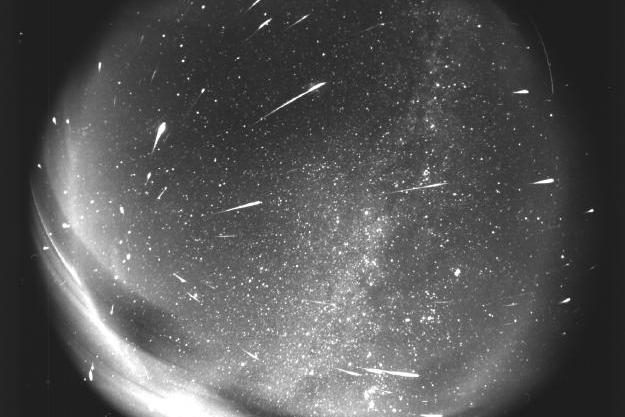
This time around, the earth is passing through the orbit of comet 55P/Tempel-Tuttle — a relatively small comet roughly 2.2 miles across. This comet orbits our sun once every 33 years in an elliptic pattern. The Leonids are particularly fast-moving and whirl overhead at roughly 44 miles per second. During the infamous 1966 Leonid meteor storm, thousands of meteors burned through the atmosphere over the course of just 15 minutes.
The Leonids meteor shower can be quite finicky with meteor rates ranging as low as roughly 15 meteors per hour. However, sometimes the Leonids produce a meteor storm specifically defined as an event with a minimum of 1,000 meteors per hour. As many as 100,000 meteors per hour were observed in the 1833 Leonid storm.
Unfortunately, we’ve had a Leonid meteor storm drought with the last Leonid specific storm occurring in 2002. Based on current estimates, we won’t hit another dense pocket of material until 2099. We could experience a few unexpected flare-ups in activity before then as our planet passes through “uncharted” portions of this trail. The comet itself is set to make a triumphant return to our neck of the cosmic woods in 2031 and 2064.
Where, when, and how to see the Leonids?
While the Leonids meteor shower began on November 5 and will continue until November 30, the peak is set for this weekend. This apex will occur late on November 17 and into the predawn hours on November 18.
The Leonids are named after the constellation in which the system appears to radiate from, Leo — this point is called the radiant. However, NASA recommends viewing the Leonids outside of this portion of the sky. By looking directly at the radiant, the streaking meteors will appear to be short due to an effect called foreshortening. Observations outside of the radiant point will appear longer and “more spectacular,” according to the space agency.
Fortunately, the Leonids can be seen with the naked eye, so you don’t need binoculars or a telescope to behold the event. However, getting away from the bright lights of the city will certainly make it easier to see fainter glints streaking across the sky. We may not be in for a meteor storm this year but patient sky watchers should expect to see up to 25 meteors per hour during the peak. NASA has created a Flux Estimator — aka the Fluximator — allowing individuals to more clearly anticipate the overhead concentrations for a specific date and time.