  1. Home
  2. Space
  3. News

Here’s what NASA plans to do with its shiny new SpaceX spacecraft

Add as a preferred source on Google
nasa lunar landers delivery plans hls large cargo 240419 jpg
SpaceX

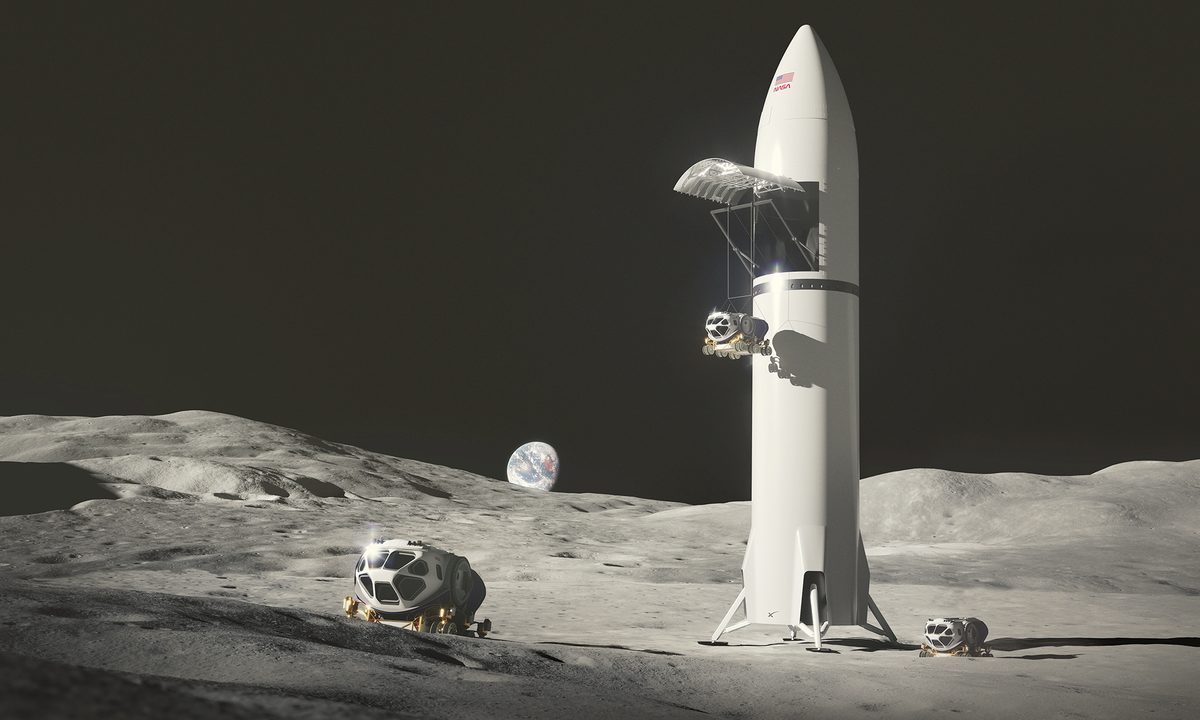
As SpaceX gears up for the big sixth test flight of its Starship vehicle, NASA has announced its longer term plans for the next generation of SpaceX craft. The company is in the process of developing a human lander for the moon, which NASA intends to use along with a lander from Blue Origin to potentially carry astronauts to the lunar surface as part of the Artemis program.

But NASA won’t just be carrying people in its two shiny new spacecraft. The agency announced today that it also intends to use the vehicles to carry cargo such as equipment and infrastructure to the moon.

Recommended Videos

“NASA is planning for both crewed missions and future services missions to the Moon beyond Artemis V,” said Stephen D. Creech, assistant deputy associate administrator for technical at the NASA Moon to Mars Program Office. “The Artemis campaign is a collaborative effort with international and industry partners. Having two lunar lander providers with different approaches for crew and cargo landing capability provides mission flexibility while ensuring a regular cadence of Moon landings for continued discovery and scientific opportunity.”
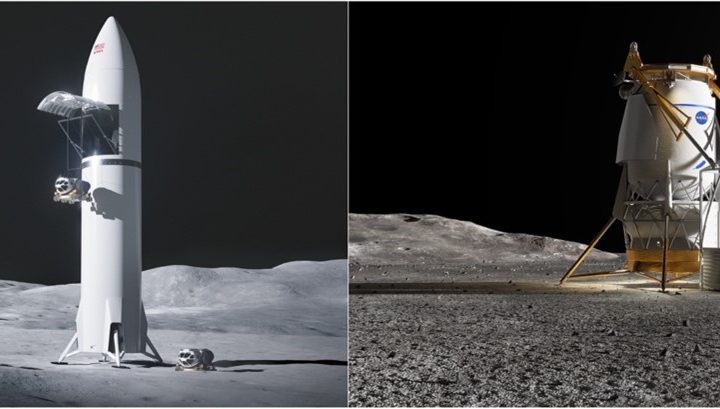
Early conceptual renderings of cargo variants of human lunar landing systems from NASA’s providers SpaceX, left, and Blue Origin, right. The large cargo landers will have the capability to land approximately 26,000 to 33,000 pounds (12-15 metric tons) of large, heavy payload on the lunar surface.
Early conceptual renderings of cargo variants of human lunar landing systems from NASA’s providers SpaceX, left, and Blue Origin, right. The large cargo landers will have the capability to land approximately 26,000 to 33,000 pounds of large, heavy payload on the lunar surface. SpaceX/Blue Origin

For NASA to succeed in its ambitious plans to create a moon base where astronauts can live for periods of weeks or even months, it will need to create a large amount of infrastructure such as habitats, water filtration systems, and scientific research laboratories on the lunar surface.

The current plan is for at least two cargo missions to drop off large pieces of equipment including a pressurized rover, carried by the SpaceX Starship cargo lander, and a habitat, carried by the Blue Origin Blue Moon lander. These cargo drop-offs can act as a kind of test for whether the landers are capable of carrying humans on future missions.

“Based on current design and development progress for both crew and cargo landers and the Artemis mission schedules for the crew lander versions, NASA assigned a pressurized rover mission for SpaceX and a lunar habitat delivery for Blue Origin,” said Lisa Watson-Morgan, NASA program manager of the Human Landing System. “These large cargo lander demonstration missions aim to optimize our NASA and industry technical expertise, resources, and funding as we prepare for the future of deep space exploration.”

Both companies are in the process of developing their landers, with SpaceX intending to use a variant of the Starship vehicle it is currently testing for this task. The current timeline puts the Starship carrying the rover to the moon in 2032, and the Blue Moon delivering the habitat in 2033.

Georgina Torbet
Georgina has been the space writer at Digital Trends space writer for six years, covering human space exploration, planetary…
Scientists have found a hidden galaxy inside the Milky Way, and they’re calling it Loki
A lost dwarf galaxy may be hiding inside the Milky Way.
milky-way-hidden-galaxy-loki

Our home galaxy has a secret buried inside. A new study published in the Monthly Notices of the Royal Astronomical Society suggests that the Milky Way swallowed an ancient dwarf galaxy billions of years ago, and its stellar remains are still embedded within ours.

Researchers have named this lost galaxy Loki, after the Norse trickster god, and the name is quite fitting because it remained hidden in plain sight for a very long time.

Read more
NASA aims September launch for Roman space telescope and it’s going to be a huge shift
An earlier target for Roman means one of NASA’s most ambitious observatories is getting close, with the potential to open a huge new era in space discovery
Machine, Wheel, Astronomy

NASA is now aiming to launch the Nancy Grace Roman Space Telescope as soon as early September 2026, a faster timeline than its earlier commitment to fly no later than May 2027. That alone makes this one of the agency’s most important missions to watch over the next few months.

The reason is simple, Roman is built to scan vast parts of the sky with sharp infrared vision.

Read more
Blue Origin successfully re-uses a New Glenn rocket for the first time ever
Blue Origin achieves first New Glenn reflight despite payload setback
Blue Origin

Blue Origin has achieved a major milestone in its spaceflight ambitions by successfully reusing a booster from its heavy-lift New Glenn rocket for the first time. The historic launch, conducted on April 19, marks a significant step forward for Jeff Bezos’ space company as it seeks to compete with rivals like SpaceX in the rapidly evolving commercial launch market.

A Milestone With A Mixed Outcome

Read more