1. Home
  2. Space
  3. News

Neptune’s temperatures are fluctuating, and no one knows why

Add as a preferred source on Google

Something strange is happening on Neptune. Researchers have studied 17 years of data from the planet, collected using telescopes including the European Southern Observatory’s Very Large Telescope, NASA’s Spitzer Space Telescope, the Gemini South and North telescopes, the Subaru Telescope, and the Keck Telescope. And they’ve found surprising swings in the planet’s temperatures which they can’t explain.

This composite shows thermal images of Neptune taken between 2006 and 2020. The first three images (2006, 2009, 2018) were taken with the VISIR instrument on ESO’s Very Large Telescope while the 2020 image was captured by the COMICS instrument on the Subaru Telescope (VISIR wasn’t in operation in mid-late 2020 because of the pandemic). After the planet’s gradual cooling, the south pole appears to have become dramatically warmer in the past few years, as shown by a bright spot at the bottom of Neptune in the images from 2018 and 2020.
This composite shows thermal images of Neptune taken between 2006 and 2020. The first three images (2006, 2009, 2018) were taken with the VISIR instrument on ESO’s Very Large Telescope while the 2020 image was captured by the COMICS instrument on the Subaru Telescope (VISIR wasn’t in operation in mid-late 2020 because of the pandemic). After the planet’s gradual cooling, the south pole appears to have become dramatically warmer in the past few years, as shown by a bright spot at the bottom of Neptune in the images from 2018 and 2020. ESO/M. Roman, NAOJ/Subaru/COMICS

Neptune does have seasons, as it rotates and moves around the sun. However, its seasons are much slower than those on Earth, lasting around 40 years. In the southern hemisphere, it has been summer since 2005, so researchers were surprised by the apparent significant variation in temperatures they saw.

Recommended Videos

“Our data cover less than half of a Neptune season, so no one was expecting to see large and rapid changes,” said co-author Glenn Orton, senior research scientist at NASA’s Jet Propulsion Laboratory, in a statement.

In a series of observations taken between 2003 and 2018, the global average temperature of the planet dropped by eight degrees Celsius (46 degrees Fahrenheit), and then around the planet’s southern pole, the temperatures rose quickly by 11 degrees Celsius (52 degrees Fahrenheit) between 2018 and 2020. While Neptune is known to host vortices, or areas of atmospheric turbulence, including one at the planet’s southern pole which affects temperatures there, that isn’t enough to explain how temperatures rose so fast. And the overall global cooling is strange too.

“This change was unexpected,” said lead author of the study, Michael Roman of the University of Leicester, U.K. “Since we have been observing Neptune during its early southern summer, we expected temperatures to be slowly growing warmer, not colder.”

The astronomers were puzzled by their findings and have no clear answer as to what could have caused them. Some of the theories suggested by the European Southern Observatory are that the temperatures changes could be due to something happening in the chemistry of the planet’s atmosphere, or due to a weather phenomenon, or even perhaps due to some kind of effects from the sun.

To learn more, astronomers will need to take more readings of Neptune using powerful upcoming telescopes like the Extremely Large Telescope or the James Webb Space Telescope.

“I think Neptune is itself very intriguing to many of us because we still know so little about it,” says Roman. “This all points towards a more complicated picture of Neptune’s atmosphere and how it changes with time.”

The research is published today in The Planetary Science Journal.

Georgina Torbet
Georgina has been the space writer at Digital Trends space writer for six years, covering human space exploration, planetary…
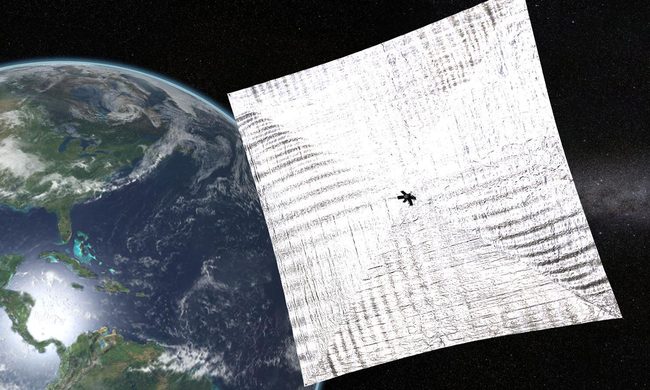
Lightsails have hit another speed bump on the road to interstellar travel
The coolest interstellar travel idea may get betrayed by the light pushing it
LightSail in Earth orbit

Laser-powered lightsails are one of the coolest answers to spaceflight. It might not be as sci-fi-sounding as a warp drive, but now, its practicality has also come under question. Using lightsails, a spacecraft could unfurl an ultra-thin reflective sail and let a powerful laser push it toward another star, without relying on fuel.

The tech was simple and elegant--except it's also more complicated than it sounds. A new preprint from researchers Chao Shen and Jiaze Li of the Harbin Institute of Technology suggests that relativistic lightsails may run into a hidden propulsion problem once they start moving extremely fast.

Read more
The galaxy has an exoplanet size mystery, and NASA’s EVE mission wants to solve it
This planet-hunting mission wants to catch baby worlds before they grow up
Artist’s Illustration of Exoplanets Orbiting Barnard’s Star

Mankind venturing into space ended up creating more questions than it answered, and one of the dilemmas is related to the planet sizes. Astronomers have found plenty of rocky super-Earths and plenty of puffier sub-Neptunes, but far fewer planets with a radius of about 1.8 times Earth’s.

That gap is known as the radius valley, and a proposed mission called the Early eVolution Explorer, or EVE, wants to figure out why it exists. NASA has a simple plan: look at planets while they are still young. The mission concept, detailed in a new arXiv preprint and covered by Phys.org, would focus on newly formed star clusters to see what small planets look like before billions of years of evolution.

Read more
We just got a hot signal that a Tesla and SpaceX merger could happen, after all
Tesla

For years, the idea of Tesla and SpaceX becoming a single company has lived somewhere between ambitious business theory and Elon Musk fan fiction. The two companies already share DNA, leadership influence, engineering talent, and long-term goals. But every time the topic surfaced, it felt more like an interesting thought experiment than a realistic possibility. Now, one of the most important people at SpaceX has added fresh fuel to the conversation.

Speaking in a recent CNBC interview, SpaceX President and COO Gwynne Shotwell was asked about the possibility of closer ties between Tesla and SpaceX. Her response wasn’t a flat-out denial. In fact, she suggested that bringing the two companies together could make life a little easier for Musk. That may sound like an offhand comment, but coming from Shotwell, it’s noteworthy. She’s been at SpaceX since its earliest days and remains one of the company's most influential executives.

Read more