  1. Home
  2. Space
  3. Photography
  4. News

Astronaut’s photo shows a gorgeous ‘golden path’

A fast-moving vehicle, a long shutter speed, and a unique vantage point come together to create a striking image.

Add as a preferred source on Google
Earth as seen from the space station.
Don Pettit/NASA

Don Pettit is NASA’s oldest serving astronaut, and even at the age of 70, he’s not done yet. He’s been to orbit four times since his first voyage back in 2002, and hopes to make it back there again in the coming years. 

The American astronaut’s most recent space trip saw him living and working aboard the International Space Station (ISS) between September 2024 and April 2025. A big part of his time aboard the orbital outpost was spent observing Earth and capturing stunning imagery of our planet and beyond.

Recommended Videos

Since returning to terra firma a few months ago, Pettit has continued to share many of the images and videos that he didn’t have a chance to post while he was in orbit. 

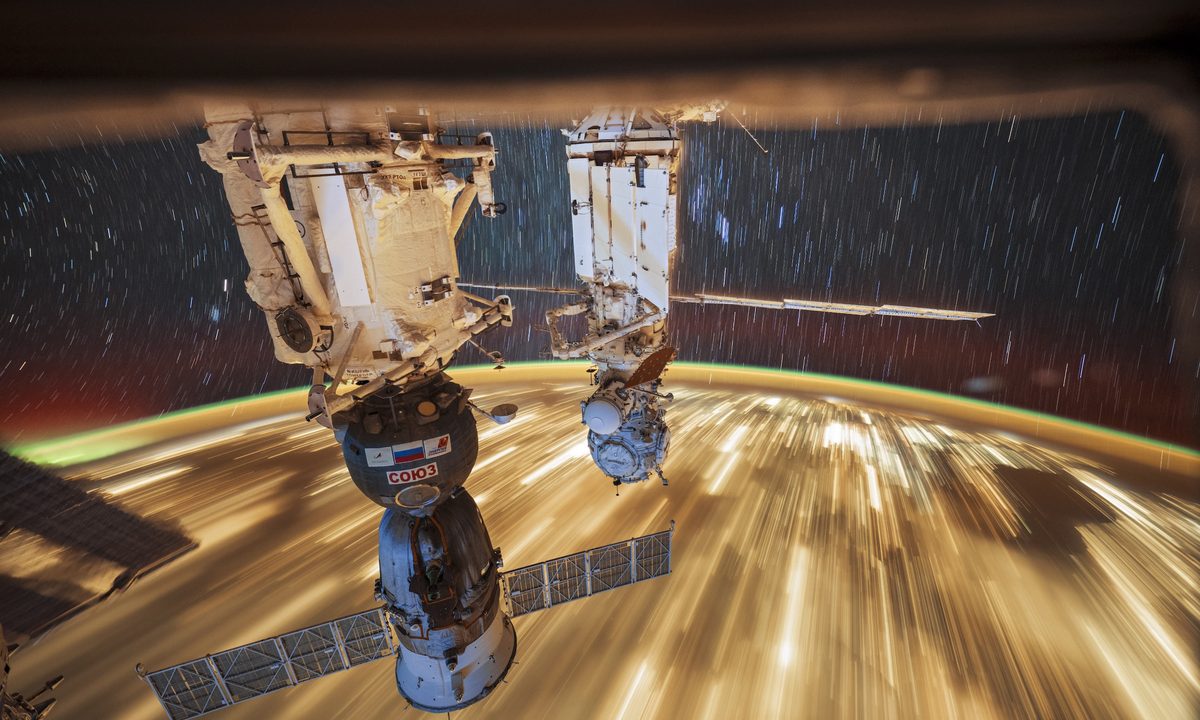
This latest stunner shows, in Pettit’s own words, “city lights at night, streaked by orbital speeds with time exposure,” which “create a golden path seen only from space.” We can also see a docked Soyuz spacecraft in the foreground, and a Progress cargo ship, also docked, behind it.

City lights at night, streaked by orbital speeds with time exposure, create a golden path seen only from space. pic.twitter.com/z0KCfz0kBm

— Don Pettit (@astro_Pettit) July 30, 2025

At night, Earth becomes speckled by the golden glow of city lights, but with the camera shutter kept open, and the space station orbiting Earth at a speed of around 17,500 mph, the lights streak across the frame to create a look that’s as unique as it is gorgeous.

During his most recent space voyage, Pettit also posted extraordinary imagery of Madagascar’s Betsiboka River estuary, aurora rippling over Earth, the Grand Canyon, and moonlight reflections. Check out this collection of some his best work.

“Images from space help tell the story to people on Earth that don’t have the opportunity to go into space,” Pettit said last year when asked why he enjoys taking photos from 250 miles up. He added that as well as capturing memories of his trips to orbit, “the photographs help complete the story of what it means for human beings to expand into space and expand into this frontier.”

Trevor Mogg
Contributing Editor
Not so many moons ago, Trevor moved from one tea-loving island nation that drives on the left (Britain) to another (Japan)…
Getting to Mars may require a pit stop in orbit, and NASA just tested the nozzle to make that happen
A gas pump nozzle for spacecraft sounds simple. It is not, and that's what makes this test worth paying attention to.
Architecture, Building, Factory

Getting a spacecraft to Mars or beyond requires an enormous amount of fuel, most of which has to be hauled from Earth, adding to the overall cost and weight of the spacecraft. NASA has been working on a different approach, one that could be more efficient and effective.

It wants to refuel a spacecraft in orbit before heading out for the mission. What’s even more interesting is that the space agency just finished testing a component that could make that possible: a cryocoupler.

Read more
Elon Musk’ Starlink could soon offer mobile services as a US carrier
Showcase of T-Mobile Starlink service on an iPhone.

Elon Musk’s Starlink has already changed how millions of people access the internet, especially in places where traditional broadband struggles to reach. Now, the satellite internet service could be preparing for an even bigger leap — becoming your mobile carrier.

According to a Financial Times report, SpaceX has told investors it’s considering launching a retail Starlink mobile service in the US. Instead of simply partnering with wireless carriers, the company could begin selling mobile plans directly to consumers, putting it in direct competition with Verizon, AT&T, and T-Mobile.

Read more
Lightsails have hit another speed bump on the road to interstellar travel
The coolest interstellar travel idea may get betrayed by the light pushing it
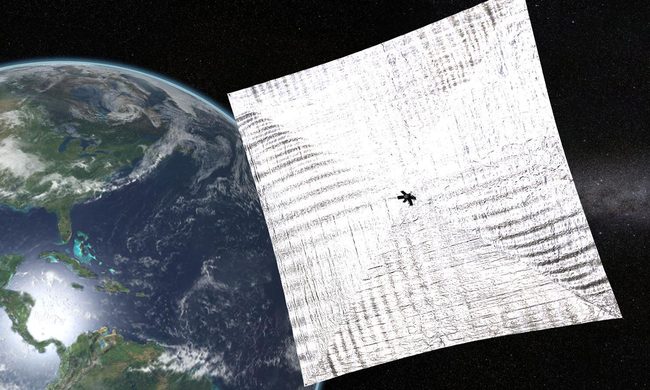
LightSail in Earth orbit

Laser-powered lightsails are one of the coolest answers to spaceflight. It might not be as sci-fi-sounding as a warp drive, but now, its practicality has also come under question. Using lightsails, a spacecraft could unfurl an ultra-thin reflective sail and let a powerful laser push it toward another star, without relying on fuel.

The tech was simple and elegant--except it's also more complicated than it sounds. A new preprint from researchers Chao Shen and Jiaze Li of the Harbin Institute of Technology suggests that relativistic lightsails may run into a hidden propulsion problem once they start moving extremely fast.

Read more