  1. Home
  2. Space
  3. News

SpaceX Starship makes it off the pad, but is lost during second test flight

Add as a preferred source on Google

SpaceX has performed a second integrated test flight of its Starship, the world’s most powerful rocket. The Starship made it off the launchpad and survived through stage separation, but communication with the spacecraft was lost near the end of its engine burn.

The rocket made it further in this test than it did in its previous test flight in April this year when it took off from the pad, but exploded before stage separation.
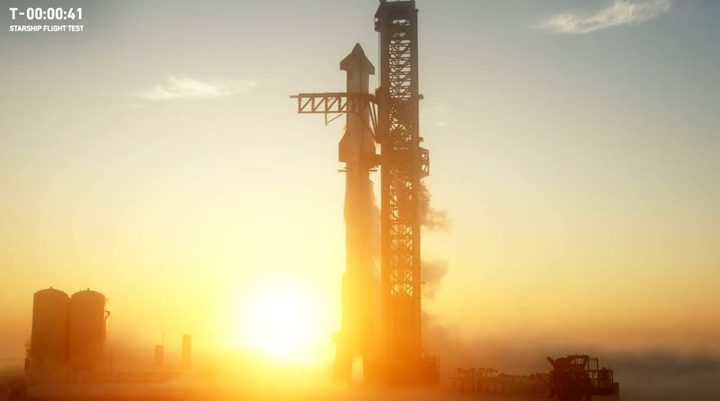
Starship on the launch pad ahead of the second orbital flight test on November 11, 2023.
Starship on the launch pad ahead of the second integrated flight test on November 11, 2023. SpaceX

The launch took place at SpaceX’s Starbase facility in Boca Chica, Texas, on Saturday, November 18. There was a short pause when the countdown clock was halted at T-40 seconds due to a pressurization issue, but then the Starship was able to liftoff successfully. The Starship also separated from its booster using a new stage separation method called hot-staging, with the aim of recovering the booster, but shortly after separation, the booster exploded.

Recommended Videos

The loss of the booster was not entirely unexpected, and the Starship continued on its flight and came close to reaching orbital velocity, with the goal of making a trip around the globe rather than going into orbit. But then contact was lost for reasons which are still unclear.

“Starship successfully lifted off under the power of all 33 Raptor engines on the Super Heavy Booster and made it through stage separation. The booster experienced a rapid unscheduled disassembly shortly after stage separation while Starship’s engines fired for several minutes on its way to space,” SpaceX wrote in a statement on its website.

The statement did not make mention of the status of the second stage of the Starship, which is thought to have been lost.

“We have lost the data from the second stage. We heard a callout that we were in internal guidance which means that we were getting near the end of the approximately six-minute burn of Starship, but we haven’t gotten any more data since then, so we think we may have lost the second stage,” a SpaceX commentator said during the livecast.

The loss of the spacecraft was given preliminary confirmation by the Federal Aviation Administration (FAA), which said in a statement, “A mishap occurred during the SpaceX Starship OFT-2 launch from Boca Chica, Texas, on Saturday, Nov. 18. The anomaly resulted in a loss of the vehicle. No injuries or public property damage have been reported.”

Georgina Torbet
Georgina has been the space writer at Digital Trends space writer for six years, covering human space exploration, planetary…
Scientists have found a hidden galaxy inside the Milky Way, and they’re calling it Loki
A lost dwarf galaxy may be hiding inside the Milky Way.
milky-way-hidden-galaxy-loki

Our home galaxy has a secret buried inside. A new study published in the Monthly Notices of the Royal Astronomical Society suggests that the Milky Way swallowed an ancient dwarf galaxy billions of years ago, and its stellar remains are still embedded within ours.

Researchers have named this lost galaxy Loki, after the Norse trickster god, and the name is quite fitting because it remained hidden in plain sight for a very long time.

Read more
NASA aims September launch for Roman space telescope and it’s going to be a huge shift
An earlier target for Roman means one of NASA’s most ambitious observatories is getting close, with the potential to open a huge new era in space discovery
Machine, Wheel, Astronomy

NASA is now aiming to launch the Nancy Grace Roman Space Telescope as soon as early September 2026, a faster timeline than its earlier commitment to fly no later than May 2027. That alone makes this one of the agency’s most important missions to watch over the next few months.

The reason is simple, Roman is built to scan vast parts of the sky with sharp infrared vision.

Read more
Blue Origin successfully re-uses a New Glenn rocket for the first time ever
Blue Origin achieves first New Glenn reflight despite payload setback
Blue Origin

Blue Origin has achieved a major milestone in its spaceflight ambitions by successfully reusing a booster from its heavy-lift New Glenn rocket for the first time. The historic launch, conducted on April 19, marks a significant step forward for Jeff Bezos’ space company as it seeks to compete with rivals like SpaceX in the rapidly evolving commercial launch market.

A Milestone With A Mixed Outcome

Read more