  1. Home
  2. Space
  3. News

The Artemis II moon mission is special, and so is the astronauts’ toilet

Artemis 2 is finally flying astronauts back to the moon, and it’s a huge deal

Add as a preferred source on Google
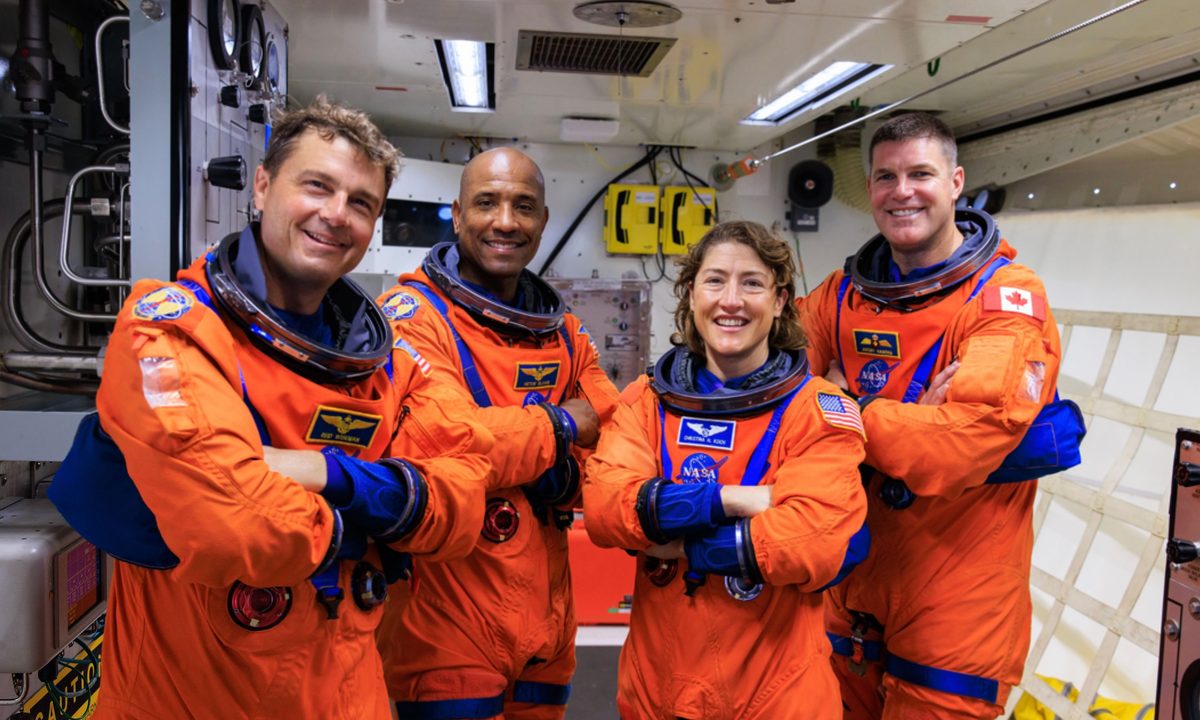
Artemis II NASA astronauts (left to right) Reid Wiseman, Victor Glover, and Christina Koch, and CSA (Canadian Space Agency) astronaut Jeremy Hansen
Artemis II NASA astronauts (left to right) Reid Wiseman, Victor Glover, and Christina Koch, and CSA (Canadian Space Agency) astronaut Jeremy Hansen. NASA

NASA’s Artemis II mission is already pretty historic as the agency’s first crewed journey around the moon in more than half a century. But tucked inside all the big-picture lunar ambition is a much more grounded milestone, with astronauts finally getting a toilet that does not sound like a hassle.

This may not be the most glamorous part of the mission, but it is still a meaningful one. Decades ago, the Apollo astronauts went to the moon using a waste system based on plastic bags and funnels, and NASA’s own later assessment described it as “objectionable” and “distasteful”.

But no longer.

Why this is actually a big deal

The old Apollo’s plumbing setup was messy, awkward, and prone to failure. Crew members had to manually use adhesive-rimmed plastic bags and tubes in microgravity, then mix in germicide by hand to stop bacteria and gas buildup. The system also had a bad reputation for leaks, including famously gross moments like floating waste during Apollo 10.

Recommended Videos

NASA later admitted that this whole arrangement earned poor marks for crew satisfaction. So the new upgrade on Atermis II is more than just a quality-of-life upgrade; it is NASA finally solving a problem that has been hanging around since the first moonshots.

A working toilet is a real milestone

NASA’s Artemis II uses the new Universal Waste Management System, or UWMS. It includes handles to help astronauts stay steady in microgravity, supports simultaneous urine and feces collection, and works for both male and female astronauts. Another big thing is a door for at least the illusion of privacy inside Orion’s cramped crew capsule.

The design has been in the works for more than a decade, with Collins Aerospace first contracted in 2015. A different version of the UWMS was tested on the ISS (International Space Station) in 2020, with final installation being complete in 2021. Artemis II will carry a modified lunar version inside Orion, where it will face its first real test on a crewed moon mission.

The toilet for the future in space

There is a reason NASA cares so much about this, since it believes waste management is considered mission-critical. So the system failing can put the whole mission at risk. Since Artemis II is supposed to help define the systems NASA will rely on for future lunar campaign missions and eventually Mars missions, this is a big moment for the advanced space-grade toilet.

Vikhyaat Vivek
Vikhyaat Vivek is a tech journalist and reviewer with seven years of experience covering consumer hardware, with a focus on…
Getting to Mars may require a pit stop in orbit, and NASA just tested the nozzle to make that happen
A gas pump nozzle for spacecraft sounds simple. It is not, and that's what makes this test worth paying attention to.
Architecture, Building, Factory

Getting a spacecraft to Mars or beyond requires an enormous amount of fuel, most of which has to be hauled from Earth, adding to the overall cost and weight of the spacecraft. NASA has been working on a different approach, one that could be more efficient and effective.

It wants to refuel a spacecraft in orbit before heading out for the mission. What’s even more interesting is that the space agency just finished testing a component that could make that possible: a cryocoupler.

Read more
Elon Musk’ Starlink could soon offer mobile services as a US carrier
Showcase of T-Mobile Starlink service on an iPhone.

Elon Musk’s Starlink has already changed how millions of people access the internet, especially in places where traditional broadband struggles to reach. Now, the satellite internet service could be preparing for an even bigger leap — becoming your mobile carrier.

According to a Financial Times report, SpaceX has told investors it’s considering launching a retail Starlink mobile service in the US. Instead of simply partnering with wireless carriers, the company could begin selling mobile plans directly to consumers, putting it in direct competition with Verizon, AT&T, and T-Mobile.

Read more
Lightsails have hit another speed bump on the road to interstellar travel
The coolest interstellar travel idea may get betrayed by the light pushing it
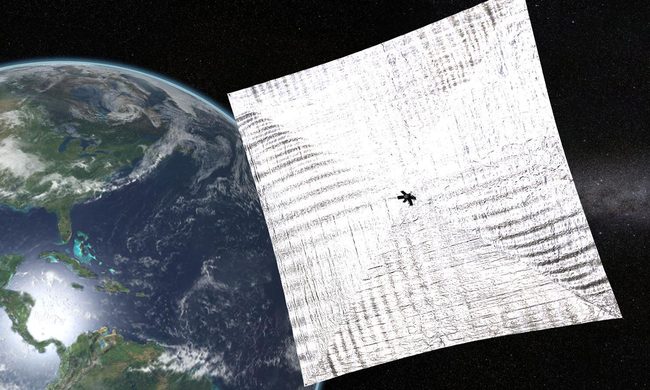
LightSail in Earth orbit

Laser-powered lightsails are one of the coolest answers to spaceflight. It might not be as sci-fi-sounding as a warp drive, but now, its practicality has also come under question. Using lightsails, a spacecraft could unfurl an ultra-thin reflective sail and let a powerful laser push it toward another star, without relying on fuel.

The tech was simple and elegant--except it's also more complicated than it sounds. A new preprint from researchers Chao Shen and Jiaze Li of the Harbin Institute of Technology suggests that relativistic lightsails may run into a hidden propulsion problem once they start moving extremely fast.

Read more