
Space tourism company Virgin Galactic could soon be offering private flights to the International Space Station (ISS) along with training for private astronauts as part of a partnership with NASA.
Virgin Galactic is best known for its plans for sub-orbital space tourism flights, in which people will be taken to the edge of space on its SpaceShipTwo spacecraft. A test flight of three people including a passenger went ahead last year, and the company recently performed another test flight from what will be the home base for the sub-orbital flights, Spaceport America. It’s thought that the company will begin to offer these sub-orbital flights to paying customers within the next few years.
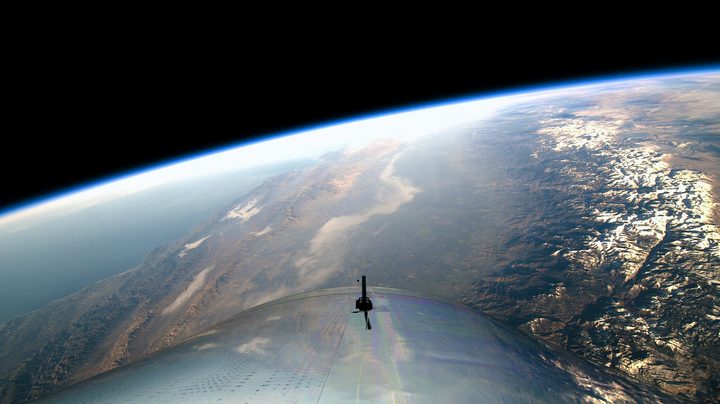
But the company has bigger ambitions to offer orbital flights as well, as the new partnership with NASA shows. NASA has been enthusiastic about commercializing space, including the possibility of space tourism to the ISS. The agency says that partnering with private companies will help to reduce the cost of space flight for everyone, and that space tourism can expand the pool of who gets to travel to space even as it brings in additional funding.
“We are excited to partner with NASA on this private orbital spaceflight program, which will not only allow us to use our spaceflight platform, but also offer our space training infrastructure to NASA and other agencies,” George Whitesides, CEO of Virgin Galactic, said. “Based on the unsurpassed levels of spaceflight customer commitments we have secured to date, we are proud to share that insight in helping to grow another market for the new space economy. We want to bring the planetary perspective to many thousands of people.”
However, the concept of space tourism has attracted fierce criticism. With trips to the ISS estimated to cost $58 million for transport there and back, plus an additional $35,000 per night to stay on the space station, the only people who will be experiencing the wonders of space are the most elite of multimillionaires, so it is hardly democratizing access to space. There are also concerns about the environmental impact of such trips, which bring little scientific benefit and act as holidays for the super-rich.
Virgin Galactic is keen to emphasize that its trips are not only for space tourists, but could be used for private researchers and perhaps even government-backed research projects. “Private astronaut experiences could range from private citizen expeditions to government-enabled scientific research missions,” the company said in a statement.
To carry passengers to the ISS, Virgin Galactic will need to use a spacecraft other than its SpaceShipTwo, as this is not capable of orbital flight. The obvious option would be the SpaceX Crew Dragon, which recently successfully completed its first crewed test flight, however Virgin Galactic has not yet announced whether it will be purchasing seats on the Crew Dragon for these trips.


