1. Home
  2. Space
  3. News

Watch NASA’s dramatic trailer for Saturday’s SLS rocket hot fire test

Add as a preferred source on Google
Jan. 16: Artemis I Hot Fire Test

NASA is aiming to perform the first four-engine hot fire test of its Space Launch System (SLS) rocket on Saturday, January 16. (Check out NASA’s movie-like trailer for this weekend’s test above.)

Recommended Videos

Success will take the space agency a big step toward its crewless Artemis I mission to the moon just 11 months from now, ahead of a planned crewed mission that would put the first woman and next man on the lunar surface before the end of the decade.

Saturday’s test at NASA’s Stennis Space Center near Bay St. Louis, Mississippi, will be the final one in what’s known as the Green Run, a series of eight tests that puts a rocket and all of its associated hardware through its paces. Earlier Green Run tests evaluated the rocket’s avionics systems, propulsion systems, and hydraulic systems.

According to NASA, the SLS is capable of producing a maximum 8.8 million pounds of thrust, “exerting more power than any rocket ever.” This means we can expect to see a spectacular display of booster power this weekend as all four of the SLS rocket’s RS-25 engines fire up together for a full eight minutes in a ground-based test designed to simulate the core stage’s launch performance.

Assuming Saturday’s test goes according to plan, the SLS rocket’s core stage will then be refurbished and transported by barge to NASA’s Kennedy Space Center in Florida. There, it will be assembled with the other parts of the rocket, including the Orion spacecraft, in preparation for the highly anticipated Artemis I mission.

“The next few days are critical in preparing the Artemis I rocket stage, the B-2 Test Stand at NASA’s Stennis Space Center, and the test team for the finale of the Green Run test series,” said Barry Robinson, project manager for SLS core stage Green Run testing at Stennis. “The upcoming Green Run hot fire test is the culmination of a lot of hard work by this team as we approach a key milestone event for NASA’s Artemis missions.”

It’s not currently clear if NASA plans to livestream the hot fire test. We’ll be sure to update this article if it releases any such details. Failing that, the agency is almost certain to post a video of the test soon after it takes place.

Trevor Mogg
Contributing Editor
Not so many moons ago, Trevor moved from one tea-loving island nation that drives on the left (Britain) to another (Japan)…
Lightsails have hit another speed bump on the road to interstellar travel
The coolest interstellar travel idea may get betrayed by the light pushing it
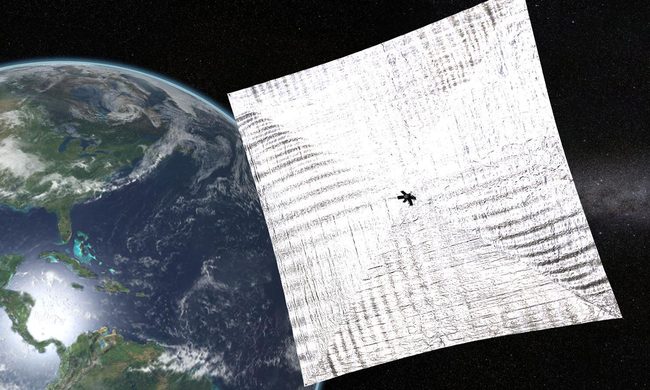
LightSail in Earth orbit

Laser-powered lightsails are one of the coolest answers to spaceflight. It might not be as sci-fi-sounding as a warp drive, but now, its practicality has also come under question. Using lightsails, a spacecraft could unfurl an ultra-thin reflective sail and let a powerful laser push it toward another star, without relying on fuel.

The tech was simple and elegant--except it's also more complicated than it sounds. A new preprint from researchers Chao Shen and Jiaze Li of the Harbin Institute of Technology suggests that relativistic lightsails may run into a hidden propulsion problem once they start moving extremely fast.

Read more
The galaxy has an exoplanet size mystery, and NASA’s EVE mission wants to solve it
This planet-hunting mission wants to catch baby worlds before they grow up
Artist’s Illustration of Exoplanets Orbiting Barnard’s Star

Mankind venturing into space ended up creating more questions than it answered, and one of the dilemmas is related to the planet sizes. Astronomers have found plenty of rocky super-Earths and plenty of puffier sub-Neptunes, but far fewer planets with a radius of about 1.8 times Earth’s.

That gap is known as the radius valley, and a proposed mission called the Early eVolution Explorer, or EVE, wants to figure out why it exists. NASA has a simple plan: look at planets while they are still young. The mission concept, detailed in a new arXiv preprint and covered by Phys.org, would focus on newly formed star clusters to see what small planets look like before billions of years of evolution.

Read more
We just got a hot signal that a Tesla and SpaceX merger could happen, after all
Tesla

For years, the idea of Tesla and SpaceX becoming a single company has lived somewhere between ambitious business theory and Elon Musk fan fiction. The two companies already share DNA, leadership influence, engineering talent, and long-term goals. But every time the topic surfaced, it felt more like an interesting thought experiment than a realistic possibility. Now, one of the most important people at SpaceX has added fresh fuel to the conversation.

Speaking in a recent CNBC interview, SpaceX President and COO Gwynne Shotwell was asked about the possibility of closer ties between Tesla and SpaceX. Her response wasn’t a flat-out denial. In fact, she suggested that bringing the two companies together could make life a little easier for Musk. That may sound like an offhand comment, but coming from Shotwell, it’s noteworthy. She’s been at SpaceX since its earliest days and remains one of the company's most influential executives.

Read more