
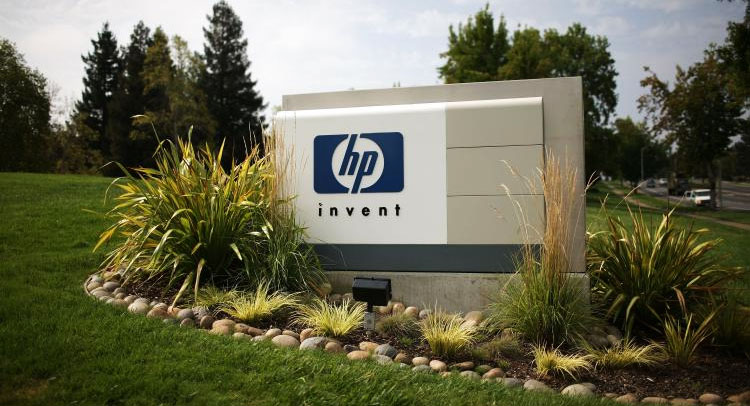
According to a press release today, Hewlett-Packard is discontinuing webOS and is looking for a “a full or partial separation of [consumer electronics division] from HP through a spin-off or other transaction.” That’s right, the number one PC maker in the world is essentially shutting, or selling, its doors. HP is looking for someone to buy its Personal Systems Group (PSG). This division is responsible for all consumer PCs, business PCs, handheld products like the Pocket PC, and TV-related devices like MediaSmart TVs and DVR products. Strange things are happening, people. Strange things.
Apple takes HP’s PC throne
This news comes just as reports are leaking that Apple may have stolen the top spot to become the number one PC manufacturer with its line of Mac computers and the massive success of the iPad. Hot Hardware reports that Apple took a 21.1 percent share of the PC market in Q2 2011, with 80 percent of Apple’s sales of 13.6 million units for the second quarter coming from the iPad. HP, now in the number two spot, moved 9.7 million PCs in the second quarter. Dell, Acer, and then Lenovo rounded out the top five.
So, why is HP planning to rid itself of its PC division? These sales aren’t terrible. Well, it doesn’t see a bright future in the space, apparently. With the PC space and smartphone space beginning to interbreed, traditional PC sales are stagnating (down 2 percent in Q2 2011) It’s printing, enterprise, software, and services businesses hold a lot higher profit potential than PCs and tablets, which tend to have thin profit margins due to competition.
WebOS meets its demise
Then there’s webOS. HP paid $1.2 billion to purchase Palm two years ago because it saw a future in webOS, but hasn’t been able to capitalize on the platform. In February, HP announced three new webOS devices — the HP Veer, HP TouchPad, and Palm Pre 3 — and boldly stated that webOS would be integrated into all of its future PCs. As of today, that plan has been dissolved, partially due to poor sales of the HP Veer and HP TouchPad, two odd products that likely didn’t take off more because of the hardware than webOS itself. Still, sales are everything. According to sources at Best Buy, the recently-launched TouchPad sold just 25,000 of its 250,000 initial shipment to the retailer. And in HP’s quarterly earnings call, it announced that it would be taking a $100 million hit to buy off unsold inventory of the failed tablet.

In its release, HP says it has no plans to continue development on webOS products, but may continue to update it or consider licensing it out to other vendors, like those who make smart cars and appliances. Still, we have to wonder why any manufacturer would sign on to integrate an OS that has been publicly discontinued. Would you want to run a dead OS when there are plenty of living options?
Lenovo and IBM all over again?
So what might happen if HP spins off its PC business? It could simply operate independently and continue to make PCs and other electronics for a long time. The more likely scenario, however, is that someone will buy HP’s PC business, in a deal not unlike Google’s recent Motorola acquisition. But forget Motorola for a moment. We’ve seen this before. In 2005, IBM made the decision to sell off its PC business to a Chinese company called Lenovo for $1.75 billion, an amount that seems paltry when compared to the mammoth $12.5 billion sale of Motorola Mobility. At the time of sale, IBM was the number three consumer PC manufacturer in the United States, but, like HP, IBM saw a brighter, more profitable future in the world of enterprise, computing architecture, and a number of other business and government related projects.
At first, Lenovo relied heavily on the IBM name, but in the years since, it has increasingly relied on its own branding, relegating the IBM logo to the inside of its products, similar to the old “Intel Inside” branding that used to adorn PCs in the 1990s. Lenovo is currently the number five PC maker with 7.5 percent of the market, $4.8 million in Q2 2011 sales and 9.7 percent of total market share in 2010. For comparison, IBM’s market share in 2004 was 5.5 percent. Lenovo has announced and released tablet computers outside the United States and has a good foothold in China, which will undoubtedly see a great deal of growth in the future.
Who will buy HP’s PC business?
So who is HP’s Lenovo? Who will step up and buy the PC giant? Well the obvious first guess would be one of HP’s competitors. Dell, Acer, Lenovo, and Toshiba could be interested in acquiring HP if the math benefits them enough. After all, in 2002, HP bought its way to the number one PC position with its purchase of Compaq computers. Compaq was the number one manufacturer from 1996 to 2000. By 2006, HP had taken back the top spot from Dell, reigned supreme from 2001 to 2005. It has held the top spot ever since.
Or maybe somebody else wants in on the PC market. Samsung, HTC, LG, Google (why not?), or another smartphone manufacturer could choose to buy into the PC market or increase their stake significantly. Samsung seems an especially good fit, as its PC sales have never reached the heights of its smartphone and feature phone sales. Maybe somebody from outside the industry all together plans to join.
The PC market is alive and well
It’s not like the PC market is dying. It’s just evolving. Tablet computers are becoming an important sector of the market and are slowly merging with the traditional PC, a topic we just covered in Back to Basics – How smartphones and tablets are shaping your next PC. Overall, the space is still growing quite rapidly. Global sales of PCs have risen from 305.9 million units in 2009 to 346 to 350 million in 2010. 2011 sales will likely grow still, propelled by the growing tablet market. Want to know how fast computer sales have grown? In 2005, 218.5 million units were sold around the world. In 2000, only 134.7 million were sold, and in 1996, only 70.9 million computers were sold. We’ve gone from 71 million to 350 million in 15 years. For those with an open mind, the PC industry is a great place to be.
Don’t fret the coming loss of HP, should such a thing happen at all. Companies rise and fall all the time. It’s only when we stop seeing companies fail that an industry gets into trouble and complacency. The PC market will not shrink or hurt severely without HP branded products to fill retail shelves. If anything, this mix up will only speed up innovation and growth. HP will survive too, likely sinking into the background of the tech industry much as IBM has done. Years from now we consumers will hear about Hewlett-Packard from time to time and wonder just what the company actually does anymore. HP isn’t going anywhere, it’s just content being boring. It’s had enough with the glitz of consumer electronics. It’s gotten to the age where it just wants safer and larger profits.


