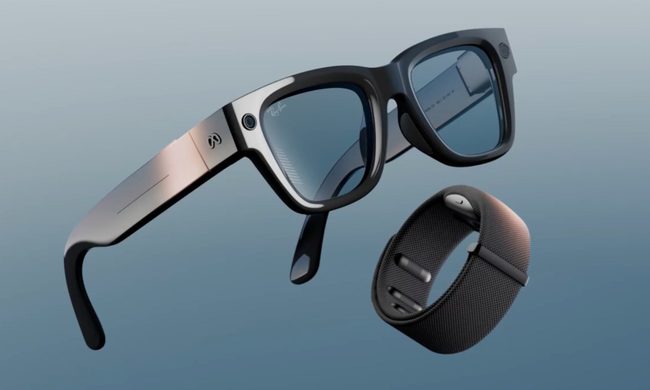
Rokid is making a strong case that smart glasses and wearable control do not have to come with Meta-level prices. At CES 2026, the company unveiled its new Rokid Style smart glasses and announced a partnership with Mudra, the startup behind the Mudra Link neural wristband.
Rokid handles the glasses and AI experience, while Mudra takes care of neural input through a separate wearable. Together, the two products offer hands-free computing at a lower cost than Meta Ray-Ban glasses and Meta Neural Band.
Rokid Style takes a display-free approach to smart glasses

The Rokid Style glasses take a noticeably different approach from AR headsets or display-heavy smart glasses. There is no screen built into the lenses. Instead, Rokid positions Style as an all-day AI companion focused on audio, cameras, and voice interactions.
The glasses support multiple AI engines, including ChatGPT and DeepSeek, rather than locking users into a single assistant. It also works with services like Google Maps and Microsoft AI translation.
Inside, Rokid uses a dual-chip design, pairing an NXP RT600 chip for low-power background tasks with a Qualcomm AR1 chip that handles heavier AI and imaging work. Rokid says this setup enables up to 12 hours of battery life under typical use.
On the front, there is a 12MP Sony camera capable of 4K video recording in multiple aspect ratios, a feature Rokid highlights as being particularly useful for creators. The glasses can record up to 10 minutes of continuous video.
Weighing just 38.5 grams, Rokid Style is light enough for all-day use and supports prescription lenses, with options like transition lenses and different frame styles. The glasses go on sale starting January 19 and are priced at $299, which is cheaper than the latest $379 Meta Ray-Bans.
Mudra Link brings neural input at a lower price than Meta

Mudra Link is a neural wristband that uses electromyography (EMG) to detect subtle finger and wrist movements, turning them into control inputs for connected devices.
Instead of cameras tracking hand gestures in the air, Mudra Link reads muscle signals directly, allowing users to scroll, select, and interact without touching a screen. Priced at around $249 (at the time of writing), Mudra Link is positioned as a cheaper alternative to the Neural Band by Meta.
Together, Rokid Style and Mudra Link present a modular approach to wearable computing. Rather than asking users to buy into a single expensive ecosystem, the two companies are combining affordable glasses with a dedicated neural controller to deliver meaningful hands-free experiences.
It may not be as ambitious as Meta’s long-term AR vision, but it is an affordable option that people can actually buy, wear, and use right away.