New information regarding the next-gen Intel Meteor Lake and Intel Arrow Lake processors has just been leaked. It seems that Intel is heading for a huge redesign of its current chip architecture.
The processors will also mark the release of a brand-new socket, which means that they will require a new motherboard — but they are still close enough to their older siblings that one key component will remain the same.
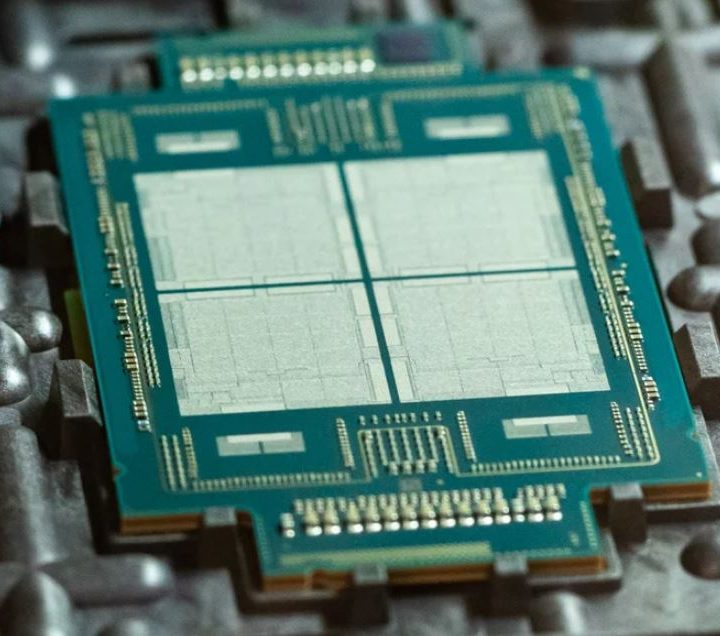
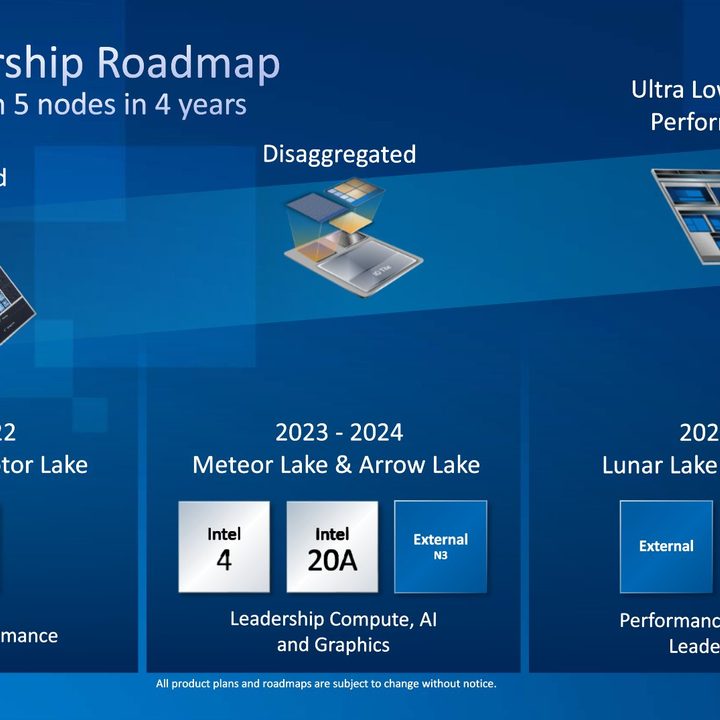
Although this year will see the launch of Intel Raptor Lake, the company has already outlined the next generations of its processors, and preparations are well underway. Intel Meteor Lake is set to launch in 2023, followed by Arrow Lake in 2024, Lunar Lake in 2025, and Nova Lake in 2026. Of course, the further away from the estimated release date, the more we should take it with a healthy dose of skepticism. However, the 14th and 15th generation of CPUs is drawing near, so these are a fairly safe bet to expect in 2023 and 2024, respectively.
This latest round of leaks talks about the socket that Intel Meteor Lake and Arrow Lake will utilize. Intel usually only keeps the same socket for two generations of processors. Alder Lake, as well as the upcoming Raptor Lake, both use the same LGA 1700 socket. According to the new leaks, Meteor Lake CPUs will usher in a new socket design — LGA 1851.
As reported by Benchlife, the alleged LGA 1851 socket is codenamed Intel Socket V1. Just a few days ago, Moore’s Law Is Dead claimed that the new Intel socket will be LGA 2551, but this has now been debunked. If Benchlife’s report proves to be true, this gives us a little insight into Meteor Lake.
The new socket design seemingly confirms that next-gen desktop models will only have 51 additional contact pads compared to the CPUs that are currently in use. As such, although the socket has a higher number of pins, the overall size of the package will be very similar. The Socket VI is expected to measure 45 by 37.5 millimeters. This brings us to the good news — existing Alder Lake and Raptor Lake coolers will continue to work with Meteor Lake and Arrow Lake processors. However, as Wccftech notes, the mounting pressures for CPU coolers might need to be adjusted due to the slight changes in height.
As far as the Intel Meteor Lake chip itself goes, Intel is introducing huge architectural changes. It will be switching to the Intel 4 process node, and with that, it will be working with a brand-new tiled approach. The CPUs will have four main tiles — the input/output (IO) tile, the system-on-a-chip (SOC) tile, the graphics (GFX) tile, and lastly, the compute tile. The compute tile consists of the GFX tile and the CPU tile put together.
Meteor Lake’s CPU tile will retain the hybrid design we already know from Intel Alder Lake. There will, of course, be a difference in cores. The performance (P) cores will be called Redwood Cove, and the efficiency (E) cores — Crestmont. The processors will have varying power requirements from as low as 5 watts for ultra-thin mobile chips to 125 watts.
The new generation of CPUs is expected to deliver a performance jump of up to 20%, according to the current information. Aside from upgrading the processing power of these chips, Intel is supposed to introduce a change to the graphics. The new GFX tile will, apparently, be neither an integrated GPU nor a dedicated GPU. It will utilize Intel’s Xe-HPG graphics architecture and is said to bring an increase in capabilities while retaining the power requirements of Intel’s current integrated graphics solutions.
Meteor Lake will be followed up by Arrow Lake, bringing with it an upgrade to Lion Cove and Skymont cores as well as a switch to the Intel 20A process node. This generation is supposed to bring up the core counts to much higher numbers than what we’re currently used to, reaching as high as 40 cores. Intel also promises an up to 15% improvement in performance-per-watt from this generation of CPUs.
This round of leaks was compiled by Wccftech. While both Intel Meteor Lake and Arrow Lake are still far off, more and more information about the CPUs will emerge as time goes by. In the meantime, there’s a lot to get excited about because, in just a few months, Intel Raptor Lake will be released — with AMD Zen 4 to compete against it.