I’ve been chugging along on my 2015 MacBook Pro for a few years now, and it helped me through those lean years when I refused to buy a Touch Bar MacBook Pro on pain of death. But recently it’s been struggling to keep up with the highly demanding (borderline unreasonable, perhaps) things I ask of it, like checking for macOS updates and writing emails. It was finally time to upgrade and scare my wallet silly in the process.
Or so I thought. As it turns out, right now there’s a much better option than buying a horribly expensive new MacBook: get a refurbished one from Apple’s labs instead. The planets have aligned to make now the perfect time to buy a refurbished Apple laptop. Doing so could save you significant cash and still bag you a like-new device.
An unprecedented price cut
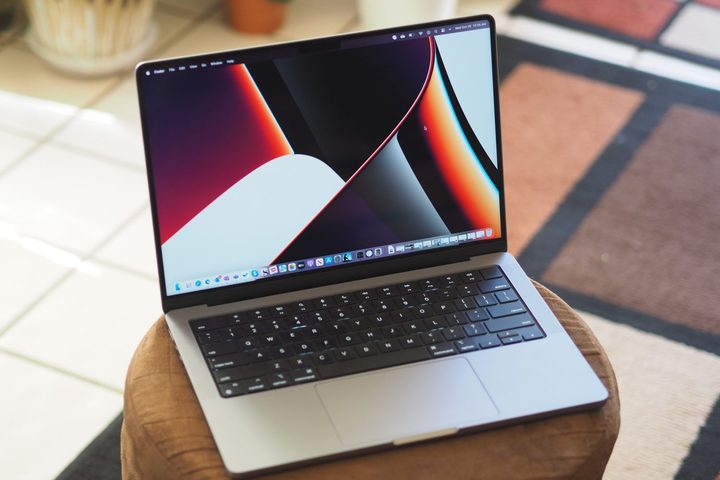
Apple’s refurbishment process is, on the face of it, extremely thorough. Every refurbished Mac is cleaned and tested by Apple, and any defective parts are swapped out for genuine replacements. The device is then packaged up in an original box with all the cables and accessories you’d get with an unused product. It’s an extra step above what you can expect from refurbished Macs bought from third-party outlets.
For that reason, you can typically expect to pay a bit more for Macs refurbished by Apple compared to other companies. Not even second-hand devices can escape the Apple tax, it seems.
Well, that’s usually the case anyway. But recently Apple did something extremely out-of-character: it dropped the prices of its refurbished products. We’re not talking a few dollars here and there — the price cuts jumped from 10% to 15%, a significant bump when you’re talking about laptops that can set you back thousands of dollars each.
In practice, that means you can save almost $300 on an entry-level 14-inch MacBook Pro. For a company as allergic to price cuts as Apple, that’s unheard of. I’ve seen more common unicorns out in the wild.
The price drops don’t extend to the entire MacBook range, but there are some real corkers. Aside from the base-model 14-inch MacBook Pro, you can save $360 on a 16-inch MacBook Pro with an M1 Pro chip, and $150 on an M1 MacBook Air. It’s possible you might find cheaper deals elsewhere, but no one will give you the same quality assurance you get from Apple’s own refurbishment. And in the case of the 14-inch MacBook Pro, I couldn’t find a cheaper deal anywhere else. That’s unbelievably unusual.
New MacBooks have been delayed
I mentioned at the start that there was a confluence of reasons why now is a great time to buy a refurbished Mac. Aside from the price drops and Apple’s own quality guarantee, there’s something else to consider.
Apple often launches new MacBooks in the fall, and up until recently, the rumor mill had gone into overdrive with speculation that new 14-inch and 16-inch MacBook Pro laptops were almost upon us. Surely it would be foolish to buy now when new models were just around the corner, which could in turn prompt even better price drops on older models.
That all changed a week or two ago when reputable tipster Mark Gurman claimed Apple had delayed these laptops into 2023. They might not even launch until June at Apple’s Worldwide Developers Conference, and with no new laptops on the horizon, there’s one less reason to wait. For me, that was the final signal I needed.
Just like new
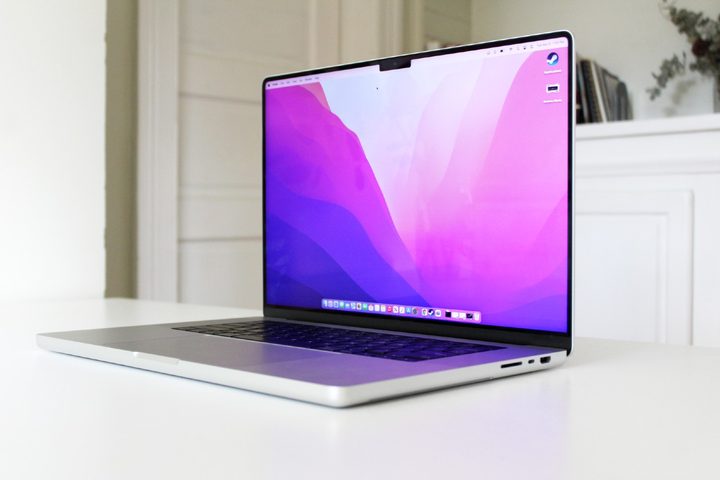
In the end, I opted for a 14-inch MacBook Pro with an M1 Pro chip — the one with the $290 savings. Apple’s ordering deadline for next-day delivery is 10:30 p.m. and, because I am weak and indecisive, I ended up placing my order at 10:28 p.m. Miraculously, it still arrived by lunchtime the next day.
When it arrived, everything was exactly as you’d expect from a brand-new MacBook. I got the same super-slow (and deliberately engineered) box opening that’s designed to build excitement, the same MagSafe cable annoyingly tangled in its paper holder, the same everything. You wouldn’t have known it wasn’t new.
Apple has sold ~2B iPhones.
With a clear understanding of human psychology, Apple designed its packaging to make these ~2B new iPhone unboxing experiences very memorable (and prob why you can't get rid of the box).
Here's a breakdown 🧵 pic.twitter.com/XUKXwndCC4
— Trung Phan (@TrungTPhan) October 27, 2021
That extended to the MacBook itself. There was not a scratch on the laptop. Opening it up, every surface was clean and clear, with no hint that it had been previously returned to Apple.
My one concern going into this was the battery. Apple’s explainer page on its refurbishment process states the company adds a new battery to all refurbished iPhones but doesn’t make the same promise for MacBooks. That had me concerned, but it turns out there was no need to worry. As soon as macOS Ventura was set up, I checked the battery cycle count and felt a wave of relief when I saw the result: just two cycles.
For all intents and purposes, I got a brand-new MacBook Pro for $290 off the list price. It certainly feels that way, and there’s no one else out there who can match the combination of quality and price that you get directly from Apple right now. If you’re in the market for a new MacBook, now is the time to consider getting a refurbished one.