  1. Home
  2. Computing
  3. News

The next generation of QD-OLED monitors is coming soon

Add as a preferred source on Google
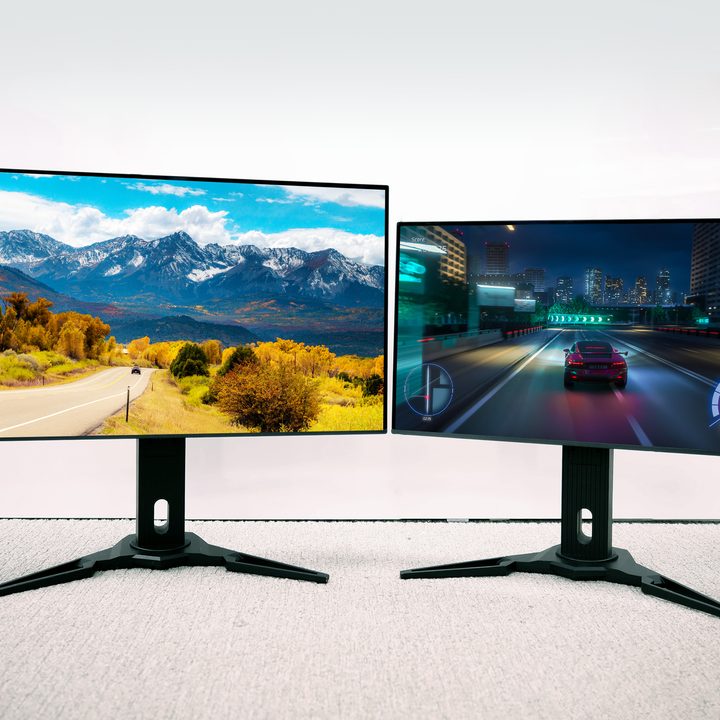
Samsung's 31.5-inch and 27-inch QD-OLED monitors for 2024.
Samsung Display
CES 2026
Read and watch our complete CES coverage here

With CES just around the corner, display manufacturers are fully committed to unveiling their next generation of panels. We have already heard announcements from TCL and Lenovo, and now Samsung has joined the fray with the announcement of its development of two advanced high-end QD-OLED gaming monitors.

Considering the Alienware 34 QD-OLED has been the best gaming monitor ever since it came out, the stakes for the next generation of QD-OLED are high.

Recommended Videos

The first offering measures 31.5 inches and has a UHD resolution (3840 x 2160) with a pixel density of 140 pixels per inch. This makes it the highest pixel density UHD resolution OLED monitor on the market and is comparable to a 65-inch 8K TV. Samsung says that it has achieved the high resolution by using a special ultra-precise inkjet printing technology for the quantum dot light-emitting layer by optimizing the inkjet nozzle and spray volume.
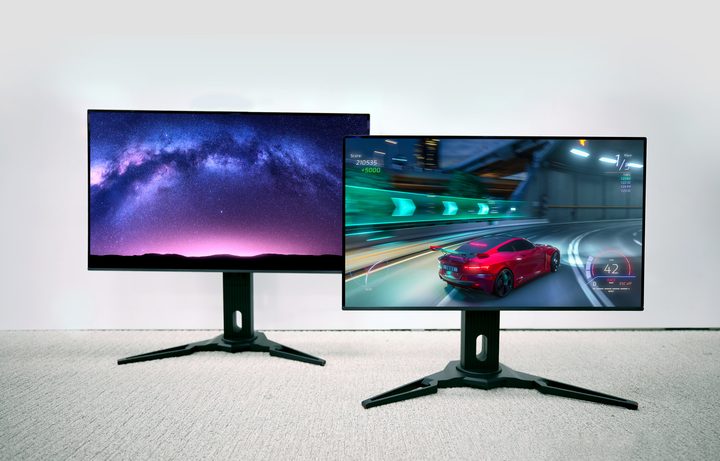
Samsung's 31.5-inch and 27-inch QD-OLED gaming monitors for 2024.
Samsung

Additionally, Samsung is working on a 27-inch QHD QD-OLED with a 360Hz refresh rate. This one also stands out from the crowd as it will be the first OLED monitor with such a high refresh rate. Up until now, we’ve seen OLED monitors reach up to 240Hz. The high refresh rate has been achieved using Quantum Enhancer, a proprietary AI-driven algorithm.

Along with the 360Hz refresh rate, the panel will also be capable of offering a fast response time of up to 0.03ms, making it an excellent choice for professional first-person-shooter (FPS) gamers.

Both QD-OLED gaming monitors are undergoing mass production and are expected to be available in retail stores next year, probably sometime after they have been showcased at CES 2024. With the expansion of its product lineup, Samsung is aiming to triple its total display shipments in 2024 compared to the previous year.

Alienware teased two new QD-OLED monitors in October, so don’t be surprised if we see these Samsung panels showing up there and from other manufacturers.

Kunal Khullar
Kunal Khullar is a computing writer at Digital Trends who contributes to various topics, including CPUs, GPUs, monitors, and…
Your Windows 11 PC can now natively run AI workloads, even if it lacks the Copilot+ badge
Windows 11 laptop on a table

For the better part of a year, Microsoft has been telling us that the future of AI on Windows belongs to Copilot+ PCs. If you wanted Microsoft’s most advanced local AI features, you needed a machine with a dedicated Neural Processing Unit (NPU). That was the deal. Now, Microsoft appears to be rewriting the rules.

According to updated documentation, Windows 11’s local Language Model APIs can now run on non-Copilot+ PCs, provided they have an Nvidia GeForce RTX 30-series GPU (or newer) with at least 6GB of VRAM. On the surface, this sounds like a developer-focused update. In reality, it could be one of the most significant shifts in Microsoft’s AI PC strategy since Copilot+ PCs launched last year. More importantly, it raises a question that has been lingering ever since the AI PC era began: Did we really need NPUs for all of this in the first place?

Read more
The Windows 11 June update makes your Start menu and Search feel much more snappier
Low Latency Profile is the first targeted fix Microsoft has shipped for shell responsiveness, and the June update brings it to every eligible PC rather than just Insider preview testers.
Windows 11 Laptop

If you’ve ever clicked on the Start button and watched the menu appear after a second or two, you already understand the problem Microsoft is trying to solve with its June 2026 Windows 11 update. 

The update (KB5094126) rolled out on June 9, 2026, for WIndows 11 24H2 and 25H2, and targets the shell responsiveness issues that have quietly frustrated users since its launch in 2021. The headline change is the broad rollout of the Low Latency Profile.

Read more
OpenAI teams up with Visa to enable secure payments through AI agents
ChatGPT could soon buy things on your behalf thanks to OpenAI's new Visa partnership
openai-chatgpt-visa-payment

Imagine telling ChatGPT to reorder your paper towels or find the best wireless headphones in your budget, and it just handles the purchase without you lifting a finger. That is exactly what OpenAI and Visa are now building toward.

The two companies announced a strategic partnership at the Visa Payments Forum, with plans to bring Visa's global payment infrastructure directly into OpenAI's AI agent experiences, including ChatGPT and the Atlas browser.

Read more