

There was a time when the Mac mini felt like the perfect Mac for me. Its compact frame was ideal for keeping my desk neat and uncluttered, while its M1 chip was miles better than the sluggish Intel processor in my 2015 MacBook Pro. Almost all my work was done from home, so I didn’t mind the lack of portability, while my MacBook handled things just fine on the road.
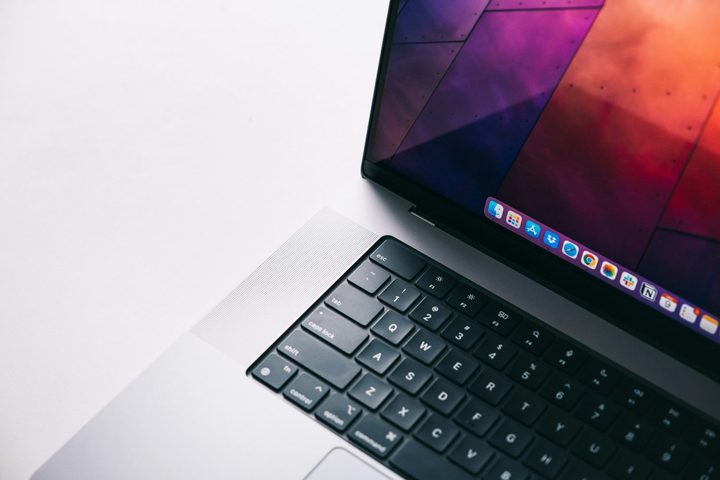
But over time, my 2015 MacBook Pro slowed to a crawl and I eventually replaced it with a 14-inch MacBook Pro with M1 Pro chip. And that’s where the problems began (for the Mac mini, at least). Because after a couple years of use, I’m finding myself reaching for my MacBook Pro rather than my Mac mini almost every time — and I’m not sure even the upcoming Mac mini redesign can change that fact.
In case you missed it, rumors have been swirling that Apple is planning to launch a revamped Mac mini in the next few months. This isn’t just any old tune-up — the Mac mini is expected to come with a new design that reduces its footprint to about the size of an Apple TV box, while slightly increasing its height in the process. It’ll be the first major design change for the Mac mini since 2010, right around the time the iPhone 4 initially went on sale.
That has admittedly piqued my interest. After all, we’ve seen various claims over the years that a Mac mini redesign was in the works, but they’ve all come to nothing so far. Will this time be any different? And if it does actually come to fruition, will it be enough to convince me to upgrade? Or has the MacBook Pro forever dented my enthusiasm for Apple’s smallest desktop Mac?
Overcoming the MacBook Pro
Aside from the new design, the next Mac mini is expected to get a chip upgrade to the Apple M4 series. There are rumored to be two models in the works, one with an M4 chip and another bearing the M4 Pro. Other than that, though, there aren’t expected to be too many other changes.
While the new chips sound intriguing — especially the M4 Pro, which would help with the game reviews that are a part of my work — I’m not sure that they’re enough to convince me to pull the trigger. And that’s because even the new Mac mini’s smaller size still won’t help it overcome the MacBook Pro’s trump card: portability.
Sure, the Mac mini itself is highly portable. It’s the smallest Mac you can get for your desktop, and I find it’s easy to slip inside a backpack when I’m on the go. But using a Mac mini requires more than just the computer itself — you need a power cord, a keyboard, a mouse, and a display, too. And lugging around a desktop monitor is not exactly my definition of convenient.
The Mac mini doesn’t really have much of an advantage for me at home either, since I can easily connect my MacBook Pro to a monitor and use it like a desktop Mac. For me at least, the MacBook Pro has the upper hand.
Should you buy the Mac mini?
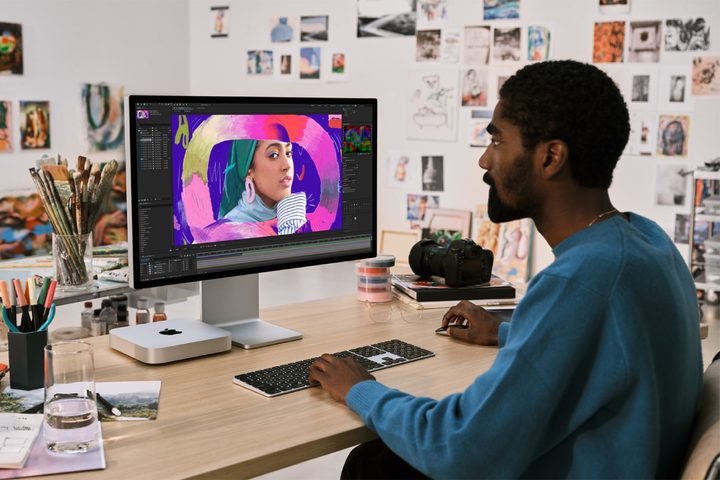
That’s not to say there’s no reason at all to buy a Mac mini. One of its primary strengths is its price – starting at $599, it’s the cheapest Mac by some $400 and is a full $1,000 less expensive than the most affordable MacBook Pro. That’s a massive savings and it still nets you an excellent little computer.
If Apple can keep the price of the new model low, that alone will be an excellent reason to buy it. Add in the reduced footprint, new looks, and faster chips and it could be a tempting prospect for a lot of people.
I’m just not sure I’m one of those people anymore. My M1 Mac mini has served me really well over the years, but it just can’t match the MacBook Pro’s combination of power and portability. The new model, as good as it could be, is unlikely to change that for me.


