  1. Home
  2. Computing
  3. News

Digital Trends may earn a commission when you buy through links on our site. Why trust us?

Risk of bubble in humanoid robot sector, China warns. So, what if it bursts?

We've heard plenty about an AI bubble. But there appears to be another one emerging in the tech sector.

Add as a preferred source on Google
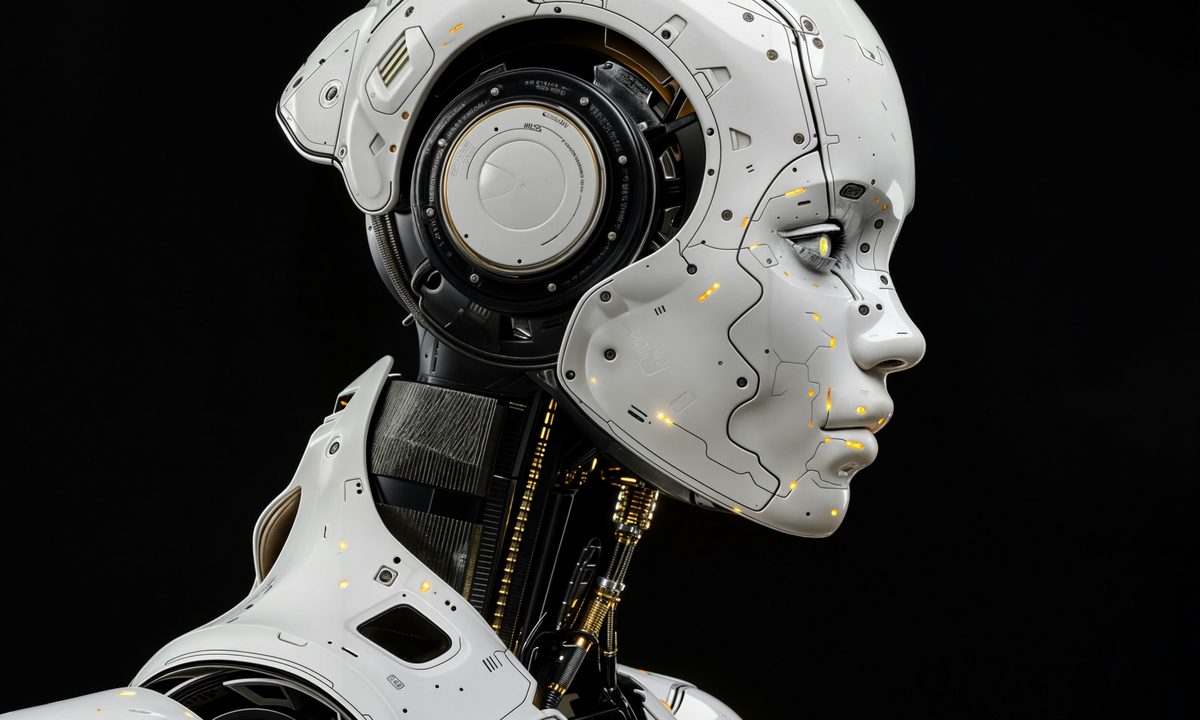
face of a humanoid robot side view
Gabriele Malaspina / Unsplash

We’ve been hearing a lot lately about the so-called “AI bubble,” a phenomenon caused by overinvestment in AI technology, pushing its prices and valuation far beyond its actual, proven value, thereby creating a metaphorical balloon that could eventually burst.

Well, the first warnings are now being sounded regarding a similar bubble emerging in another growing sector — humanoid robots.

Recommended Videos

Over the last year especially, there have been numerous reports focusing on humanoid robots and the growing number of companies spending time — and plenty of money — developing them, with a view to one day deploying them in the workplace, and even the home. But mass production has yet to happen, as engineers grapple with design challenges such as creating super‑dexterous hands and robust whole‑body control systems that can safely handle real‑world tasks, from lifting awkward loads in factories to tidying up and folding laundry in people’s homes

This week, Li Chao, a spokesperson for the National Development and Reform Commission — China’s top economic-planning agency — has cautioned about a homegrown bubble occurring in the humanoid robotics industry as more companies around the world join the race to create the definitive robot.

“Frontier industries have long grappled with the challenge of balancing the speed of growth against the risk of bubbles — an issue now confronting the humanoid robot sector as well,” Li said in comments reported by Bloomberg.

In China alone, more than 150 companies are currently engaged in the development of humanoid robots, with Li warning that a flood of “highly similar” models could overwhelm the market and restrict opportunities for research and development.

Next year looks to be key in the development of the humanoid robot market — as well as the development of any associated bubble — with Citigroup forecasting “exponential” growth in robot production in the Asian nation, Bloomberg noted.

If China’s humanoid robotics bubble does eventually burst, it could lead to the slower rollout of affordable humanoid robots globally, as Chinese firms are pushing hard to scale humanoid robots and cut costs.

The sector would likely face a sharp funding squeeze, too, and consolidation around a number of the stronger players, with smaller firms merging with the larger companies, or simply failing.

A reset could also result in a drop in competition for U.S.-based companies in the same sector, which could potentially benefit from cheaper Chinese components and talent, though that would likely only be in the short-term as the Chinese firms restructure and consolidate.

You’d also likely see a cut in funding as a more cautious investment environment emerges.

While it’s not certain that any humanoid robotics bubble will burst, China’s warning suggests that the industry could be in for some serious disruption in the coming years.

Trevor Mogg
Contributing Editor
Not so many moons ago, Trevor moved from one tea-loving island nation that drives on the left (Britain) to another (Japan)…
Pope says AI must be disarmed and shouldn’t dominate humanity. We’re going the opposite way.
The Pope just dropped his first encyclical, and AI companies should probably read it.
Pope Leo XIV signing his first encyclical

Pope Leo XIV signed his first encyclical on May 15, the 135th anniversary of Pope Leo XIII's Rerum novarum. The document, Magnifica humanitas, was published on May 25 and addresses one of the defining challenges of our time: artificial intelligence and its impact on humanity.

The core message isn't anti-technology. The Pope is clear that technology is neither a threat nor inherently evil. However, he does say that technology is never neutral, because it takes on the values of those who build, fund, and control it. That's where things get interesting.

Read more
I built an offline Grammarly alternative and turned it into a Mac app without any coding
It lives in a browser tab. It's a Chrome extension. It's also a Mac app. Claude built it for me in all three flavors.
Grammarly alternative built using Claude.

I wrote this entire article while seated on an airplane experiencing unusually high turbulence. The software I used to spell-check and grammatically sanitize the draft was built at an airport. The language engine is running entirely on my Mac, fully offline, fixing all my typos and removing the double spaces while I mash the keyboard and sip a sugar-bomb coffee. 

Also, I don't know how to code. I didn't write a single line of code, and yet, the Mac software I am using right now looks classier and feels snappier than Grammarly ever did. Grammarly, if you don't know, is one of the most popular apps for spelling and grammar checking on the planet. So, how did I do it? I asked Claude. I narrated my wish, it asked my preferences, and in less than 30 minutes, I built myself a no-internet Grammarly replacement while also avoiding the "yet-another-subscription" curse.

Read more
China will put a unique ID code on humanoid robots, just like citizen ID for us humans
China is treating its humanoid robots like citizens. assigning each one a unique ID code from birth to recycling.
Robot with four arms

China has launched a national programme that will assign every humanoid robot manufactured in the country a unique digital identity code, effectively a citizen ID, but for bipedal machines (those that can balance and walk/run on two legs). 

The initiative, called the Humanoid Full Lifecycle Management Service Platform, was announced on Friday. It is led by the Humanoid Robotics and Embodied Intelligence Standardization committee, which is under China's Ministry of Industry and Information Technology (via South China Morning Post).

Read more