
Some ideas sound theoretical until they appear in a place as ordinary as your morning coffee. Artly is trying to answer that question with Jarvis, its robotic barista system that is already serving drinks at locations including Muji in Portland, Oregon. The company is attempting to take something that has traditionally depended on human skill, repetition, and instinct, then translate it into a system that can reproduce the same result consistently at scale.
What makes Jarvis more interesting than a standard automation story is that Artly is not trying to build the coffee equivalent of a vending machine. Its goal is to replicate the techniques, standards, and workflow of a world class barista closely enough that the experience still feels intentional rather than automated. According to Digital Trends founder Dan Gaul, who visited the Portland location to try it firsthand, the coffee itself was surprisingly good.
It all started with Joe Yang
Jarvis was trained using the techniques of Joe Yang, a latte artist, coffee roaster, and multiple U.S. coffee competition winner who now serves as Artly’s Chief Coffee Officer. His own path into coffee was not especially conventional. Yang grew up in China and did not really begin drinking coffee until he attended university in Auckland, New Zealand, in 2007, where he ordered an espresso mostly because it was the cheapest thing on the menu.
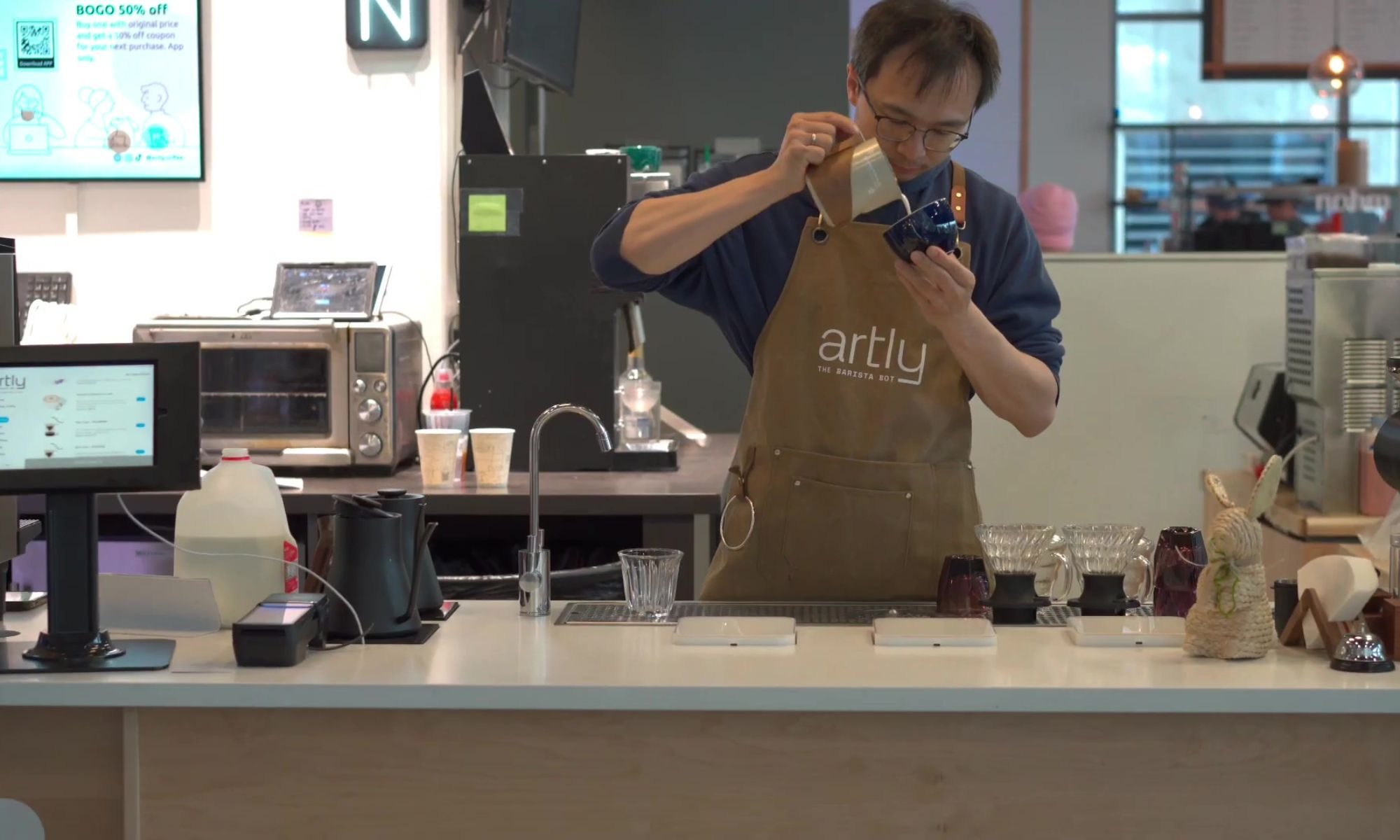
Over time, that curiosity pushed him deeper into café work, specialty coffee culture, and professional competition, where he eventually went on to win U.S. championships in brewers cup, latte art, and roasting.
Artly approached coffee from a robotics perspective
While Yang’s background came from specialty coffee, Artly’s founding team came from computer vision and robotics. The co-founders had previously built facial recognition and computer vision technology before eventually selling their startup to Amazon. After several years there, and during the slowdown of the pandemic, they returned to robotics and started looking for industries where automation could improve consistency without removing the experience entirely.
Coffee became an obvious candidate. The market was large, the company was based in Seattle, and café operations rely heavily on timing, repetition, and quality control. The first prototype reportedly came together in a garage within six months before eventually being shown at a coffee trade show where the team met Yang.
Jarvis learned by studying how a barista works
One of the more interesting aspects of Jarvis is how the system was trained. For latte art, the Artly team attached motion capture equipment to Yang’s arm and recorded how he moved while pouring milk. The robotic arm then learned to reproduce those movements rather than relying on a fixed animation or pre programmed sequence.
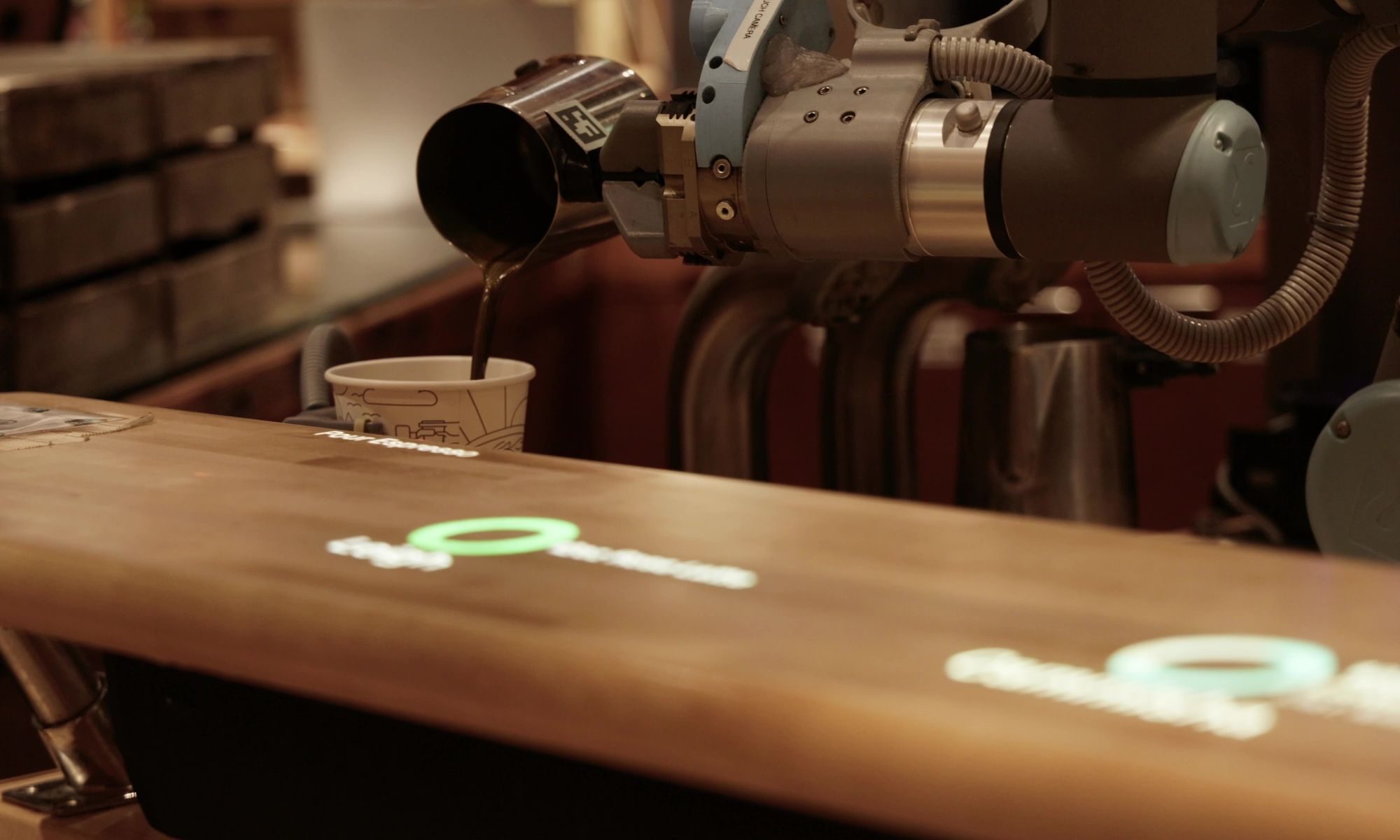
The system also uses computer vision throughout the process. After preparing a drink, Jarvis photographs the latte art using a camera mounted on the robotic arm and evaluates whether the result meets the expected standard. If something is off, the system adjusts future pours accordingly.
This feedback loop is one of the defining parts of the system. Jarvis is not meant to endlessly repeat one identical movement forever. Instead, it is designed to check, correct, and recalibrate itself against the standards originally established by Yang.
Consistency may be the biggest advantage
According to the company, the system measures ingredients with a variation of only 0.1 gram while also controlling extraction time, milk steaming, water levels, and other variables that affect the final drink. Yang himself tuned details like steam wand angles, extraction timing, and the roasting process used for the beans.
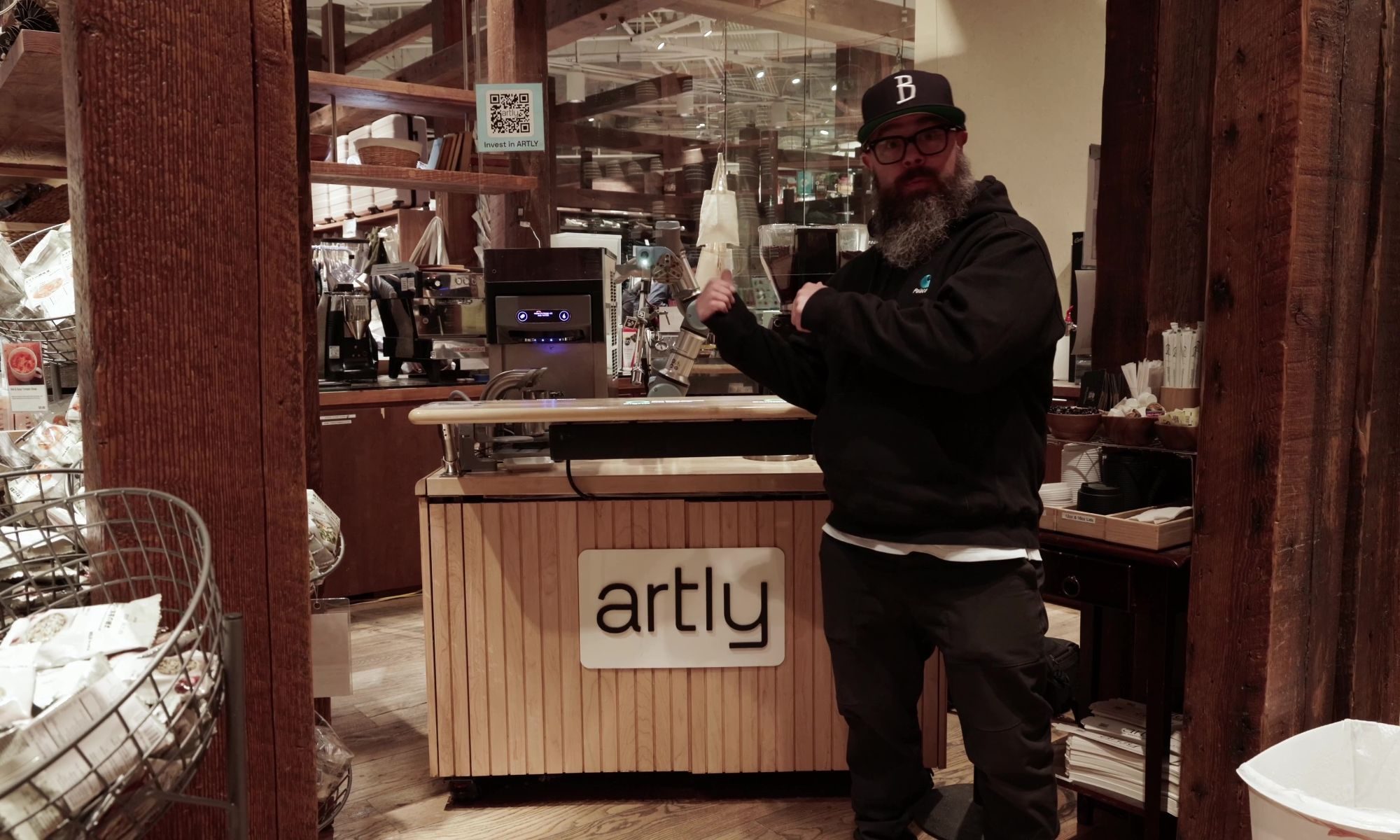
Precision matters even more once the environment becomes busy and unpredictable. A barista may be exceptional under ideal circumstances, but cafés are noisy, crowded, and constantly interrupted environments. Yang acknowledged this directly, saying there are situations where he trusts the system to make drinks more consistently than he would during a busy shift.
In practice, that may be the strongest argument in Jarvis’ favor. Most people are not getting coffee every morning from a championship level barista operating under perfect conditions. More often, they are getting coffee from rushed workflows, crowded counters, and employees balancing multiple orders at once. A system that can repeatedly deliver the same level of quality starts to feel less like a novelty and more like a practical consumer product.
The system still relies on people
Jarvis is not fully autonomous in the way many people might imagine. Staff still need to refill beans, milk, cups, and syrup, while the system focuses on drink preparation and self cleaning processes. At the same time, Jarvis constantly checks its own work through cameras and sensors that verify tamping pressure, ingredient levels, cup placement, and milk quality throughout the process.
The distinction is important because Jarvis is not operating like a simple robotic arm repeating a fixed motion from point A to point B. The system is continuously monitoring, correcting, and recalibrating while preparing drinks.
Coffee may only be the beginning
Artly sees Jarvis as the starting point rather than the end goal. The company says it is already experimenting with robotic systems for cocktails, mocktails, smoothies, and even projects outside food and beverage, including robotic fish filleting in collaboration with Virginia Tech.
The broader ambition makes Jarvis feel less like a novelty café robot and more like an early example of how robotics could move into other forms of skilled work.
If you do end up visiting one of Artly’s locations, Yang recommends ordering a latte first because it showcases the latte art system and the milk steaming process the company focused heavily on replicating. According to Artly, the goal is not just consistency in appearance but also a creamier texture and more natural sweetness without relying on added sugar.