
If you’re looking for a luxury electric vehicle, you have many more options available to you than buyers looking for budget options. Sure, there are options from the new companies, like Lucid, but there’s still something to be said for options from the likes of BMW and Mercedes-Benz, which have both been building solid electric cars for some time now. Excellent examples of these include the Mercedes-Benz EQS SUV and the BMW i7.
Both of these cars are among the most luxurious in their respective lineups, offering high-end technology, stunning interior designs, and more. But is one actually better for your needs? Here’s a look.
Design
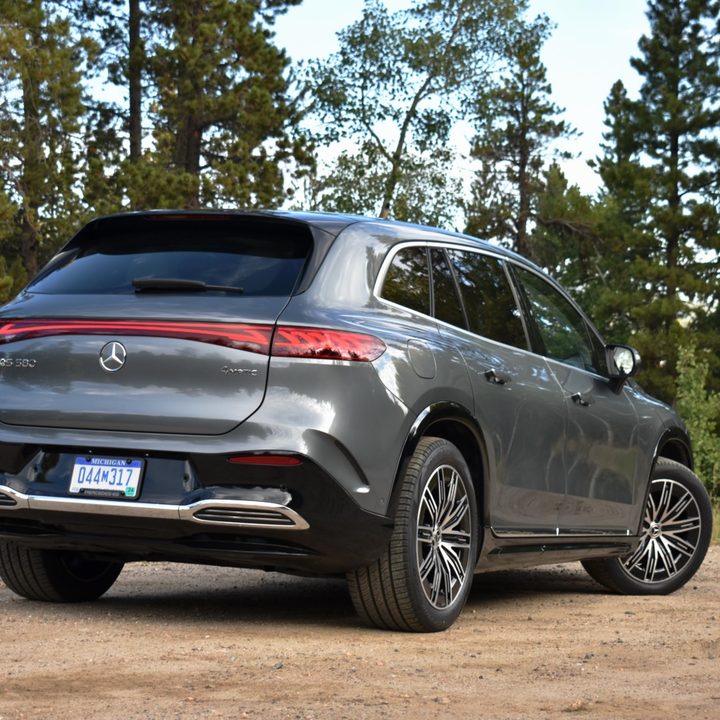
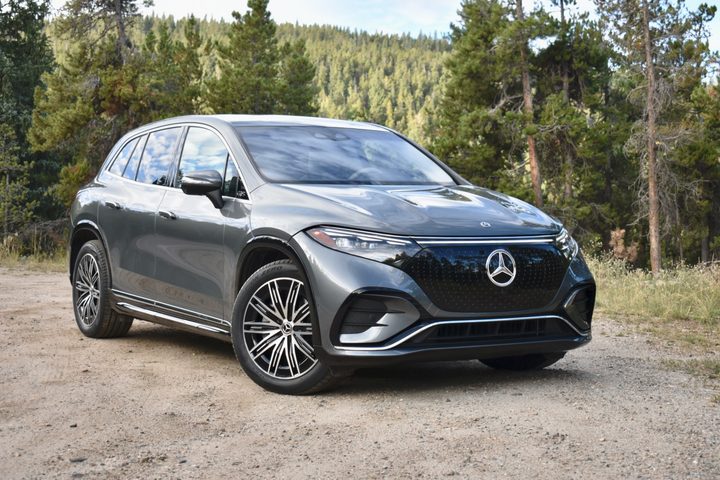
The Mercedes-Benz EQS SUV follows the same overall design language as many of Mercedes’ other electric vehicles from the past few years. That’s to say, it has the somewhat bulbous nose that can be found on the standard EQS — a design feature that I’m not a huge fan of. The rest of the car isn’t bad-looking, though. As expected, it’s a little taller than the standard EQS, with a light bar along the back for the brake lights.
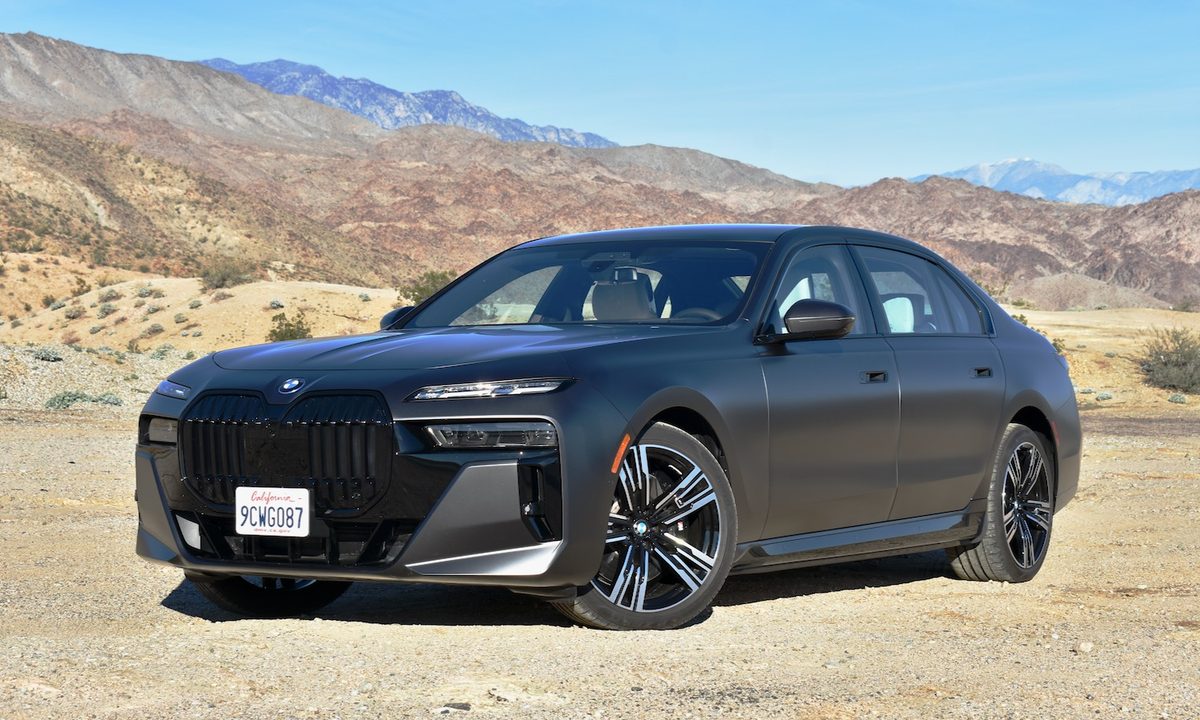
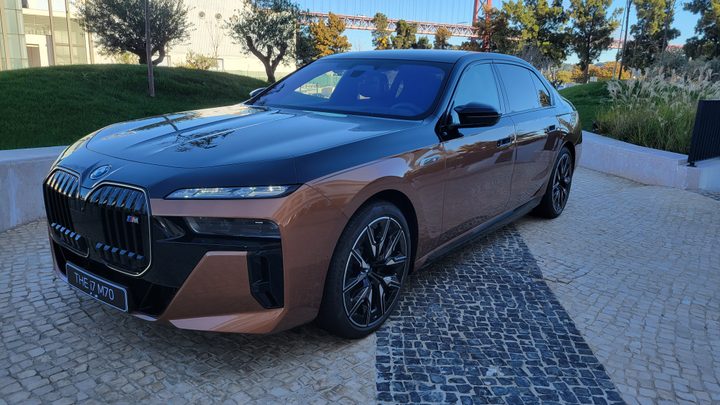
The BMW i7 isn’t as tall as the EQS SUV, of course — it’s more of a sedan. BMW has also been struggling a little with the front end of its cars, and the BMW i7 has a large faux grille that doesn’t look great, but it could be worse. The rest of the car, again, isn’t bad-looking. It’s a little boxy-looking, but generally, it’s sleek and stylish overall.
Design is ultimately down to personal preference, so we’re giving this one a tie.
Winner: Tie
Interior and tech
The insides of the cars offer a slightly different approach. The Mercedes EQS SUV boasts three large displays at the front, including a 12.3-inch display for the passenger to stream video. Apart from that, the EQS SUV is decked out with accent lighting and premium materials, and it looks and feels excellent. The car also supports CarPlay and Android Auto, which is handy, and offers features like heated and cooled front seats with massagers.
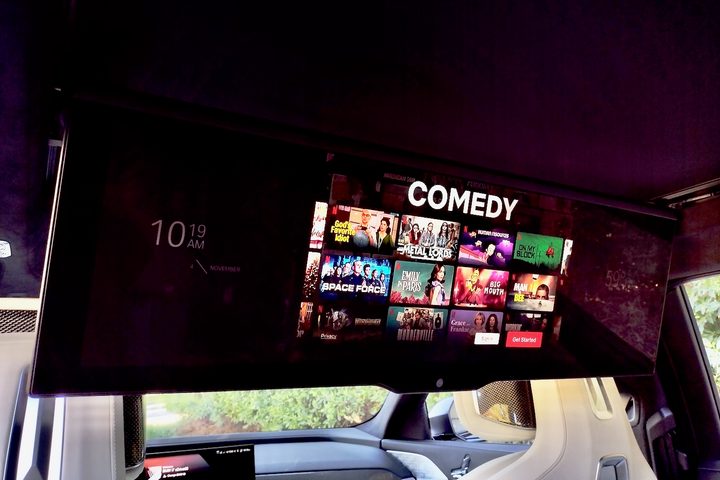
The EQS SUV isn’t the only car built for passenger comfort. In fact, the BMW i7 is perhaps even more built to coddle, especially for passengers in the back seat. The car offers a massive 31-inch screen in the rear seats, which can extend from the ceiling of the car. There are displays in the arms of the rear seats, too, to help control shades, climate, and more. It’s a pretty neat setup. The front of the i7 is perhaps not quite as impressive as the EQS SUV, but it does have a large infotainment display, which can also be used with CarPlay and Android Auto.
The BMW i7 has some more interesting features, but if you’re a driver, I prefer the front of the EQS SUV. Still, this one’s a tie.
Winner: Tie
Performance
The EQS SUV is available in a few different variants — including the EQS 450+ SUV, the EQS 450 4Matic SUV, and the EQS 580 4Matic SUV. They all offer slightly different performance, with the base model (EQS 450+ SUV) offering 355 horsepower and the ability to accelerate from 0 to 60 miles per hour in 6.5 seconds. The top-tier model has 536 horsepower and gets to 60 miles per hour in 4.5 seconds.
The BMW i7, as you might expect, is also available in a few different variants. There’s the i7 eDrive50, which is the base model, the i7 xDrive60, and the i7 M70. The eDrive50 offers 449 horsepower, which is quite impressive, while the M70 steps up to 650 horsepower and has the ability to accelerate from 0 to 60 miles per hour in 3.5 seconds. That’s pretty quick — and it puts the BMW ahead in the performance category.
Winner: BMW i7
Range and charging
The different models don’t just impact the performance — they also impact the range on offer. The Mercedes EQS 450+ SUV has an estimated range of 305 miles, and that’s the longest-range model — with the two other EQS SUV models offering an estimated range of 285 miles. It’s not a bad range by any means — though, of course, more would have been nice. The car can charge at 207kW, which is quite fast, though not the fastest — especially compared to cars half the price, like the Kia EV6, which charges at 350kW.
The BMW i7 is about on par. The base model of the BMW i7 (the eDrive 50), has a range of between 301 and 321 miles according to BMW, with the difference presumably coming down to options like different tires. The lowest-range i7, the i7 M70, sits in at between 274 and 291 miles, which, again, is about on par with the 285-mile EQS SUV. The BMW i7 can charge at a speed of 195kW, which isn’t different enough to notice much of a difference in real-world use compared to the EQS SUV.
Winner: Tie
Pricing and availability
The BMW i7 and the Mercedes EQS SUV are available for purchase now, so you can get one if you choose. The EQS SUV starts at $104,400 for the EQS 450+ SUV, though, of course, that can go up dramatically for higher-end models. The EQS 580 4Matic SUV starts at $125,950.
But the BMW i7 isn’t cheap either. The base price of the BMW i7 is a hefty $105,700 — and if you spring for the i7 M70, you’ll pay an eye-watering $168,500.
Considering the base price of these two cars isn’t really all that different in the grand scheme of things, this one’s a tie.
Winner: Tie
Overall winner: BMW i7
The BMW i7 and Mercedes-Benz EQE SUV are very similar in many ways. They offer a similar range and charging speed, start at a similar price, and both offer a distinctive design. The EQS SUV is a little bigger and more practical, and while it’s definitely a luxury vehicle, it doesn’t necessarily go over the top. The BMW i7, on the other hand, does go over the top — but perhaps that’s what you’re looking for.
What puts the i7 on top, however, is the fact that it performs better. It’s a fair bit faster than the EQS SUV, and while the EQS SUV is still very quick, if speed is what you’re looking for, the i7 may be the way to go.


