  1. Home
  2. Cars
  3. News

Rivian is partnering with Uber to put thousands of robotaxis on the road

Uber's $1.25 billion bet on Rivian's R2 robotaxi could reshape how millions of people hail a ride across 25 cities by 2031.

Add as a preferred source on Google
Rivian R2 featured image.
Rivian

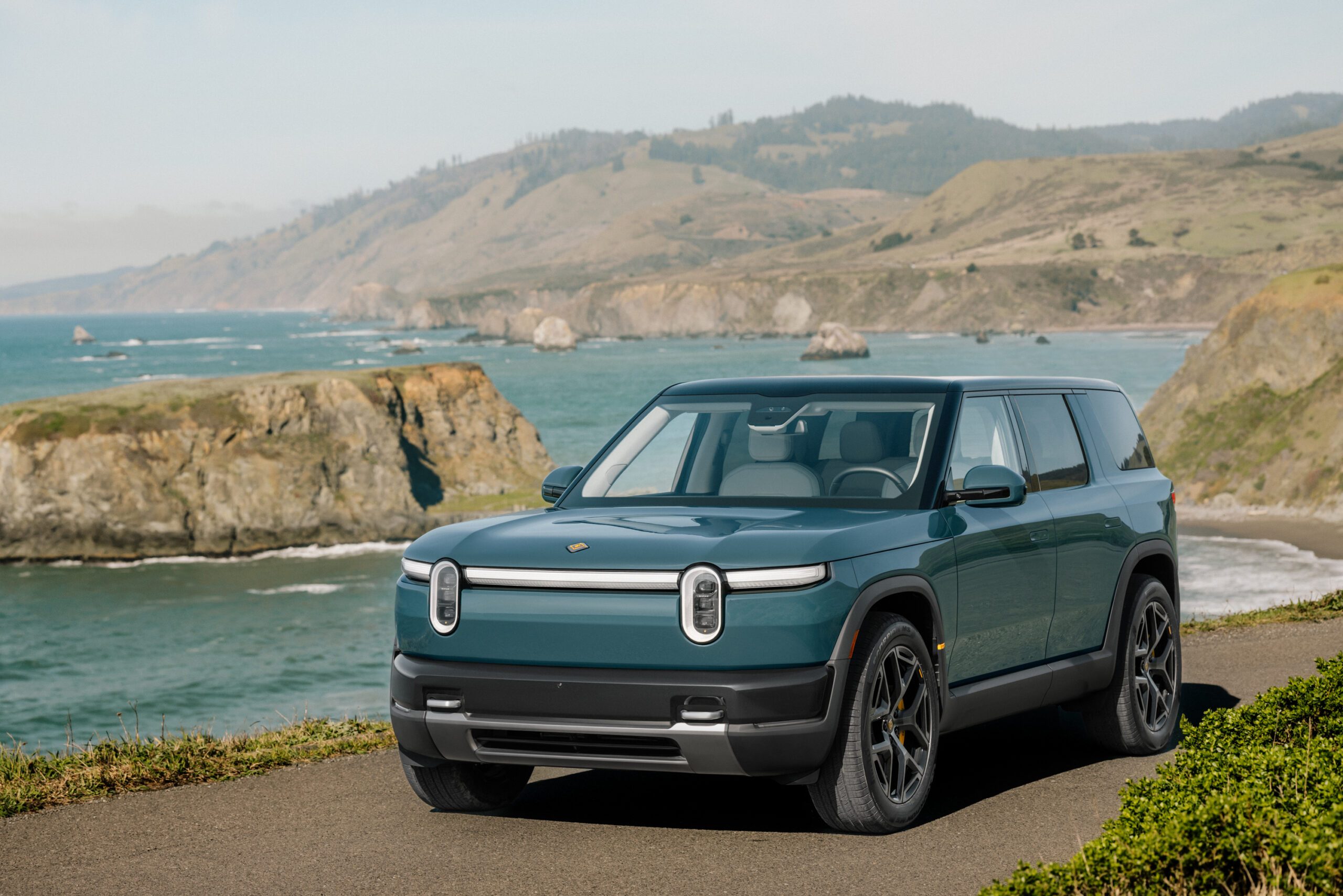
Uber and Rivian have announced a strategic deal that could deploy up to 50,000 robotaxis (fully autonomous vehicles) on the road by 2031. 

As part of the partnership, Uber will invest $300 million in Rivian (equivalent to about 19.55 million Rivian shares), with the investment committed immediately upon signing. 
What will passengers experience on the ground?

In the first phase, Uber or its fleet partners could purchase the first 10,000 fully autonomous Rivian R2 EVs. From 2028, passengers in San Francisco and Miami could be hailing fully driverless Rivian R2s directly through the Uber app. 

Recommended Videos

Thereafter, Uber will have the option to purchase an additional 40,000 units from the automaker through 2031, to be deployed across 25 cities in the United States, Canada, and Europe. However, the bulk of the investment is tied to Rivian meeting the agreed-upon performance milestones. 

Uber has also agreed to pay licensing fees for Rivian’s autonomous driving software. For those catching up, the automaker’s third-generation autonomy platform combines 11 cameras, five radars, and one LiDAR, all powered by two in-house RAP1 chips (capable of delivering up to 1,600 TOPS of AI compute). 

The deal improves Rivian’s position as an autonomous technology provider 

It’s worth mentioning that Rivian is beginning consumer R2 sales this spring. Once that happens, the real-world driving data should help further improve the autonomous systems. It is Rivian’s stronghold over its hardware (the car) and the platform (the software) that convinced Uber to enter the deal. 

Following the announcement, Rivian’s stock jumped roughly 10%, signalling strong investor confidence in the partnership. The deal adds to Rivian’s existing $5.8 billion software partnership with Volkswagen, solidifying its position as an autonomous technology provider. 

For Uber, it is the most substantial robotaxi commitment the company has made, following earlier tie-ups with Lucid, Amazon’s Zoox, Stellantis, and Nvidia.


Shikhar Mehrotra
For more than five years, Shikhar has consistently simplified developments in the field of consumer tech and presented them…
Citroen is bringing back the iconic 2CV as an electric car priced under $18,000
The iconic Citroën 2CV is returning as a sub-$18,000 electric car
The beloved Citroen 2CV is getting an EV reboot

Affordable EVs have become weirdly hard to find. But Citroën is reaching deep into its own history for a fix. The company has recently confirmed that the beloved Citroën 2CV is coming back as a fully electric car, more than three decades after the original ended production. Citroën CEO Xavier Chardon announced the revival at a Stellantis investor event in Michigan, saying the new 2CV will be 100% electric, built in Europe, and priced below €15,000, or about $17,400.

The people’s car goes electric

Read more
Xiaomi’s new $34,500 electric SUV goes farther than a Tesla Model Y and costs less
Xiaomi's cheapest YU7 yet offers more range than a Tesla Model Y at a meaningfully lower price.
Transportation, Vehicle, Car

Xiaomi CEO Lei Jun had a straightforward reason for why the YU7 wasn't outselling the Tesla Model Y in China: the base model wasn't cheap enough. 

At just 10,000 yuan ($1,450) less than Tesla’s Model Y, the price gap simply wasn't compelling enough. On the evening of May 21, at Xiaomi's "Human x Car x Home" launch event, Lei did something about it (via CarNewsChina).

Read more
Chinese researchers claim solid-state EV battery can charge in just minutes
Imagine charging your EV faster than ordering coffee
EV Charger

Chinese researchers claim a new solid-state battery can survive ultra-fast charging while delivering dramatically higher energy density, potentially reshaping the future of electric vehicles. Researchers at the Chinese Academy of Sciences claim they have developed a new solid-state lithium-metal battery capable of delivering extremely high energy density while surviving ultra-fast charging conditions - a combination the global EV industry has been chasing for years.

According to the research paper published in the Journal of the American Chemical Society, the prototype battery achieved an energy density of 451.5 Wh/kg while maintaining stable cycling performance for 700 charge cycles under a 20C charging rate. In practical terms, that theoretically translates to charging and discharging in roughly three minutes.

Read more