


The Rivian R2 has finally been announced, and it could end up being the go-to EV for drivers who want a decently affordable electric car with a rugged look and feel. But when it finally launches to the public, it won’t be the only option in its price range — the Ford Mustang Mach-E could be one of its main competitors.
The Mustang Mach-E may not be quite as rugged-feeling as the Rivian R2, but it does have a lot going for it — like an increasingly low price, sleek design, and comfortable interior. Is one of these EVs better than the other? We put the two head-to-head to find out.
Design
The first thing to note about the two cars is their design, as they’re pretty different. The Rivian R2 is built to be a little more rugged and outdoorsy, while the Mach-E instead has a sleeker and sportier look to it. Both cars look stylish and modern.

The Rivian R2 definitely has more of an SUV design to it. It has a boxy overall shape similar to that of the R1S but a little smaller. You’ll get those signature oval headlights at the front, along with a long light bar that extends across the back of the car and around to the sides. It’s a great-looking vehicle that will appeal to those who already like Rivian’s design aesthetic.
The Mach-E isn’t really an SUV. It’s much more of a crossover-size vehicle, translating to a little less space on the inside. That doesn’t mean that it’s not spacious, though — in fact, the Mach-E is larger than most electric sedans out there. The car has angled headlights at the front, with a roofline that slants down toward the back of the car. And you’ll get those grated taillights that have become synonymous with the Mustang.
Both the Mustang Mach-E and the Rivian R2 offer modern and interesting designs. You’ll have to decide for yourself which one you like more.
Interior and tech
The design aesthetics of these two cars extend to the interior, too. Like the exterior, the Rivian R2 is more rugged and outdoor-focused. In fact, when announcing the car, Rivian was quick to point out the fact that the first- and second-row seats can fold down, allowing enough room for an air mattress for camping. Other than that, the car offers premium materials and plenty of interior storage, including two glove boxes under the dash.
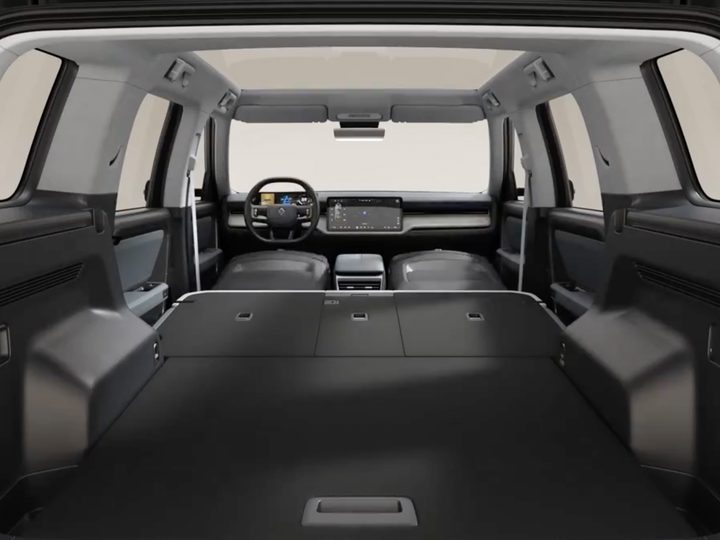
At the front of the R2 sits a large infotainment display alongside a digital instrument display. The R2 has Rivian‘s self-developed infotainment system, which most drivers have found to be relatively well-designed and easy to use. Unfortunately, the car does not support CarPlay or Android Auto, so if those infotainment systems are important to you, you’ll want to look elsewhere. Rivian has said that the cameras and radars dotted around the car’s exterior allow it to offer hands-free and eyes-free self-driving on the highway, but we’ll have to wait and see if that ends up being available at launch.
While not as spacious, the Mach-E does still have plenty of interior room. There’s not as much storage space behind the second-row seats, but considering its hatchback design, you’ll be able to fit a couple suitcases when needed. At the front, the Mach-E also has a large infotainment display, and interestingly, it’s vertically aligned. It also has Ford’s own infotainment system, which isn’t as well designed or as well respected as Rivian’s, but it does support CarPlay and Android Auto.
Generally, the R2 has a slightly more spacious an interior and is a little more tech-focused. If those things are important to you, then the R2 might be a better buy, if you want CarPlay, the Mustang is a better option.
Performance

The Rivian R2 and the Ford Mustang Mach-E benefit from that immediate EV response time — they’re both pretty quick cars. The base trim of the 2024 Mach-E is the Mustang Mach-E Select, and it’s a rear-wheel drive car with one motor capable of delivering 266 horsepower and accelerating from 0 to 60 miles per hour in 6.3 seconds. That, however, is the slowest version of the Mustang Mach-E. Performance ranges from there to the GT model with the so-called “Upgraded eAll-Wheel Drive” drivetrain, which is capable of delivering 480 horsepower and accelerating from 0 to 60 mph in 3.5 seconds. That’s quite fast.
But not necessarily as fast as the Rivian R2 will be when it’s eventually launched. Because the R2 isn’t out yet, there’s a lot we don’t know about its performance — but we do know that it’ll be available in single-, dual-, and tri-motor variants, with the tri-motor R2 offering an acceleration to 60 mph in under 3.0 seconds. In other words, it’ll be quicker and more powerful than the Mach-E — but that top-spec model will also likely be more expensive than the top-spec Mach-E.
It’s also important to note that it’s entirely possible that the Mach-E will offer better or different performance in 2026 when the R2 rolls out.
Range and charging
Both the Rivian R2 and the Mustang Mach-E will offer a decent range, though that will largely depend on the model and options you buy. The lowest-range Mach-E, unfortunately, only has 226 miles of range. That’s for the Mach-E Select or Premium with the Standard Range battery and the eAll-Wheel Drive option. You can get up to 312 miles of range on the Mach-E, though — by going for the California Route 1 model. Unfortunately, the Mustang Mach-E doesn’t have the fastest charging speed. It maxes out at around 107 kilowatts, which means that it’ll take around 34 minutes to charge from 10% to 80%.
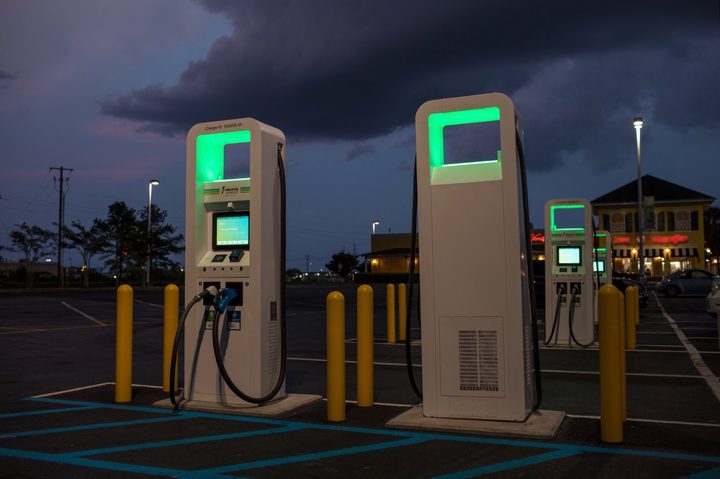
We don’t have exact figures when it comes to the range of the Rivian R2 just yet. The vehicle will offer two battery size options on top of the different drivetrain options that we know about. Rivian has said that the R2 will offer over 300 miles of range with the larger battery, so it’ll at least get close to the longest-range Mach-E if it doesn’t beat it. We’re hoping the lowest-range R2 won’t be much lower than that, but we’ll have to wait and see. We don’t yet know exactly how fast the Rivian R2 will charge, but Rivian has said that the R2 will charge from 10% to 80% in under 30 minutes, and we’re expecting it to offer a charging speed of up to 220kW, like the Rivian R1S.
Pricing and availability
The Mustang Mach-E and Rivian R2 are both built to be on the slightly more affordable side. The Mustang Mach-E, in fact, is one of the most affordable EVs out right now, and you can get the 2024 model starting at $39,895. Not breaking the $40,000 barrier is kind of a big deal, and makes the car more affordable than many similar options, like the Kia EV6 and the Hyundai Ioniq 5. The Mustang Mach-E does not qualify for the federal EV tax credit, likely due to restrictions around where the battery is sourced. But you can buy the Mach-E right now — it’s actually been available for a few years now.
The Rivian R2 isn’t available yet. Rivian has announced the new vehicle, and it’s expected to start rolling out to customers in the first half of 2026. In other words, you’ll have to wait a while to get your hands on one for yourself. You can’t pre-order the vehicle just yet, but you can “reserve” one, which basically involves putting down a $100 deposit to secure a place in line to get one. Rivian has said that the R2 will cost $45,000 when it goes on sale in 2026 — however, it’s entirely possible that the price will change a little as we get closer to 2026.
Conclusions
Is one car better than the other? Well, it kind of depends. The Rivian R2 isn’t available yet, so if you’re looking for a car now, between these two, the Mach-E is your only real option. When the Rivian R2 does finally start rolling out, it may well be a more compelling option due to its better software, more spacious interior, and faster performance — however the R2 will also be more expensive than the Mach-E and won’t offer CarPlay, which may be important to some buyers.


