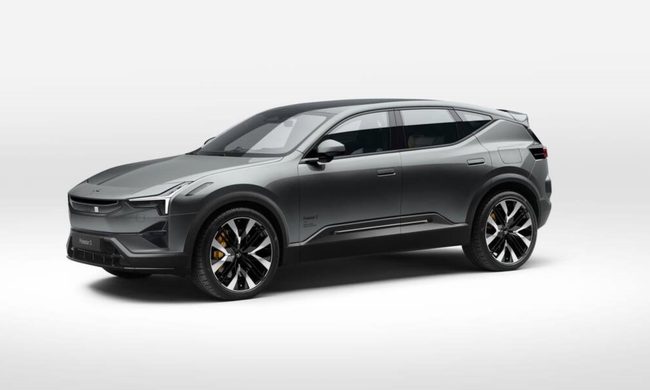
The Tesla Model 3 has long been a go-to for those who want a reasonably priced EV that’s still able to offer important perks like long range. But that doesn’t mean there isn’t competition. In fact, over the years a number of great electric sedans have popped up, like the Polestar 2.
Polestar itself has developed quite a reputation for building high-quality cars. It makes sense. While Polestar itself is a relatively new company, it’s owned by Volvo and at this point, shares many design elements with Volvo cars.
But how does the all-electric Polestar 2 compare with the Tesla Model 3? And which one should you buy? Here’s a look.
Design
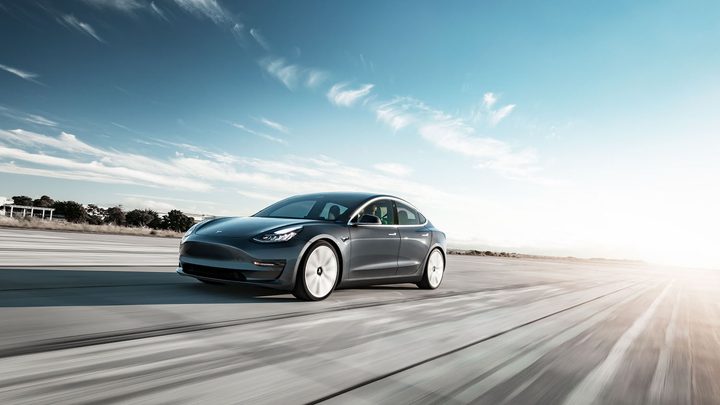
The first thing to notice about these two cars is their design — namely because of the fact that they offer pretty different looks. The Tesla Model 3 looks similar to other Tesla cars — it has flush door handles, comes in the same colors, and has a curved roofline. It’s still a sleek and modern-looking car, despite the fact that the overall design is aging a little.

The Polestar 2 is a pretty sweet-looking car too, though. It’s much blockier than the Model 3, offering more angles and straight lines than the Model 3. It also has many design elements from other modern Volvo cars, like the squared-off light bar along the back and the slim front headlights. It’s available in six colors, and they’re a little more muted than the Model 3’s palette.
Generally speaking, both cars look sleek and modern. Ultimately, design preferences are personal — there’s no objective winner.
Winner: Tie
Interior and tech
The interior design of the cars is pretty different too. As on the outside, the Model 3 continues to prioritize minimalism on the inside, with few controls that haven’t been moved to the display. The display itself is a big 15.4 inches, and it’s where you’ll control most aspects of the car, from the climate to the maps to the audio playback. The car features faux leather upholstery, which comes in all black or black and white.
The interior of the Polestar 2 is a little busier, with more physical controls that prevent the need to have to dig through settings. There’s still a big screen at the front though — this one vertically aligned and loaded with Google’s Android Automotive infotainment system. That’s coupled with a digital instrument cluster, unlike the Model 3.
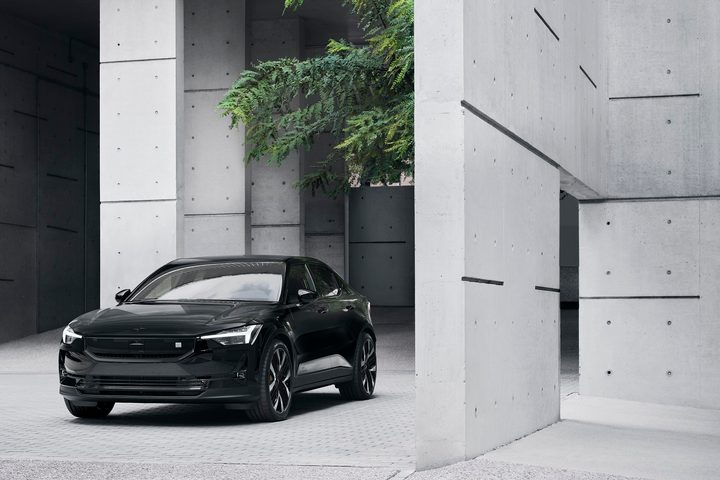
The Polestar 2 also has CarPlay and Android Auto, meaning that you won’t have to stick with the Android Automotive infotainment built into the car if you don’t want to. The Model 3 does not support CarPlay or Android Auto — but it does have among the best software experiences in a car out there right now.
Again, this is a little subjective. Some prefer the minimalistic approach, while others want quick access to physical controls.
Winner: Tie
Performance
Both the Model 3 and the Polestar 2 benefit from that zippy electric car pep, but they don’t quite perform the same.
The Tesla Model 3 comes in three variants — a standard model, which is a rear-wheel drive model, a Long Range model, which is all-wheel drive, and a Performance model, which is also all-wheel drive. On the low end, the standard model has a top speed of 140 miles per hour and can reach 60mph in 5.8 seconds. That’s not slow — but upgrade to the Performance model and you’ll get to speed in only 3.1 seconds. That makes the Model 3 one of the fastest cars on the road, in terms of acceleration.
The Polestar 3 isn’t slow either, but it doesn’t reach the heights of the Model 3. The Polestar 2 is available in two variants — a long-range single-motor model in rear-wheel-drive, and a long-range dual-motor variant with all-wheel-drive. The slower model, which is the single-motor model, reaches 60 mph in 5.9 seconds, while the dual-motor model gets to speed in 4.3 seconds. Again, quite fast — but nowhere near as fast as the Model 3 Performance.
Both cars are quick, but the Model 3 is a clear winner here.
Winner: Tesla Model 3
Range and charging
Range is one of the most important factors of an electric car, and it’s an area where the cars are pretty closely matched.
The standard Model 3 gets 272 miles of range, while the Long Range model steps that up to an impressive 333 miles. The Performance model sits at 315 miles. All of them can charge at 250kW, which allows them to gain 200 miles in around 15 minutes.
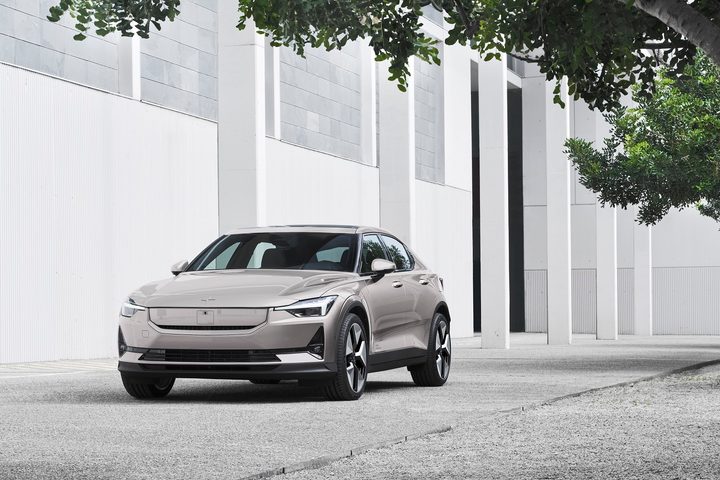
The Polestar 2 is a pretty solid performer in the range department too. Interestingly, the cheaper model gets better range. That’s the single-motor variant, which gets 320 miles of range. The dual-motor model sits at 276 miles. Unfortunately, the Polestar 2 only charges at a speed of 150kW, which will get it from 10% to 80% charge in 35 minutes.
The Model 3’s range is only slightly higher than the Polestar 2, but its faster charging speed gives it the win here.
Winner: Tesla Model 3
Pricing and availability
Both the Tesla Model 3 and the Polestar 2 are available now, and you can get them both readily.
But depending on the model you go for, the amount you pay will be a little different. The Tesla Model 3 starts at $41,240 for the standard model and ranges up to $54.240 for the Performance model. The Polestar 2, on the other hand, starts at a much higher $48,900 for the single-motor variant, ranging up to $54,300 for the dual-motor model.
The Model 3 is the clear winner.
Winner: Tesla Model 3
Overall winner: Tesla Model 3
The Polestar 2 is a great car, but ultimately it just can’t compete with the Model 3, in most situations. The Tesla Model 3 has faster acceleration, a slightly longer range, and a faster charging speed — all for a cheaper price. If you’re looking for a great electric sedan, the Model 3 is still probably the better option for most buyers.