  1. Home
  2. Computing
  3. News

Gamers are flocking to return Intel CPUs — and some are permanently damaged

Add as a preferred source on Google
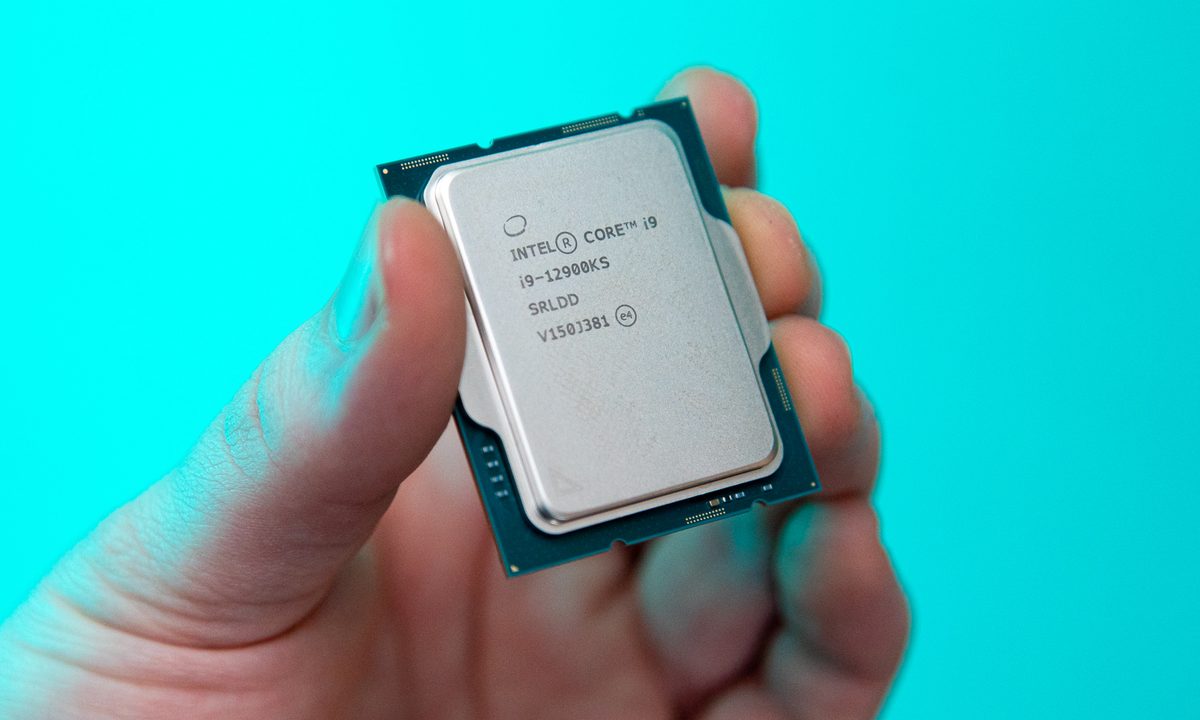
A hand holds the Intel Core i9-12900KS.
Jacob Roach / Digital Trends

Intel’s troubles with instability on 13th-gen and 14th-gen CPUs continues to escalate, and a new report suggests that gamers are returning these CPUs at a much higher rate than retailers expect. An anonymous European retailer says they’ve seen four times as many returns for 13th-gen and 14th-gen CPUs compared to 12th-gen, according to a report from French outlet Les Numeriques.

Returns have only ramped up recently, however. The retailer says that in the six months following the release of all three generations, the return rates are nearly identical. Looking at the rate now, however, 13th-gen CPUs are being returned four times as often as 12th-gen, while 14th-gen CPUs are being return three times as much. Given what we’ve learned about Intel’s instability issue, this suggests that the processors do, indeed, degrade over time.

Recommended Videos

The outlet speculates the return rate is somewhere around 5%, while most CPUs only get up to around a 1% return rate. Even that is a low estimate, as the outlet points out, considering there’s some percentage of processors that receive service directly from Intel. According to a report from Level1Techs, the number of affected processors could be as low as 10% and as a high as 50%.

In addition, some number of these processors are damaged beyond repair, according to the retailer. Intel has pinned the blame of its instability problem on elevated voltage requests within the microcode of the processor. However, we’ve since learned that a manufacturing error is also causing issues, and leaked internal communications suggest there could be even more factors at play.

Intel has committed to release a microcode update in mid-August that will address the elevated voltages, but it might not fix every processor. According to the retailer, the processors that are permanently damaged won’t be fixed by the microcode update. It’s possible that some processors impacted by Intel’s manufacturing error are still in circulation as well, which also wouldn’t be fixed by the microcode update.

Although Intel has finally broken its silence in addressing the instability problem facing its CPUs — which has grown over the course of several months — we still don’t have a concrete answer if the microcode update will fix the widespread issue.

Jacob Roach
Former Lead Reporter, PC Hardware
Jacob Roach is the lead reporter for PC hardware at Digital Trends. In addition to covering the latest PC components, from…
HP’s new ZBook workstations are bringing AI chips, Blackwell GPUs, and eye-watering prices
ZBook 8 G2a

HP has officially started rolling out its latest generation of ZBook mobile workstations globally, introducing two new premium laptops aimed at creators, engineers, developers, and enterprise users. The new lineup includes the compact 14-inch ZBook 8 G2a powered by AMD Ryzen AI processors, alongside the larger 16-inch ZBook X G2i featuring Intel Panther Lake chips and Nvidia RTX Pro Blackwell graphics.

The launches signal HP’s broader push into AI-focused professional laptops, where performance is no longer just about CPU power, but also AI acceleration, high-end graphics, and advanced displays.

Read more
Nvidia’s N1X processor for laptops could be right around the corner
An Nvidia ARM gaming chip in a Legion laptop? Things are getting interesting.
Nvidia logo

Lenovo has accidentally confirmed it is working on laptops powered by Nvidia's yet-to-be-announced N1X chip. The confirmation comes from Lenovo's own ADFS authentication system, which referenced an "Nvidia N1x Portal" in its internal login page, as first spotted by the folks at VideoCardz. 

Earlier support page leaks also listed several unreleased Lenovo systems with N1 and N1X labels, including the Legion 7 15N1X11, which points to a Legion 7 gaming laptop built around the N1X chip. 

Read more
In a market where Mac has been aspirational, it’s somehow a better deal than windows machines now
Windows Laptops became so expensive that MacBooks look sensible now
Computer, Electronics, Laptop

For a long time, the laptop buying advice was simple enough. Windows had a more versatile portfolio that brought you affordable, mid-range, high-end, and even gaming options, while MacBooks were known as the easy premium recommendation.

But owing to the pricing circus caused by memory shortages and component price hikes, the equation makes no sense anymore.

Read more