
In January, Microsoft released a minute-long advert for its Surface Pro and Surface Laptop. It currently has 42,000 views on YouTube with 302 comments discussing the hardware — what the comments don’t mention, however, is the AI-generated shots used in the ad. Why? Because no one even realized AI was involved until Microsoft smugly revealed it this week.
You can tell the company is proud of this little stunt it’s pulled off because the blog about it begins with a dramatic summary of the history of film and how it has evolved — implying generative AI tools are the next step in this grand evolution.
The blog, written by Jay Tan, says the reason the Visual Design team used generative AI for this advert is because they only had one month to plan, film, and edit the entire thing. They used AI tools to draft the script, storyboards, and pitch deck within a couple of days — a process Tan claims would usually take weeks.
The next part of the process sounds a little bit like torture, however — refining prompts to get the right output. Designers gave natural language descriptions to one AI tool which then transformed them into an effective “prompt format” to use with other AI tools. They went through thousands of different prompts to finally achieve what they wanted — and yet this was apparently quicker in the long run than the traditional methods. In the end, the team thinks it saved “90% of the time and cost it would typically take.”
When the deadline is the most important aspect of your project, I suppose you have to do whatever it takes to save time. However, having tried and failed to use generative AI for work myself, I feel acutely sorry for whoever got stuck with the task of refining prompts thousands of times over.
I can’t deny, however, that a Microsoft advert is the perfect place to hide AI-generated images. The overly clean, minimal, unlived-in look of the sets and backgrounds Microsoft uses are basically real-life versions of AI-generated images. Everything looks a little too perfect, a little too digitally adjusted, and overall just a little bit “off.” So when I watch the ad now, it’s no surprise to me that viewers just saw the AI content as more of Microsoft’s usual airbrushed imagery.
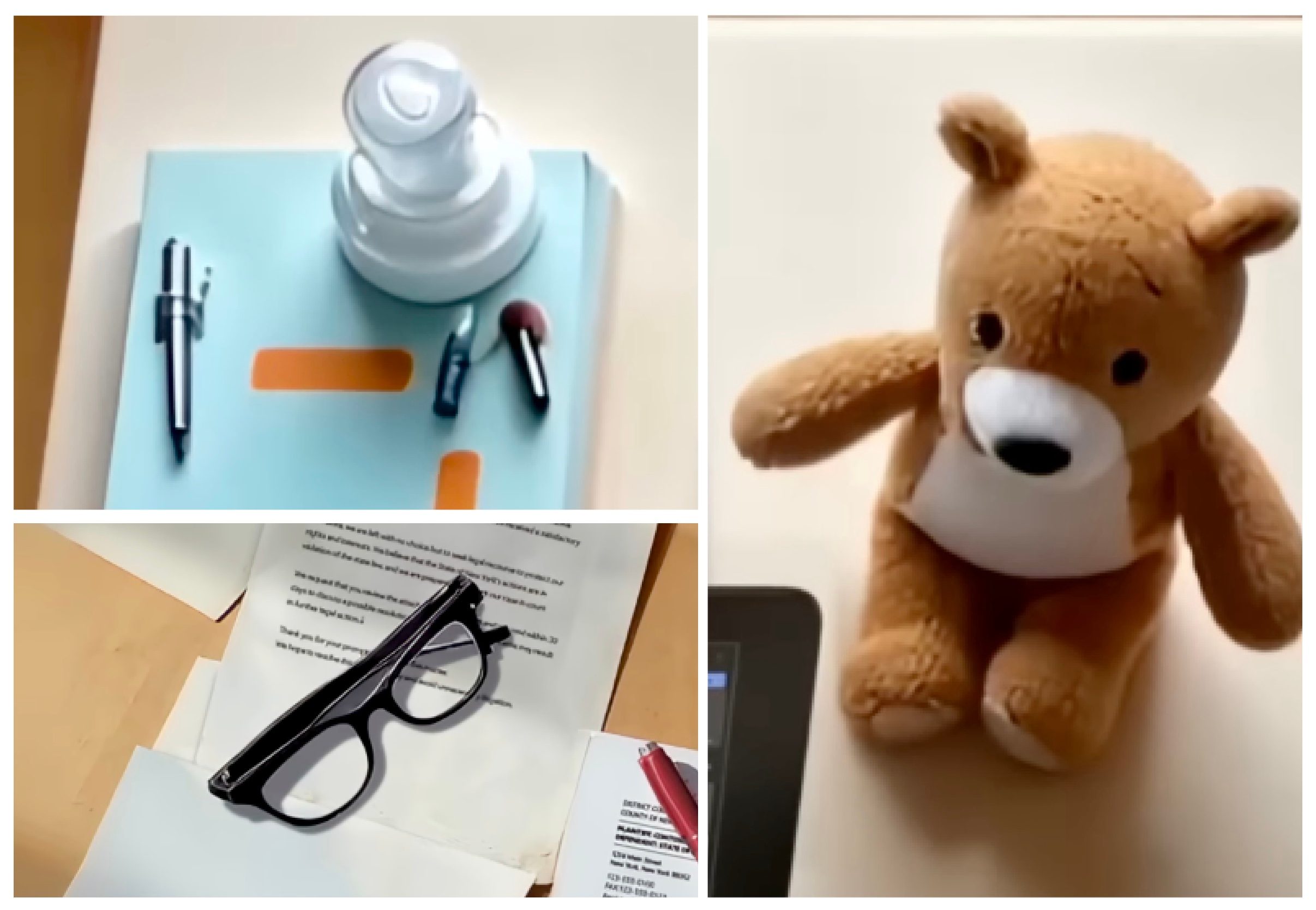
When you look closely, however, you can spot things that look a little odd — a pair of very flat glasses, a suspicious-looking teddy bear, and a few innocuous objects that look okay at a distance but when you zoom in, you can’t really tell what they’re meant to be.
But for the most part, it’s not very obvious at all. Naturally, the Design team still used real people for all of the close-up hand shots and used editing software to remove every weird AI artifact and hallucination-produced anomaly so there were no striking “uncanny valley” moments left for viewers to notice. Well done, Microsoft, you tricked us all!


