  1. Home
  2. Emerging Tech
  3. Web
  4. Legacy Archives

Robotic seals provide comfort for Japan quake survivors

Add as a preferred source on Google

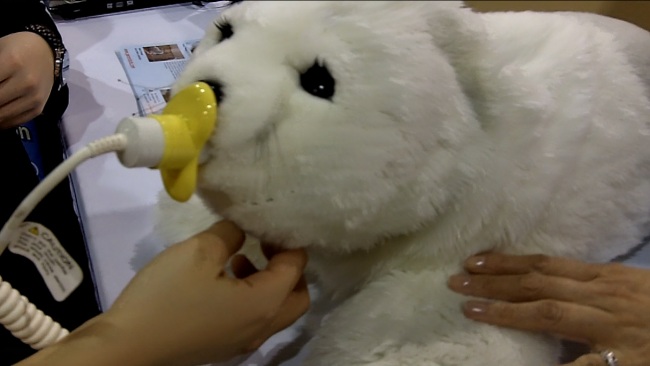
ces-2011-robots-paro-therapeutic-sealFollowing the devastating earthquake and ensuing tsunami in Japan back in March, together with the nuclear disaster at the Fukushima power plant, it’s little wonder so many people in the affected areas are still in need of comfort and support.

According to a Guardian report, residents returning to a retirement home some 17 miles from the badly damaged nuclear plant have been enjoying the company of two cute-looking seals. What makes them unusual is that they are actually fur-covered robots.

Recommended Videos

Several retirement homes in the areas hit by March’s disaster have turned to pets (real ones, that is) to help comfort the elderly. The Suisyoen retirement home, however, feels that the robotic variety is just as effective. The specially designed robot, called Paro, responds to a person’s touch and spoken word, as well as to light and temperature. It even makes a sound like that of a real baby seal.

In the report, 85-year-old Satsuko Yatsuzaka says of one of the robotic seals: “If I hold on to this, it doesn’t matter if there’s a typhoon outside, I still feel safe.”

Paro’s battery goes for about an hour, so after being used in the morning, its battery is charged during lunch so residents can pet it again during the afternoon.

“It’s just as cute as a little living creature and so everyone is looking after it every day,” said Ayako Shizo, who lost her home in the tsunami. She continues: “It does sometimes runs out of batteries and stop. But when it’s got its eyes open everyone stands around talking to it, asking it how it’s doing and such.”

The enormous clean-up operation is still underway in north-eastern Japan – a job that will take years to complete. And for as long as the nerve-fraying aftershocks continue to hit the area, the batteries in those seals are set to be replaced more than a few times.

Trevor Mogg
Contributing Editor
Not so many moons ago, Trevor moved from one tea-loving island nation that drives on the left (Britain) to another (Japan)…
This jacket pulls drinking water straight from the air
Engineers at UT Austin have developed a wearable textile that harvests ambient moisture into drinkable water.
Image showing person wearing a jacket with special fiber that pulls water from air

Engineers at the University of Texas at Austin have built a jacket that pulls drinkable water directly from the air, offering a potential solution for hikers, soldiers, agricultural workers, and emergency responders who operate far from reliable water sources.

How the jacket collects water

Read more
Google built an AI that can see football plays before they happen
DeepMind’s latest research predicts player movement up to eight seconds into the future
Google Deepmind TacticAI Featured

Football managers spend countless hours analyzing corners, free kicks, and player positioning in search of tiny competitive advantages. Google DeepMind believes artificial intelligence can make that process significantly faster, and its latest project, TacticAI, is designed to do exactly that. TacticAI is a football-specific AI assistant capable of modeling player movement, forecasting future play dynamics, and even recommending tactical adjustments for corner kicks. One of its standout abilities is predicting player trajectories up to eight seconds into the future using only broadcast-style visual data.

TacticAI was built with Liverpool FC and validated by football experts

Read more
Radical new coffee-making method uses sound, skips hot water and reduces energy bills
UNSW reserachers brewed espresso with room-temperature water and ultrasonic sound waves, cutting energy use by 75% in blind tests that fooled 100 regular drinkers.
Person brewing espresso in a lab with a modified ultrasonic espresso machine

Researchers at UNSW Sydney have figured out how to brew espresso-strength coffee without heating any water. The method replaces hot water and high pressure with ultrasonic sound waves, and in blind taste tests involving 100 regular coffee drinkers, participants could not tell the two apart.

How it works

Read more