On today’s episode of You Asked: Is it worth upgrading to Sony’s Bravia Theater Quad if you already have the HT-A9? How much has OLED improved in the last either years? How can TV remotes control your other devices these days? And what can you do to fix annoying audio sync issues in your system?
Upgrading to the Theater Quad?
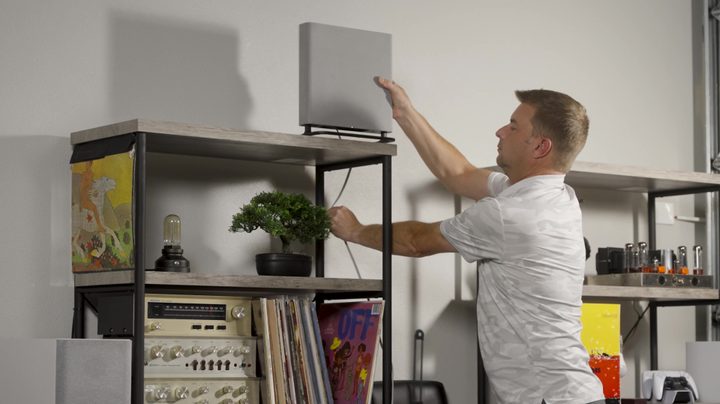
Salama writes: Is the Bravia Theatre Quad worth upgrading to from the HT-A9?
For background, Salama has been wrestling with audio dropouts, which they’ve managed to abate by changing the wireless setting on the HT-A9 to prefer signal stability over higher-resolution sound quality.
I mention that because I think it’s only worth upgrading from the older HT-A9 to the new Theater Quad for two reasons: One is if you like the look of the flat speakers way more and would appreciate the simpler placement and lower-profile look, wall-mounted or otherwise. The other is if you are having audio-dropout issues.
I can’t stress test the Theater Quad well enough to say with absolute certainty that it is going to be rock-solid in every single home or retail location, but Sony’s changes and improvements to the wireless audio signal transmission are significant, and I feel pretty confident saying you would probably get out from under those wireless audio dropouts with the upgrade.
But a far less expensive way to deal with the audio dropouts would be to identify the source of the wireless interference and see if you can deal with that. If your Wi-Fi router is in close proximity to your system and you can move it without negatively impacting anything else? Try that. If you can move the little processor box so it has a clear line of site to the speakers, try that.
Of course, it’s possible that the source of the interference is not within your control. If that’s the case, the new system is probably your best bet. It’s just an expensive solution. (Though, it’s entirely possible you could sell your HT-A9 to offset the cost.)
Oh, and using the acoustic center sync option is probably not going to help. You aren’t relieving the HT-A9 system of anything by going that route.
LG C4? Or the LG G4?

Jimmy from Belgium says that after nine years and 30,000-plus hours of intensive use, their LG EF9500 OLED is beginning to show some burn-in. They are considering the LG C4 or G4, and they are wondering if they are missing out on much if they don’t also get a new 4K Blu-ray player that supports Dolby Vision.
Well, this one’s easy, Jimmy. You are in for a pretty significant upgrade with either the LG C4 or the LG G4. Granted, your current OLED is still an OLED, so you’re used to the contrast OLED can provide. But the increased contrast available from a modern OLED TV — thanks to both white brightness and color brightness — is quite noticeable and a real treat. Also, the EF9500 model you have was one of the first TVs to offer HDR, and HDR processing alone has come a long way since then. You’ll notice much better HDR performance, but picture quality across the board is going to be better because LG’s image processing has improved by leaps and bounds in just the last couple of years.
As for Dolby Vision — there are some cases in which the Dolby Vision version of the HDR content you watch can offer some advantages. There are some cases in which the Dolby Vision version is less preferred than HDR 10 or HDR 10+. It really depends on the content. Dolby Vision has the potential to look much better. But at the end of the day, it’s a tool, and how good the picture looks in Dolby Vision is going to be up to the artist that wields that tool.
I think you’ll be so pleased with the improvement in picture quality that you won’t feel like you’re missing anything without Dolby Vision on disc. However, if it’s a matter of budget — and if you really want a more modern disc player that supports Dolby Vision — I’d get the LG C4 and a new disc player instead of spending all your allotted funds on just a G4.
Whither the cable box
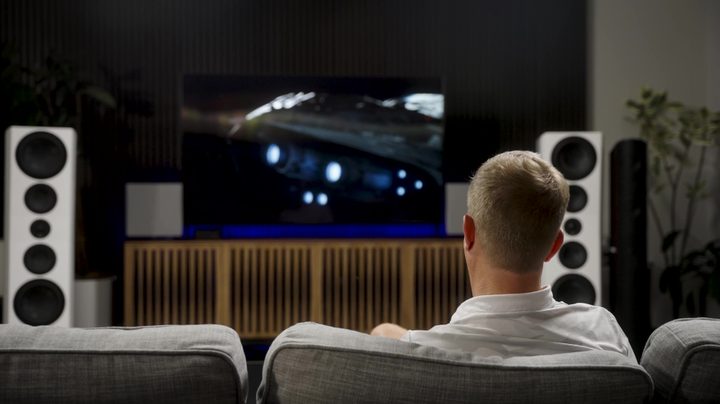
Chris Renteria writes: I have a Samsung S95B you recommended 15 months ago, and I have loved the picture quality. But I have never been able to get my Spectrum DVR cable box to work with Samsung’s One Remote. Can you help? Or should I just give up trying to make it work and go with YouTube TV, which can do the same as a DVR cable box and already has an app on the TV?
I think a lot of folks run into this issue, and it can be especially confusing for those of us who grew up programming our remotes using codes and such.
The remote controls that come with many modern TVs — certainly all of the ones I test these days — only use infrared for very basic functions, like powering the TV on and off. Most of the control signals get from the remote to the TV via Bluetooth. Modern remotes don’t have programmable buttons and can’t control other devices using infrared anymore.
More often than not, the way your TV remote is going to control your TV these days is over the HDMI cable using a protocol called HDMI CEC, or Consumer Electronics Control. CEC is far from perfect. In fact, it can be quite buggy. But, it’s what we’ve got.
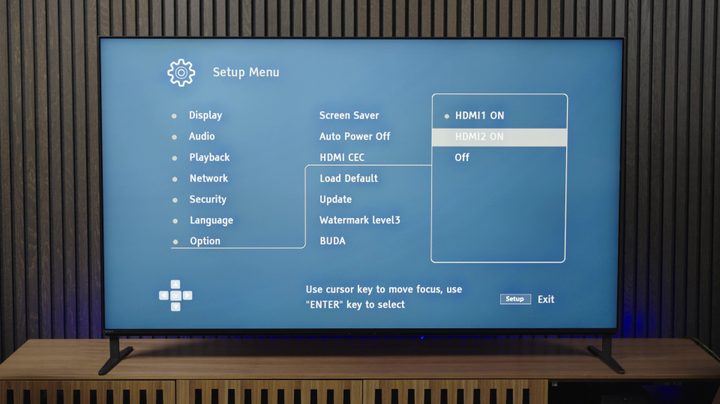
The way to get your TV remote to control your cable box or Blu-ray player if it doesn’t already is to make sure that HDMI CEC is turned on in the cable box, Blu-ray player, or whatever else you’re trying to control. Sometimes a manufacturer will use some other kind of term; other times it’s right there on the screen. CEC On, or CEC Off.
The trick is to find that setting and turn it on. Of course, it may also be possible that your box is old enough that it doesn’t support that kind of feature, in which case the solution is to get an updated box from your cable or satellite provider.
I’ll also point out that many modern TVs have as part of their initial setup wizard the option to “add devices.” (And, again, you need HDMI CEC turned on in your connected devices for this to work.) That often helps the TV recognize what boxes are connected and label the input as such — so HDMI 2, for example, might become “Blu-ray” or “Xbox” or “cable.” The remote should then control many of the control functions of that connected device without you needing to do a bunch of work.
The perils of audio sync
Nick Hanninen writes: I recently set up my 83-inch Samsung S90C and am loving the experience, except for one thing. For whatever reason, when running 5.1 audio through TOSLINK to my older receiver, I cannot get the audio timing synced up. It’s driving me crazy seeing dialogue out of sync. I found the delay option in the TV, but still can’t get it dialed in. Should I seek a pro audio calibrator? Or is there something else I can do to fix this?
I’ll tell you right now that solving audio sync issues is a troubleshooting task that depends greatly on what gear you are using and how it is all connected. What I can tell you is that the audio processing that takes place in a soundbar or a receiver can often cause delay that you can’t adjust for in the TV. And the delay in the audio device is usually meant to delay the audio so it matches up with the video signal that is passed on to the TV by that same audio device. So, it’s not uncommon to adjust these sync/delay options and actually make things worse instead of better.
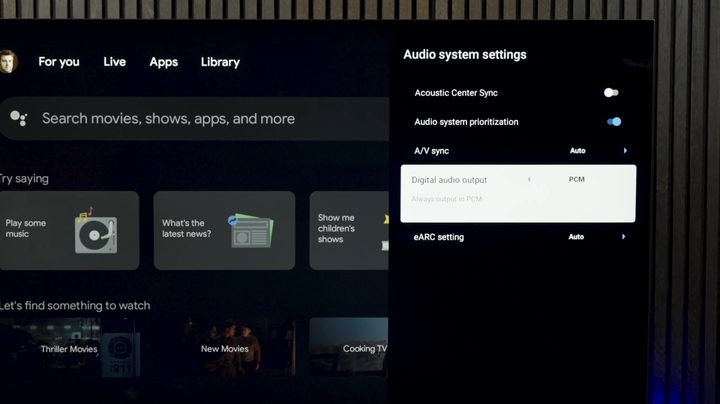
You may need to do digging deep into your TV audio settings if you are sending audio from the TV to a receiver or soundbar via HDMI ARC or optical. Often, telling the TV to convert the audio to PCM — which means an onboard audio decoder is used by the TV — helps overcome the delay. This tends to work very well when you want to send just a stereo signal down to a stereo soundbar, but it can also work when you send a 5.1 signal, as the TV can do the decoding.
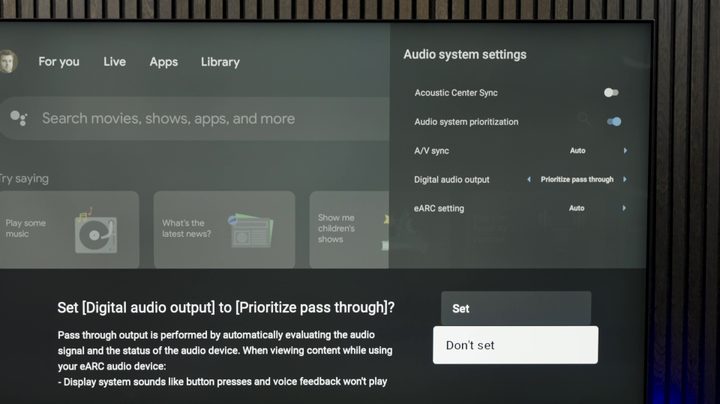
Sometimes setting the TV to passthrough rather than setting it to Dolby Digital or DTS can help, especially if you are using eARC.
I don’t expect this advice to help everyone, because there are too many permutations of settings. But you don’t have to hire a pro audio calibrator for something like this. Their expertise is best used when optimizing the audio of an advanced audio system. Hiring them to do work like fixing sync issues is like hiring a structural engineer to replace one of the floorboards on your deck.