1. Home
  2. Space
  3. News

How to watch NASA launch first crewed moon mission in five decades

A rocket carrying four astronauts is set to blast off this week.

Add as a preferred source on Google
NASA's Artemis II Crew Launches To The Moon (Official Broadcast)

The countdown for the first crewed lunar flight in more than 50 years is underway, NASA announced on Monday.

The onsite countdown clock started ticking down at 4:44 p.m. ET on Monday for the targeted launch of the Artemis II mission in just two days’ time. Read on for full details on how to watch a livestream of the liftoff.

Artemis II will launch from the Kennedy Space Center in Florida, and will mark the first crewed launch of NASA’s SLS (Space Launch System) rocket and Orion spacecraft.

Aboard the Orion will be NASA astronauts Reid Wiseman, Victor Glover, and Christina Koch, and CSA (Canadian Space Agency) astronaut Jeremy Hansen.

Hansen is on his first space voyage, while the other members have all taken part in one mission to the International Space Station (ISS).

The crew will spend 10 days in space testing out the spacecraft’s systems while flying around the moon before returning home.

A successful mission will set NASA on a path to land two humans on the lunar surface in Artemis IV, which is currently set for 2028. Looking further ahead, NASA plans to build a moon base on the lunar surface where astronauts will be able to live and work for extended periods, similar to how they operate at the ISS today.

How to watch

NASA is targeting 6:24 p.m. ET on Wednesday, April 1, for the launch of the Artemis II mission from the Kennedy Space Center.

A livestream of tanking operations will begin at 7:45 a.m. ET on Wednesday on NASA’s YouTube channel, which will continue to cover the preparations as well as the launch itself. Full launch coverage on NASA+ will start at 12:50 p.m. ET on Wednesday. You can watch the same livestream on NASA’s X account, as well as on Facebook and Twitch. The video player embedded at the top of this page will carry the same feed.

It’s possible a technical issue or weather concern could disrupt the launch timetable. We’ll update here just as soon as we hear anything.

What to expect

The livestream will show the crew members making their way to the rocket, views from inside and outside the Orion capsule, and commentary explaining everything that’s going on. Multiple cameras will track the SLS rocket as it roars to space, with communications between the crew and Mission control also broadcast as part of the livestream.

Trevor Mogg
Contributing Editor
Not so many moons ago, Trevor moved from one tea-loving island nation that drives on the left (Britain) to another (Japan)…
Getting to Mars may require a pit stop in orbit, and NASA just tested the nozzle to make that happen
A gas pump nozzle for spacecraft sounds simple. It is not, and that's what makes this test worth paying attention to.
Architecture, Building, Factory

Getting a spacecraft to Mars or beyond requires an enormous amount of fuel, most of which has to be hauled from Earth, adding to the overall cost and weight of the spacecraft. NASA has been working on a different approach, one that could be more efficient and effective.

It wants to refuel a spacecraft in orbit before heading out for the mission. What’s even more interesting is that the space agency just finished testing a component that could make that possible: a cryocoupler.

Read more
Elon Musk’ Starlink could soon offer mobile services as a US carrier
Showcase of T-Mobile Starlink service on an iPhone.

Elon Musk’s Starlink has already changed how millions of people access the internet, especially in places where traditional broadband struggles to reach. Now, the satellite internet service could be preparing for an even bigger leap — becoming your mobile carrier.

According to a Financial Times report, SpaceX has told investors it’s considering launching a retail Starlink mobile service in the US. Instead of simply partnering with wireless carriers, the company could begin selling mobile plans directly to consumers, putting it in direct competition with Verizon, AT&T, and T-Mobile.

Read more
Lightsails have hit another speed bump on the road to interstellar travel
The coolest interstellar travel idea may get betrayed by the light pushing it
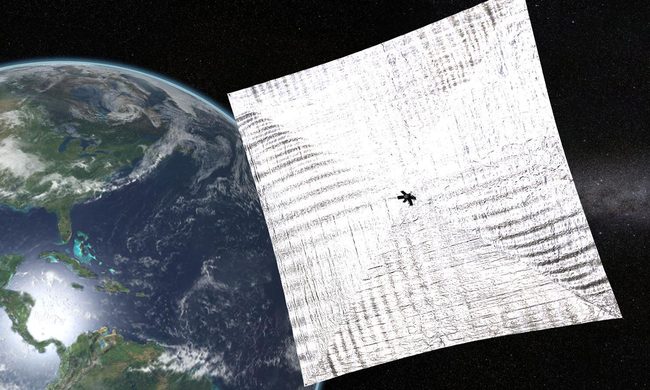
LightSail in Earth orbit

Laser-powered lightsails are one of the coolest answers to spaceflight. It might not be as sci-fi-sounding as a warp drive, but now, its practicality has also come under question. Using lightsails, a spacecraft could unfurl an ultra-thin reflective sail and let a powerful laser push it toward another star, without relying on fuel.

The tech was simple and elegant--except it's also more complicated than it sounds. A new preprint from researchers Chao Shen and Jiaze Li of the Harbin Institute of Technology suggests that relativistic lightsails may run into a hidden propulsion problem once they start moving extremely fast.

Read more