1. Home
  2. Space
  3. Emerging Tech
  4. Evergreens

The raddest NASA space colony illustrations from the 1970s

Add as a preferred source on Google

At the peak of the Space Race, both the Russian and the United States space agencies were developing plans to establish permanent space colonies in orbit around our planet and beyond. In fact, in 1975, NASA’s Ames Research Center gathered 19 professors at Stanford University for 10 weeks with intention of not only designing what a human space colony would look like, but also figuring out how these systems might function as self-sufficient, long-term human outposts. The team of researchers was given a theoretical budget of roughly $35 billion dollars (or about $200 billion in 2017 when adjusted for inflation) to create these apparatuses.

While these massive structures may seem straight out of vintage pulp fiction, these colonies were well within our technical and engineering capabilities 40 years ago, and it’s even been argued that a series of such permanent colonies could be readily constructed for less than what the U.S. spends annually on its military.

Recommended Videos

The Ames Research Center studies concluded with three main design concepts: The Bernal sphere, the O’Neill cylinder, and the Stanford torus. While each design has its own unique structural shape, they all rotate to create a centrifugal force to induce gravity for inhabitants inside. Once constructed in-situ, these colonies would revolve around the Earth in the same orbit as the moon in a sliver of space between the Earth and moon known as the Lagrangian libration point.

At the time of these proposals, NASA had just launched the Pioneer 10 probe carrying a “interstellar greeting card” to grant salutations to any extraterrestrial life too haphazardly drifting through the cosmos. It wasn’t so long ago that the future of extended manned space exploration and colonization never seemed more feasible. In just 14 years mankind went from hurling the most rudimentary of satellites into orbit to quite literally teeing off on the moon using a makeshift six-iron — a true testament to the ingenuity and boundless curiosity of our species.

Unfortunately, more than 40 years have passed since this conference and unfortunately we are still without a drifting Logan’s Run-esque colony glinting in orbit or even the most primitive of terraformed bubbles. Perhaps this will change in the near future — especially if Elon Musk has his way. Whether we ever actually leave this space rock and become a multi-planetary species is anyone’s guess. Only time will tell…

Dallon Adams
Former Editorial Assistant
Dallon Adams is a graduate of the University of Louisville and currently lives in Portland, OR. In his free time, Dallon…
Getting to Mars may require a pit stop in orbit, and NASA just tested the nozzle to make that happen
A gas pump nozzle for spacecraft sounds simple. It is not, and that's what makes this test worth paying attention to.
Architecture, Building, Factory

Getting a spacecraft to Mars or beyond requires an enormous amount of fuel, most of which has to be hauled from Earth, adding to the overall cost and weight of the spacecraft. NASA has been working on a different approach, one that could be more efficient and effective.

It wants to refuel a spacecraft in orbit before heading out for the mission. What’s even more interesting is that the space agency just finished testing a component that could make that possible: a cryocoupler.

Read more
Elon Musk’ Starlink could soon offer mobile services as a US carrier
Showcase of T-Mobile Starlink service on an iPhone.

Elon Musk’s Starlink has already changed how millions of people access the internet, especially in places where traditional broadband struggles to reach. Now, the satellite internet service could be preparing for an even bigger leap — becoming your mobile carrier.

According to a Financial Times report, SpaceX has told investors it’s considering launching a retail Starlink mobile service in the US. Instead of simply partnering with wireless carriers, the company could begin selling mobile plans directly to consumers, putting it in direct competition with Verizon, AT&T, and T-Mobile.

Read more
Lightsails have hit another speed bump on the road to interstellar travel
The coolest interstellar travel idea may get betrayed by the light pushing it
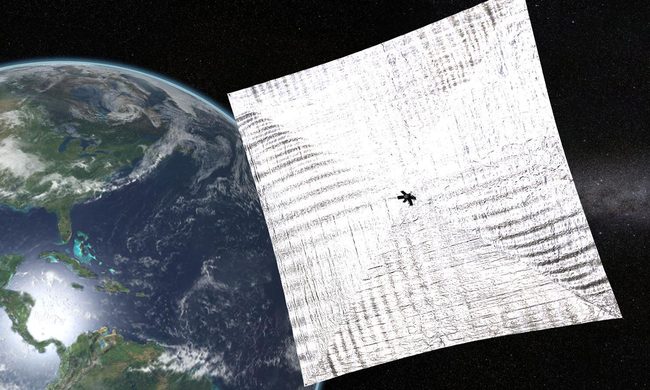
LightSail in Earth orbit

Laser-powered lightsails are one of the coolest answers to spaceflight. It might not be as sci-fi-sounding as a warp drive, but now, its practicality has also come under question. Using lightsails, a spacecraft could unfurl an ultra-thin reflective sail and let a powerful laser push it toward another star, without relying on fuel.

The tech was simple and elegant--except it's also more complicated than it sounds. A new preprint from researchers Chao Shen and Jiaze Li of the Harbin Institute of Technology suggests that relativistic lightsails may run into a hidden propulsion problem once they start moving extremely fast.

Read more