
The Vision Pro is coming. Really soon. Its release date announcement, while not technically made at CES, may as well have been.
And yet, most people haven’t used the headset, and don’t know what it really does. And that’s OK. But surely the technologists at CES 2024 would be a bit more equipped for what’s about to hit us in the near future, right? Surely, there would be companies at CES who came to the show prepared to challenge Apple — or at least complement its technology.
So, I decided I’d walk the show floor and try on every possible mixed-reality headset, spatial computing concept, and pair of AR glasses — no matter how silly or cheap-looking they were. My conclusion? It’s a dire situation, and it’s not a good sign for the tech industry’s ability to compete with Apple in the years ahead.
I tried them all
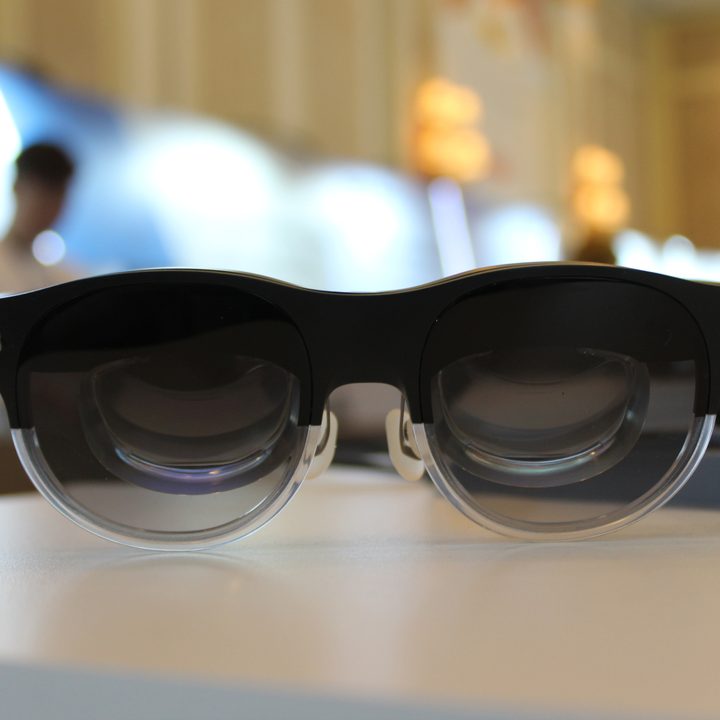
There’s a whole section of Central Hall in the Las Vegas Convention Center at CES dedicated to VR, AR, and everything in-between. It’s one of the liveliest parts of the show — a showcase of both advanced next-gen technology and wacky concepts that are more proof of concept than real product. I put a total of eight different things on my face over my days on the show floor, most of which came from smaller companies looking to make their mark.
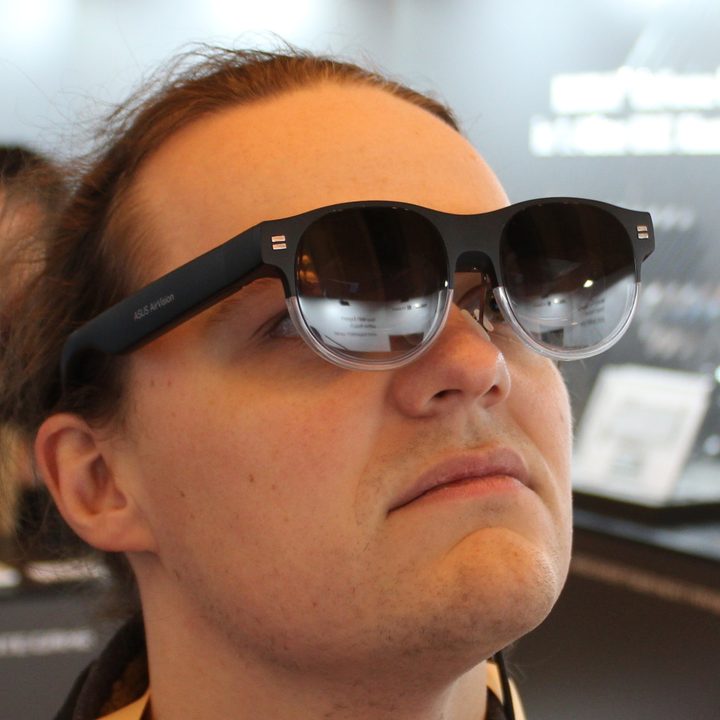
For AR glasses, there was the TCL-backed RayNeo X2 AR glasses, the Asus AirVision glasses, and a couple no-name models that I tried that were so poor in quality or uninteresting that I’d rather not mention them. They had the same approach of displaying virtual screens on the lenses, but all felt fairly limited in the tech. The field of view, brightness, and software behind these options just didn’t feel quite ready.
The technology has been moving at a snail’s pace over the past decade.
Then there was the EmDoor AX162 headset, which was a more traditional approach to an enclosed mixed-reality headset with video passthrough. I even tried a product from a company that specializes in spatial hand gestures in 3D space.
But none felt like even a partial answer to the Vision Pro. The technology has been moving at a snail’s pace over the past decade or so, and the announcement and production of the Vision Pro hasn’t seemed to magically open any doors.
It wasn’t all a bust, though.
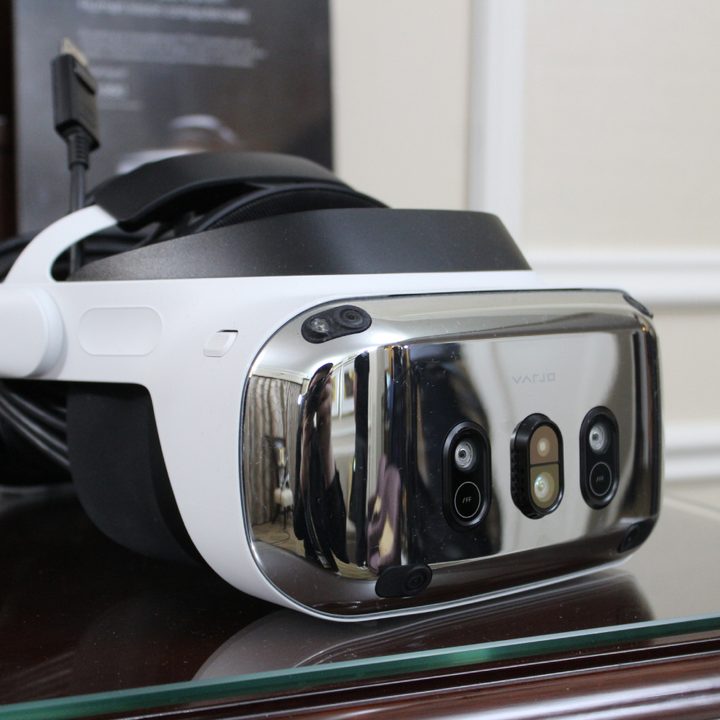
Some of the more impressive demos I tried were with the Varjo XR-4 and Xreal Ultra. Neither are consumer-facing, of course, but they provided the most high-quality mixed-reality experiences offered at the show. The Varjo XR-4 is a mixed-reality headset from a company that makes extremely high-end headsets for specialized industry customers. The enclosed VR experience might be the most high-fidelity VR experience I’ve ever had, and it’s powered by a powerful PC with an RTX 4090. As the demo blasted me out into space, looking at the Earth from a satellite, I was left pretty captivated by the immersion of it all.
The mixed-reality elements were less compelling, though. The Varjo XR-4 attempts a Vision Pro-like camera passthrough using 20-megapixel cameras and eye tracking for digital focus. It might be the best I’ve used, but still feels a bit clunky and digitized.
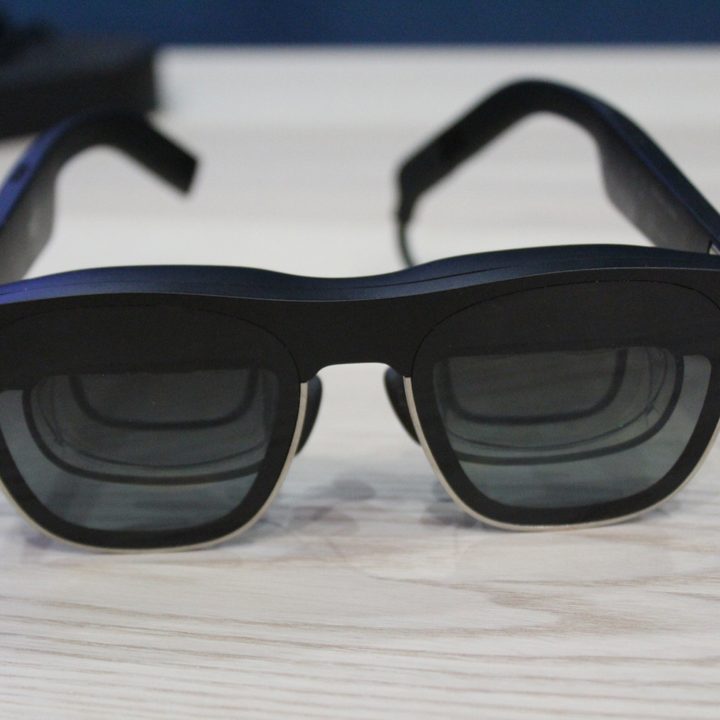
Then there was the Xreal Air Ultra. This company has gotten some buzz lately with its light and comfortable AR headsets, and its pair of glasses this year even added some spatial computing elements. You could pinch your fingers to trigger digital elements or select things from a menu. Not exactly mind-blowing, but as far as AR glasses go, this device offered the brightest and clearest picture quality in the virtual screens. I wouldn’t mind watching a movie or working on the virtual screen — so long as it was for a limited time.
I even did a demo involving wearing the glasses in a BMW test drive. There were demos for both drivers and passengers, with AR elements made for both entertainment and real-time navigation. Arrows would illuminate the road for turn-by-turn directions, or for a passenger, you could flip the visor down and watch a movie right on it. It was interesting to think about, certainly.
There’s a long way to go before this technology is ready.
But unlike the optimistic folks at BMW, I don’t think AR glasses are going to be commonplace in three years. There’s a long way to go before that technology is ready — especially in the car of all places. The hardware just isn’t close to being game ready, which is probably why Apple’s own take on it is many years off.
But maybe I was barking up the wrong tree with all these Central Hall oddities and niche projects. After all, a mixed-reality headset is a new product category, involving expensive and hard to manufacture parts that these small companies just don’t have access to. If a product is going to truly compete with the Vision Pro, it’ll probably need to come from one of the big tech companies. But even there, I was sorely disappointed the lack of a true answer to the Vision Pro.
The bigger players
The biggest notable absences from the show were Meta and HTC. Both companies launched mixed-reality headsets last year, the Quest Pro and the Vive XR Elite, respectively. They’ve played their hand, and going into the launch of the Vision Pro, don’t stand much of a chance. Both headsets are significantly cheaper than the Vision Pro, but are missing the kind of quality video passthrough that makes the Vision Pro what it is.
The silence from those big players was disappointing, but not even the bigger players in the surrounding tech world had much to say on the matter. Samsung, which has talked openly about developing a Vision Pro rival for 2024, was quiet on the topic. There wasn’t even a mention in the press conference. Qualcomm announced that it was working with Samsung on a future Vision Pro competitor with its new chip, but that’s it.
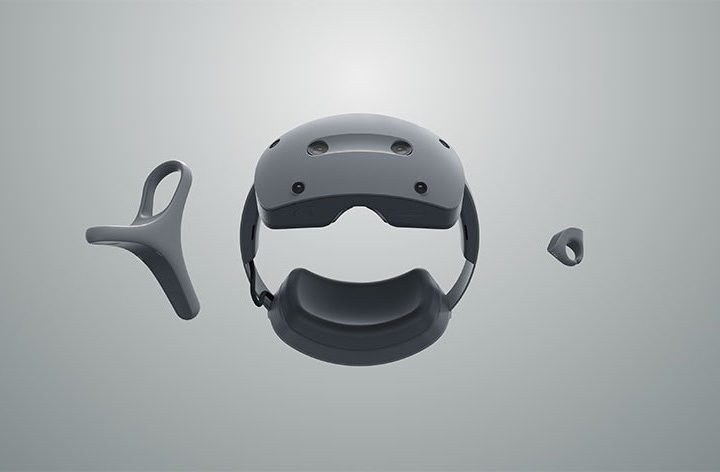
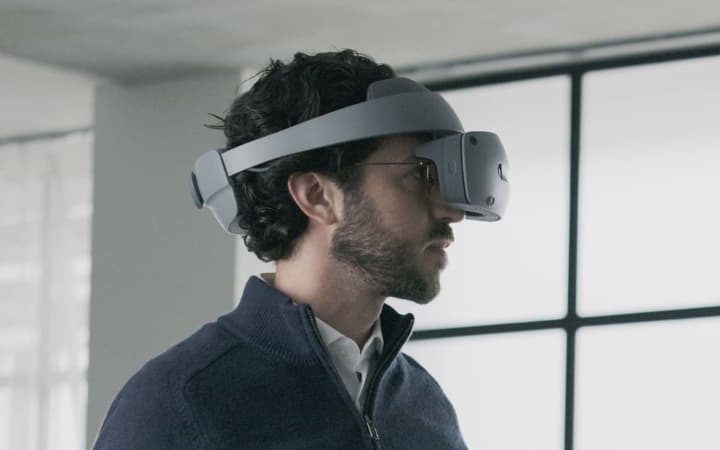
Sony was the only tech giant that had anything direct to share, and it was predictably sparse in details. Surprisingly, it made an announcement about a currently unnamed XR headset that would use 4K OLED “micro displays” and would also do video passthrough for mixed reality.
Like the Samsung headset, the Sony one will be powered by Qualcomm’s XR2+ Gen 2 chip. The headset will also use a unique controller for your dominant hand and a flip-down visor for all the spatial interaction. I wasn’t able to try it out, unfortunately, but considering the system will be available later this year, I presume there will be more chances to check it out later on.
I want to give Sony some credit for getting out ahead of the game here, especially enough to offer demos and share more info. Clearly, the company saw the need to get the ball rolling as fast as possible. A lot of questions remain, especially with the use case. In the official press release, the headset is described as Sony entering “the enterprise space with their spatial content creation system.”
In other words, this isn’t the consumer-first product that Apple hopes the Vision Pro will be. And even setting that aside, these headsets from Samsung and Sony won’t be coming out until later this year or in 2025, meaning Apple will have already had garnered a massive amount of exposure with the Vision Pro. In other words, they’re already going to be behind.
The road ahead
All this puts Apple in a familiar place with the Vision Pro in relation to the rest of the industry. It was a similar story with phones when the iPhone came out, tablets when the iPad launched, and smartwatches when the Apple Watch debuted. These were all somewhat established categories before Apple’s version came along, if a bit disparate and wild. So, the positioning of the Vision Pro isn’t terribly surprising. But like with those other categories, the rest of the tech industry is going to miss out on the true launch of yet another major product category.
Then again, the Vision Pro’s price makes it unlike every other product Apple has launched in recent years. Maybe there’s still a chance for the Samsungs, Sonys, and Metas of the world to compete on the lower end in 2025. Or maybe these companies aren’t taking it seriously because of how expensive it is and how high-end it has been positioned. Maybe there’s still time.
All I know is that as of CES 2024, the entire world seems woefully underprepared for what’s ahead.