
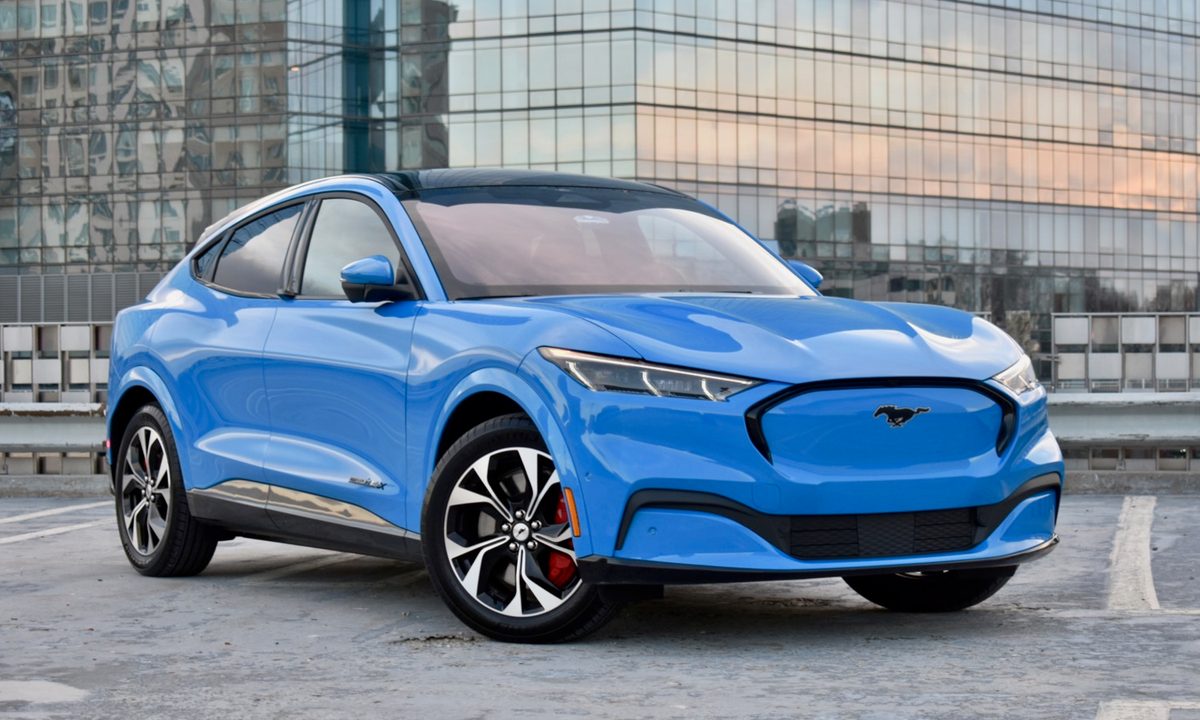
The Ford Mustang Mach-E is easily one of the best EVs for the price, offering a solid range, sleek design, and pretty good tech on the inside. In recent years, it has gotten even cheaper — thanks in large part to a price war between it and the Tesla Model 3. And, the company just took the wraps off of the latest and greatest version of the Mach-E, labeled as the 2024 model.
The 2024 Mustang Mach-E is notably different from the 2023 iteration in some meaningful ways. So much so that we decided to take a look at the two head-to-head — to see if it was better to pay for the 2024 model or save some cash on any remaining 2023 stock.
Design
The Mustang Mach-E looks relatively unique — in a good way. And thankfully, Ford has largely kept the overall design the same for the 2024 model, at least when it comes to the more consumer-focused models. The car retains the slatted taillights and crossover size. It also offers a large selection of colors, including the very blue Grabber Blue Metallic, as well as Rapid Red Metallic. It’s a good selection of colors, and there should be an option for most buyers.

The biggest design changes come with the new Mach-E Rally model, which has a racing stripe along the hood and a large spoiler on the back. It certainly won’t be for everyone, but it does shake things up a little.
Interior and tech
The interior is more or less the same too, which again, is a good thing. The car still has nice premium upholstery on the seats and the large vertically aligned display at the front for infotainment. It still also has the large volume knob built into the display — a unique feature of the Mach-E.
The Mach-E has a good amount of storage space, thanks to its crossover size. There’s 29.7 cubic feet of storage space behind the second row of seats, which is pretty good.
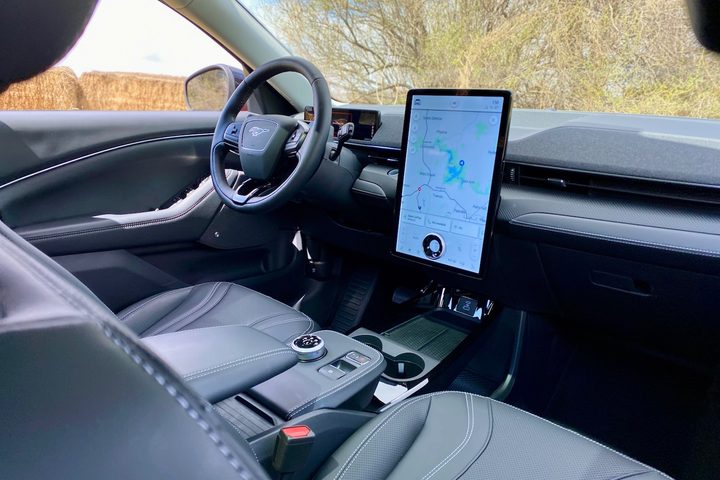
The car is pretty tech-heavy. As mentioned, there’s a large touchscreen at the front, with Ford’s own infotainment system, called Ford Sync, built into it. A relatively new development with the Sync system is that Ford says it uses machine learning to customize up to three driver profiles. Thankfully, you can also use the car with CarPlay and Android Auto. And it has some self-driving tech, including Ford’s BlueCruise hands-free driving technology.
Performance
Performance is an area where the 2024 model of the Mach-E finally starts to divert from the 2023 model. It doesn’t get massive changes, but it does get a little faster than it already was.

The 2024 model of the Mustang Mach-E is available in a few different powertrains — including a single-motor rear-wheel-drive variant and an all-wheel-drive dual-motor variant. The top models, the Mach-E GT and Rally, only come in the dual-motor variant of the car. On the Mach-E GT with the new “Performance Upgrade,” Ford says that you’ll get from 0 to 60 miles per hour in 3.3 seconds, which is faster than the Model Y Performance.
The 2023 model isn’t slow though — it’s also available in single- or dual-motor variants, and the fastest model, the Mach-E GT Performance, is able to accelerate from 0 to 60 miles per hour in 3.5 seconds. That’s still quite fast, and frankly, you probably won’t notice a huge difference in performance between the 2023 and 2024 models.
Range and charging
Range and charging are different for the new model too. The 2023 Mach-E offered a range of 230 miles in the lowest-end standard-range RWD model, or up to 300 miles in the extended-range rear-wheel drive model. The 2024 model steps that up — with range varying from 250 models on the low-end to 320 miles at its upper limits.
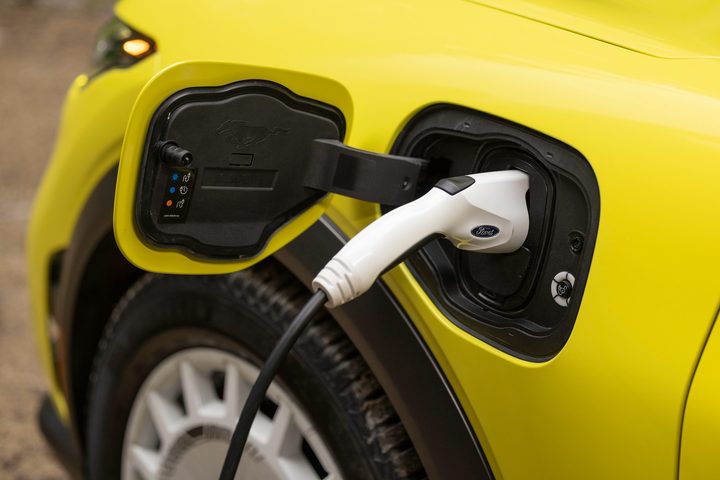
That means you’ll get up to 20 miles more with the 2024 model than you would on the 2023 model, which is actually a pretty solid improvement. Much of the range improvement is down to the fact that the full range of Mach-E models now ship with a lithium iron phosphate (LFP) battery, which was first introduced in some Mach-E models halfway through 2023.
These LFP batteries also offer the advantage of faster charging — and the difference is quite radical. Ford says the 2024 car can charge at up to 20% faster than the 2023 model. Certain models can get from 10% to 80% in 36.2 minutes — which is 8.8 minutes faster than before. It still doesn’t charge as quickly as cars like the Kia EV6 and Hyundai Ioniq 5, but those improvements are meaningful.
Price and availability
The 2024 Mustang Mach-E starts at $39,995 for the Mach-E Select and ranges up from there. That’ not bad at all, and makes the Mach-E one of the best-value electric cars out there right now. It’s also very possible we’ll see Ford continue to discount the vehicle over the next year or so.
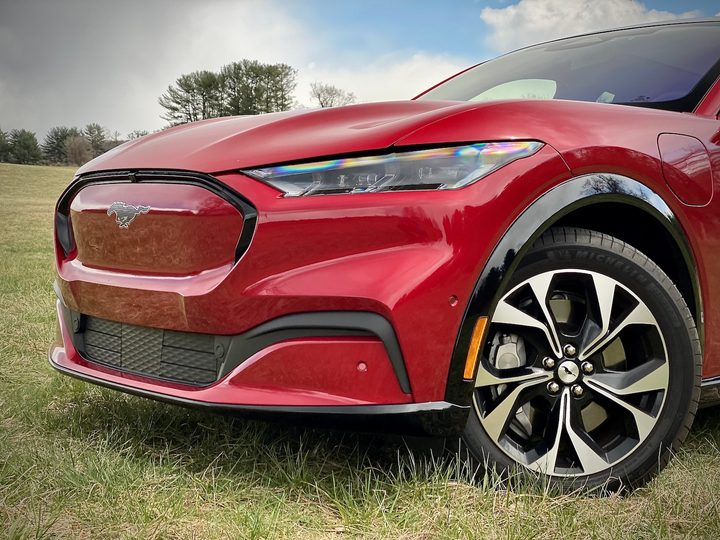
The pricing is a little lower than it was when the 2023 model first launched — with the base price in 2023 being $41,695. Over the course of the year, Ford did introduce discounts, though.
If you order a new Mach-E from Ford right now, you’re ordering the 2024 model — but the 2023 model is likely to still be in stock through some dealers, and of course, you might find some used versions of it.
Conclusions
The 2024 Mustang Mach-E doesn’t completely reinvent the electric Mustang, but it does bring some meaningful improvements to the car. The most notable of these are related to range and charging, which is exactly where EV manufacturers should be prioritizing upgrades. If you find a great deal on a 2023 model, it definitely may be worth considering — however, if you’re buying new, it’s worth getting the 2024 model.


