
  1. Home
  2. Wearables
  3. Mobile
  4. News

Fitbit’s newest feature could help you sleep better and longer

Add as a preferred source on Google
Fitbit Inspire
Fitbit

The CDC reports that roughly one in three people struggle to get the proper amount of rest, but Fitbit’s latest feature could provide a solution. The Personalized Sleep Schedule is part of Fitbit Labs, and it will “survey your energy levels multiple times daily to analyze your responses and provide an evening sleep schedule.”

In other words, the feature will determine your overall sleep debt and what you need to recover, and will then suggest a wake-up and bedtime centered on that data. Fitbit says the calculation comes from “your last night of sleep data and your survey responses throughout the day,” so you will need to take the time to complete the surveys to maximize its effectiveness.

Recommended Videos

Compared to other smartwatch features, the Personalized Sleep Schedule feels somewhat high maintenance. The morning check-in is a two-minute survey, and you have to answer it before 10 AM in your timezone. The daytime surveys are short responses about your current energy levels. And the evening/bedtime check-in is another two-minute survey.
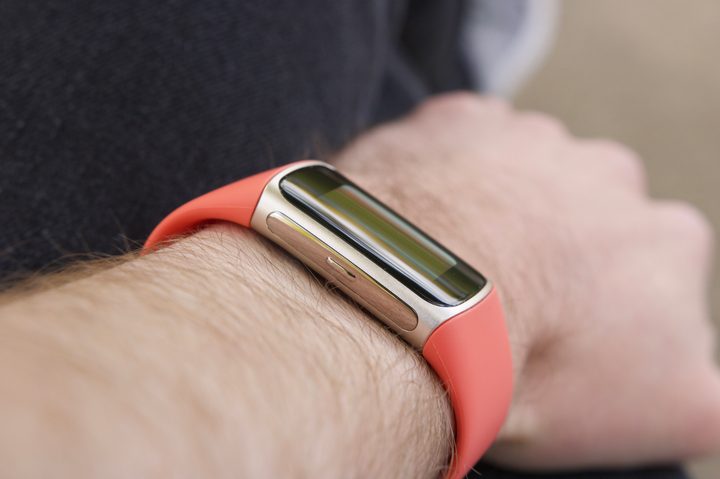
Someone wearing a Fitbit Charge 6.
Joe Maring / Digital Trends

In total, that’s roughly five minutes a day, but it equals quite a few interruptions if you’re trying to stick to your answers. The timing requirements are also inconvenient; if you don’t answer the evening survey by 11 PM each night, you won’t receive a Personalized Sleep Schedule.

Fitbit also warns the feature uses generative AI. While generally accurate, the answers might not always be correct. That said, the feature should grow more accurate over time as it “learns” your habits and behaviors.

Despite the absolute need for sleep, medical science still lacks a firm understanding of the biomechanics behind it. As such, most sleep trackers are left wanting. Each tracker is slightly different in how it determines results, but Fitbit is taking a step in the right direction by looking at things throughout the day instead of just the quality of the previous nights’ sleep.

If you’re interested, you can sign up for Fitbit Labs through the Fitbit on Android app. For now, this feature is limited only to users in the United States, and anyone participating in the Personalized Sleep Schedule Lab must be over 18 years old.

Patrick Hearn
Former Technology Writer
Patrick has written about tech for more than 15 years and isn't slowing down anytime soon. With previous clients ranging from…
Google and Xreal’s Project Aura smart glasses will ship later this year
Xreal Project Aura smart glasses come with built-in display units and run Android apps.
Front view of Xreal Project Aura smart glasses.

Google is working on a whole bunch of smart glasses. The first one running on the Android XR platform developed by Samsung is expected to arrive close to July. The slate, it seems, will get crowded pretty soon. Earlier today at the I/O 2026 Developers Conference, Google also showed off a new class of audio glasses that have been designed in partnership with Warby Parker and Gentle Monster.

But the most interesting of the bunch is the Xreal Project Aura smart glasses, which support full hand gesture support as well as mixed reality view for Android apps available through the Play Store. These smart glasses were first showcased in December 2025, but Xreal confirmed earlier today that the Project Aura smart glasses will hit the shelves in 2026. 

Read more
Wear OS 7 promises 10% better battery life and adds Gemini Intelligence… for select 2026 models
Limiting Gemini Intelligence to select future watches while existing Pixel Watch owners wait is exactly the kind of fine print that turns a promising announcement into a frustrating one.
Sphere, Person, Gauge

Google announced Wear OS 7 at I/O 2026, and for the Pixel Watch owners who have spent years watching Apple pile features onto watchOS, this one might feel like redemption. 

The latest Wear OS update promises up to 10% better battery life compared to Wear OS 6, which is meaningful for a device where every hour of battery life counts. And, more importantly, Gemini Intelligence is coming to Pixel Watches later this year (with an asterisk the size of a watch face).

Read more
Google shows off Android audio glasses designed by Gentle Monster and Warby Parker
Designed in collaboration with Warby Parker and Gentle Monster, the smart glasses will arrive later this year.
Gemini smart glasses.

At the I/O 2026 Developer Conference, Google gave us our first look at the upcoming Gemini-powered Intelligent Eyewear. Running atop the Android XR stack, these glasses have been developed in collaboration with Samsung and Qualcomm, while the design DNA has been developed by Gentle Monster and Warby Parker. The partner is similar to the work that Meta has done with its own smart glasses, which started with a partnership with Ray-Ban and later expanded to Oakley, as well. 

Google is calling them audio glasses because they don't come with a built-in screen, and most of the interactions that you will have with Gemini will be through voice and audio inputs. There are two cameras on the front of these smart glasses for image capture and understanding the world around you. And based on what Gemini sees through the camera, you will be able to ask questions. 

Read more