
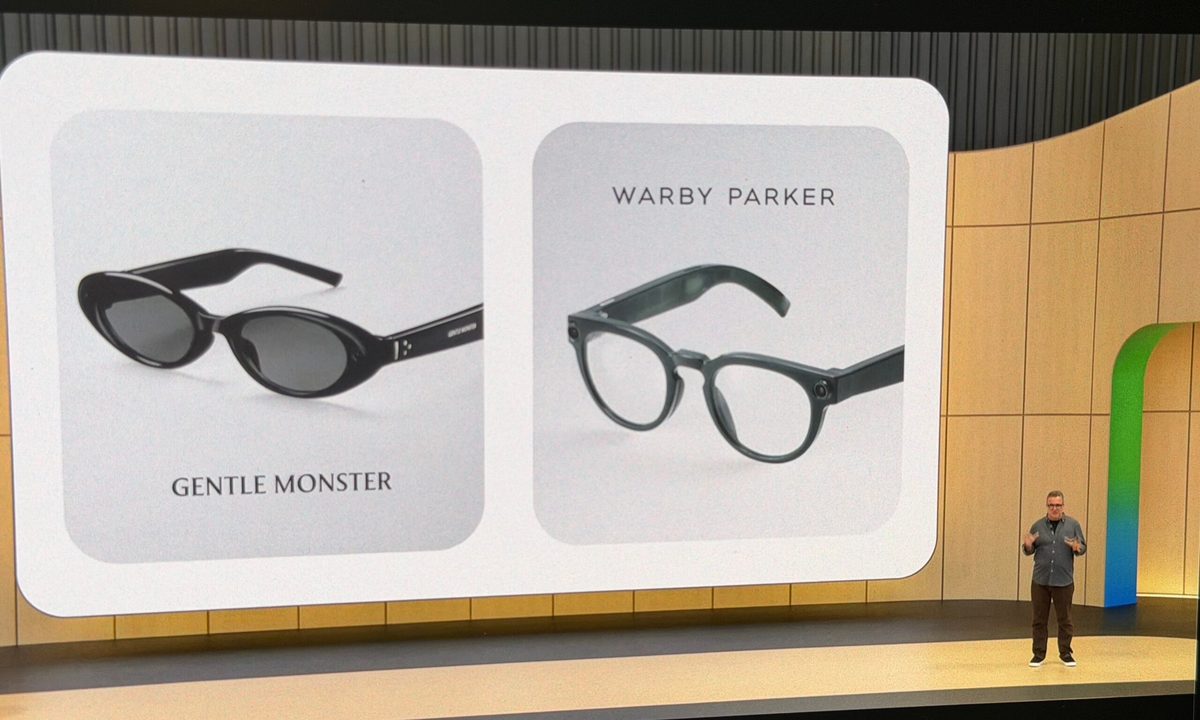

At the I/O 2026 Developer Conference, Google gave us our first look at the upcoming Gemini-powered Intelligent Eyewear. Running atop the Android XR stack, these glasses have been developed in collaboration with Samsung and Qualcomm, while the design DNA has been developed by Gentle Monster and Warby Parker. The partner is similar to the work that Meta has done with its own smart glasses, which started with a partnership with Ray-Ban and later expanded to Oakley, as well.

Google is calling them audio glasses because they don’t come with a built-in screen, and most of the interactions that you will have with Gemini will be through voice and audio inputs. There are two cameras on the front of these smart glasses for image capture and understanding the world around you. And based on what Gemini sees through the camera, you will be able to ask questions.

For example, you can just look at a restaurant building and ask Gemini about its reviews, as well as help you with the directions. Navigation is a crucial part of these smart classes, and Google says that you will be able to get turn-by-turn direction guidance using natural language conversations. Moreover, these glasses will also allow you to handle text messages, take calls, and listen to messages in a summarized form.

Another interesting ability that Google demonstrated at its I/O 2026 event was capturing and editing pictures in real time. When you click a picture, you can just summon Gemini and tell it to make some playful edits to those photos. The edits are actually handled by the Gemini Nano Banana engine, and once these images are edited, you will get an update on your mobile phone or companion smartwatch with a preview of that image.

Additionally, these smart glasses will also help with real-time translations and managing tasks in the background. Thanks to agentic capabilities, you can simply summon Gemini on these smart glasses and tell it to place an order for food or grocery items. Once the task has been completed, you can take the final step and confirm its execution.
Another interesting capability is that these glasses will also work just fine with third-party apps. For example, they will let you book a cab through Uber. Down the road, support for more applications and third-party services will also be added. More importantly, despite running atop the Android XR platform, these smart glasses designed by Gentle Monster and Warby Parker will also work fine with iPhones.


